
Last updated November 3, 2026
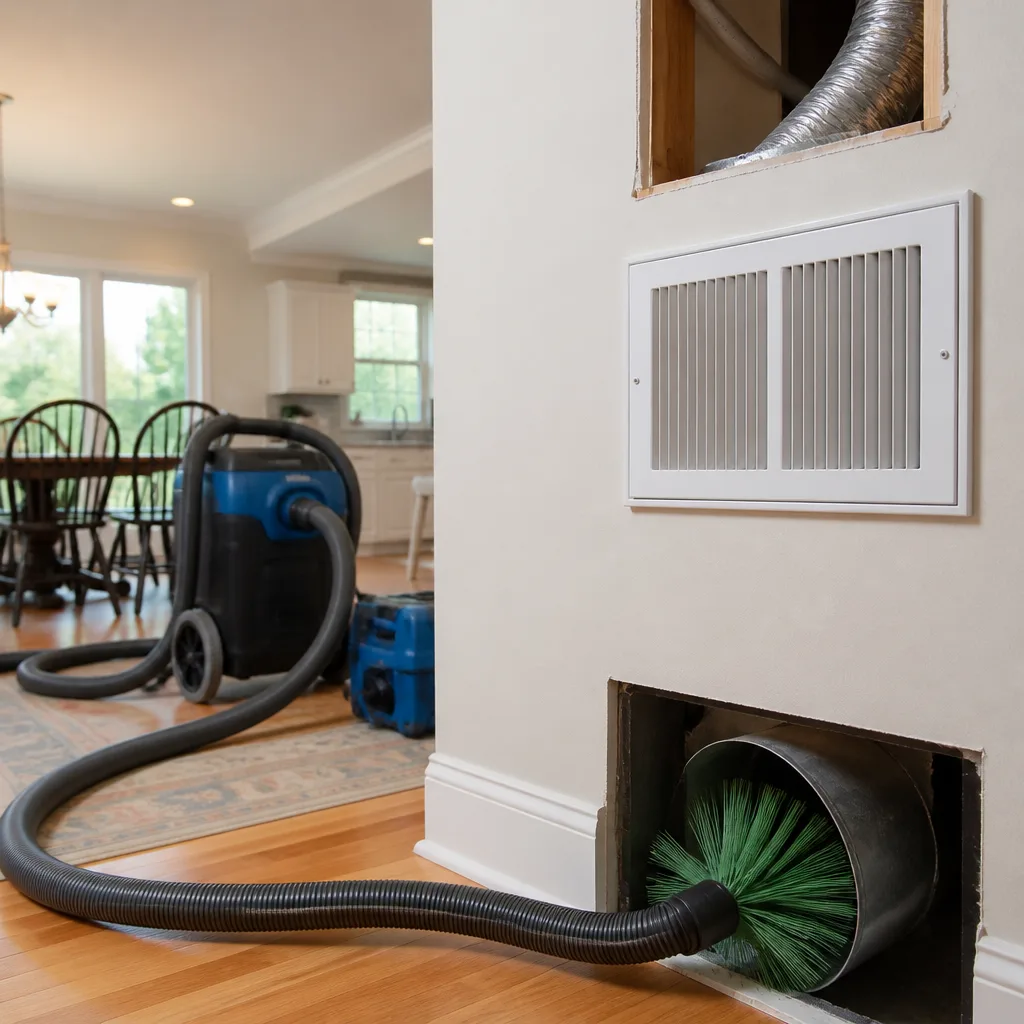 Whole-home duct cleaning
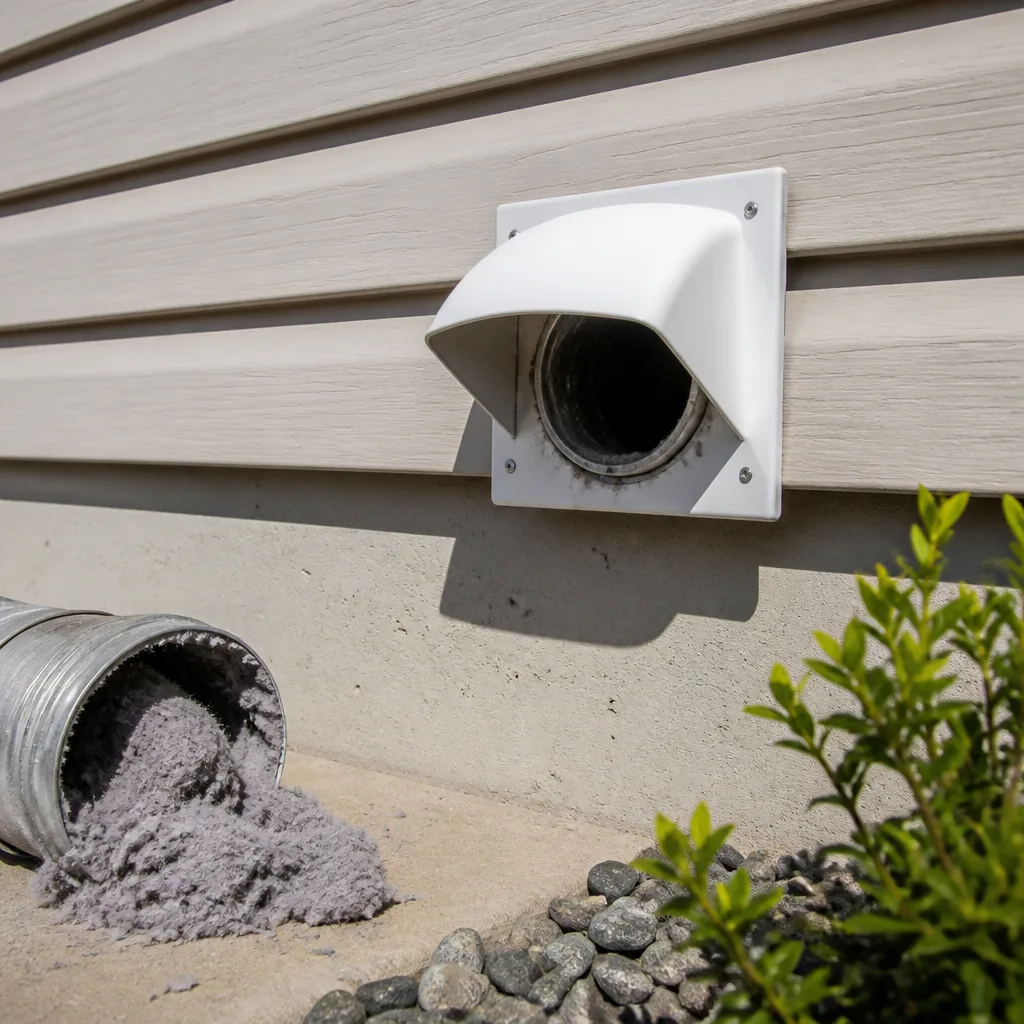 Dryer vent cleaning
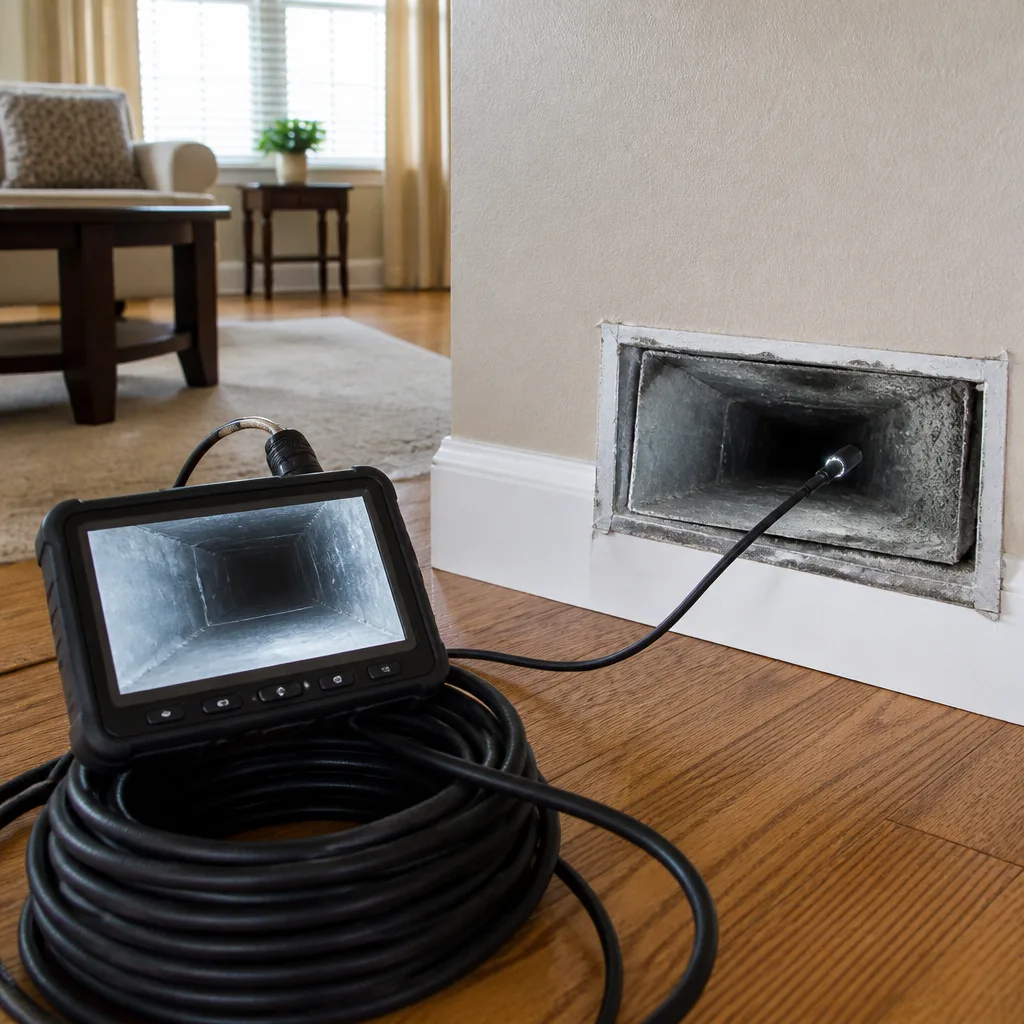 Camera inspection
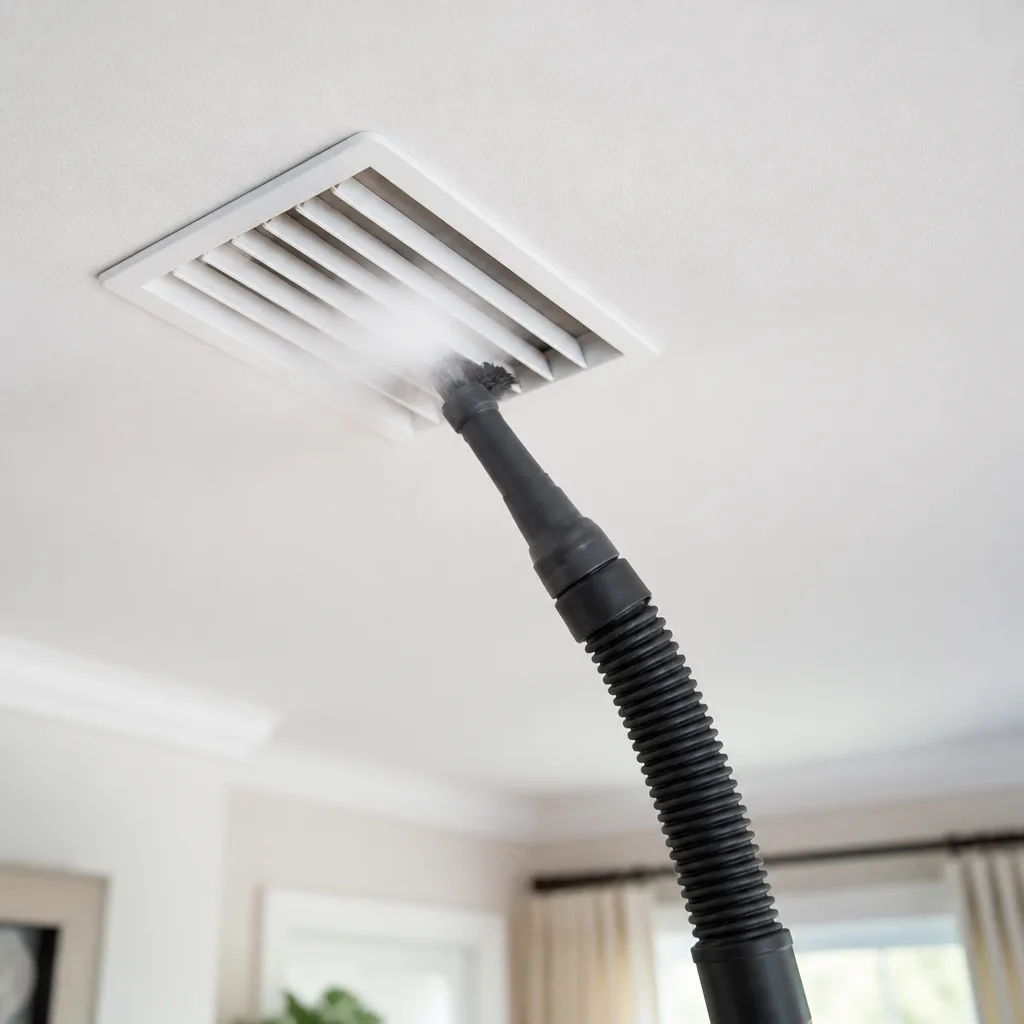 Sanitizing & deodorizing
Whole-system duct and dryer vent check with before-and-after photos - you see exactly what came out of your vents
That "$99 whole-house special" is a bait ad - the real number appears once they are in your hallway, or the "clean" is a shop-vac at the register. We photograph the inside of your ducts before and after instead.
The Complete Air Duct Cleaning Guide for Oak Park Homeowners
Here’s a truth most guides won’t tell you: a flex-duct system and a sheet-metal trunk-and-branch system require completely different cleaning approaches. Yet the majority of air duct cleaning guides treat every home identically, which is exactly how Oak Park homeowners end up paying $400 for a service that moved some dust around but never actually cleaned the ducts. Oak Park’s particular mix of dry heat, wildfire smoke season, and older construction stock means your ductwork accumulates a specific kind of particulate load, and the equipment that cleans it properly depends on what kind of ducts you actually have. This guide will walk you through identifying your system, understanding what your ducts are collecting, and knowing which cleaning method actually matches your home, or you can explore The Complete Guide to Air Duct Cleaning in Oak Park for deeper detail.
Quick Answer
Air duct cleaning in Oak Park CA should start with identifying your duct system type (flex, sheet metal, or fiberboard) before you book any service, because the wrong brush or pressure setting can damage certain duct materials. A proper Air Duct Cleaning services uses professional-grade equipment like Rotobrush rotary-brush systems or Nikro negative-air setups to dislodge particulate while containing it under negative pressure, and it costs meaningfully more than the coupon mailers suggest. For Oak Park homes specifically, the 3-5 year accumulation cycle is heavily influenced by wildfire smoke season, so if you haven’t cleaned since 2020 or earlier, your ducts are carrying a heavier load than you think.
Styles & brands we work with
- Whole-home duct cleaning
- Dryer vent cleaning
- Camera inspection
- Sanitizing & deodorizing
Table of Contents
- Why Your Duct System Type Determines Everything
- What Oak Park’s Climate Actually Does to Your Ducts
- Contact vs. Pneumatic: Two Cleaning Methods, Two Different Jobs
- Why Negative Air Pressure Is the Non-Negotiable Standard
- The Pre-Service Checklist: What to Look For in a Truck and Crew
- How Much Air Duct Cleaning Really Costs in Oak Park
- How Often Do Oak Park Ducts Actually Need Cleaning?
- When Cleaning Isn’t Enough: The Repair Question
Why Your Duct System Type Determines Everything
Before you pick up the phone to book an air duct cleaning in Oak Park, you need to know what kind of ductwork runs through your walls and attic. We’ve cleaned thousands of Oak Park homes, and the single biggest variable in whether a cleaning goes well or causes damage is the duct material and configuration. Most guides skip this entirely, which is why homeowners end up with torn flex ducts or fiberboard that’s been shredded by the wrong tool.
Here are the three system types you’ll find in Oak Park homes:
- Flex duct: Flexible, ribbed plastic-and-wire tubing, common in homes built after the 1980s and in attic runs. The inner liner is thin plastic that tears at roughly 800 PSI of direct brush pressure. A rigid metal brush can tear it. Flex requires lower-pressure rotary or pneumatic agitation with soft bristles.
- Sheet metal trunk-and-branch: Rigid rectangular or round metal ductwork, common in pre-1980s Oak Park construction and custom homes. This is the most durable system and can handle aggressive rotary-brush contact cleaning safely. However, if joints were sealed with tape that’s now dry and brittle, aggressive brushing can pop them apart.
- Fiberboard (rigid fiberglass ductboard): Compressed fiberglass panels formed into ducts, more common in 1970s-early 1980s homes. The interior surface is soft and easily gouged. Fiberboard should never be cleaned with a metal brush; it requires pneumatic agitation at controlled pressure.
How to tell what you have: remove a floor or wall register and look inside with a flashlight. If you see ribbed plastic, it’s flex. If you see smooth metal, it’s sheet metal. If you see a dull, fibrous surface that isn’t metal, it’s likely fiberboard. If your home has a mix, tell the company before they arrive. A crew that arrives not knowing your system type is a red flag.
In our experience, Oak Park homes built in the 1950s-60s along streets like Leeton Avenue or Country Club Drive are overwhelmingly sheet metal. Homes from the 1980s-90s in areas near Oak Park High School are heavily flex. Newer additions will often have a mix of both. This matters because the crew needs to know what attachment heads to bring and what air pressure settings to use before they start.
What Oak Park’s Climate Actually Does to Your Ducts
Oak Park sits in a specific microclimate: hot, dry summers with sustained temperatures in the 90s, cool desert nights, and an increasingly long wildfire smoke season that pushes fine particulate matter into every home in the valley. That combination does something specific to duct interiors that humid climates don’t experience.
In high-humidity regions, ducts collect biological growth and damp, clumping dust. In Oak Park’s dry heat, what accumulates over a typical 3-5 year cycle is different:
- Ultra-fine wildfire particulate (PM2.5 and finer): During smoke events, HVAC systems pull in outside air through any gap, and these sub-2.5-micron particles are light enough to stay suspended and then settle inside ducts when air velocity drops. They’re also small enough to pass through a standard fiberglass filter.
- Baked-on construction dust: Homes in Oak Park between the original 1960s build-out and recent renovations have decades of drywall dust, wood sanding dust, and insulation fibers that become baked onto duct walls by 150-degree attic heat.
- Desiccated human and pet dander: Dry air dessicates skin cells and pet dander into a fine powder that stays airborne longer and travels deeper into the system than the clumpier dander you see in humid climates.
- Fractured pollen and dust: Oak Park’s oak and chaparral pollen dries out and fractures into tiny shards that wedge into duct seams and fiberboard surfaces.
What this means practically: if you go 5+ years without cleaning in Oak Park, especially if you ran your system during the 2020 and 2021 wildfire seasons, you’re not looking at fluffy dust bunnies. You’re looking at a fine, packed particulate layer adhered to duct walls. That adhesion is exactly why a low-powered vacuum alone won’t do anything: the particulate needs mechanical or pneumatic agitation to break the bond before suction can remove it. This is also why the equipment question matters more than the price question.
If you want to see what’s happening in your system, pull a vent cover off in a room you use daily and run a white paper towel along the duct wall just inside the opening. If it comes back gray-black and the residue is fine, not fluffy, you’re looking at years of baked-on wildfire and construction particulate. That’s the Oak Park signature.
Contact vs. Pneumatic: Two Cleaning Methods, Two Different Jobs
The cleaning industry has two fundamentally different ways to get particulate off a duct wall: contact-based agitation and pneumatic agitation. They’re not interchangeable, and the right one for your Oak Park home depends on what your Duct Cleaning Oak Park home system type actually is.
Contact-Based Cleaning (Rotobrush)
Contact cleaning uses a rotating brush head that physically touches the duct surface and scrubs it, combined with simultaneous vacuum. Rotobrush is the recognized brand in this category, and it’s the workhorse for rigid sheet metal systems. The brush spins at high RPM, the bristles physically dislodge adhered particulate, and a powerful integrated vacuum captures the loosened debris at the source. For sheet metal trunk-and-branch systems, especially those in older Oak Park homes, Rotobrush contact cleaning is the most effective way to break the baked-on layer we described above. It’s also well-suited to homes with heavy renovation dust, where particulate has been compressed into duct corners for years.
Pneumatic Agitation (Nikro)
Pneumatic systems like those made by Nikro use compressed air to drive a specialized agitation device inside the duct. Instead of a rotating brush, a compressed-air nozzle or whip creates high-velocity air turbulence that breaks particulate bonds and knocks debris loose. The entire duct is maintained under negative pressure by a powerful vacuum source during this process. Pneumatic agitation is the preferred method for flex duct and fiberboard, because there’s no direct mechanical contact that could tear the plastic liner or gouge the soft fiberglass surface. For Oak Park homes with flex-heavy attic runs, pneumatic is frequently the safer and more effective choice.
We run both Rotobrush and Nikro systems on our trucks because we clean all three duct types regularly across the Oak Park service area, and we cover the trade-offs in our DIY vs Professional Air Duct Cleaning: The Oak Park Homeowner’s Decision Guide. A company that only owns one type of cleaning equipment has an incentive to sell you that method regardless of what your ducts actually need. Ask what systems they run and why they’d choose one for your home. If they can’t answer that question, keep dialing.
Why Negative Air Pressure Is the Non-Negotiable Standard
Here’s the difference between a cosmetic duct cleaning and a real one: negative air pressure containment. If a company is not running a properly sized vacuum that maintains negative pressure inside the entire duct system during cleaning, they are not cleaning your ducts. They are redistributing particulate.
Negative pressure means the vacuum is pulling more air out of the duct system than is being supplied to it. This creates a slight vacuum inside the ductwork, so that any particulate knocked loose during brushing or pneumatic agitation is drawn toward the vacuum intake rather than blowing out into your living space through adjacent registers. It’s the same containment principle used in professional remediation work, and it’s why we run Abatement Technologies negative-air and air-scrubbing equipment during our services. That’s a remediation-level standard of care, not a vac-attachment level of care.
Here’s how to spot the difference before you sign anything:
- Ask about CFM. The vacuum source should be rated by the manufacturer for at least 2,000 CFM of airflow for most residential systems, and larger if you have a large home or long duct runs. A shop-vac pulls maybe 150-300 CFM. That’s not a duct cleaning tool, that’s a housekeeping tool.
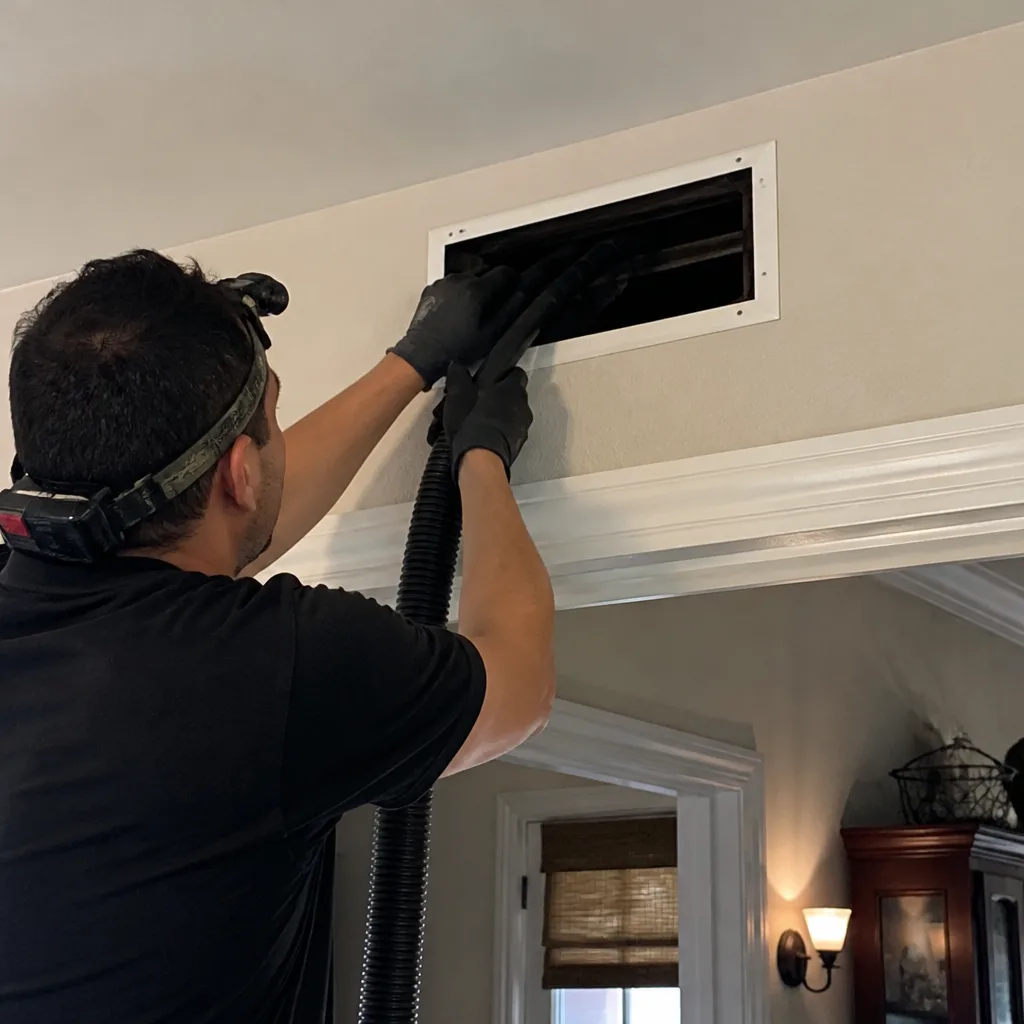
- Ask about hose diameter. A real negative-air duct cleaning uses 8-12 inch diameter vacuum hose connected to the main trunk line. If the technician brings a 2-inch hose through your front door, they’re doing retail-level dust collection, not duct system service.
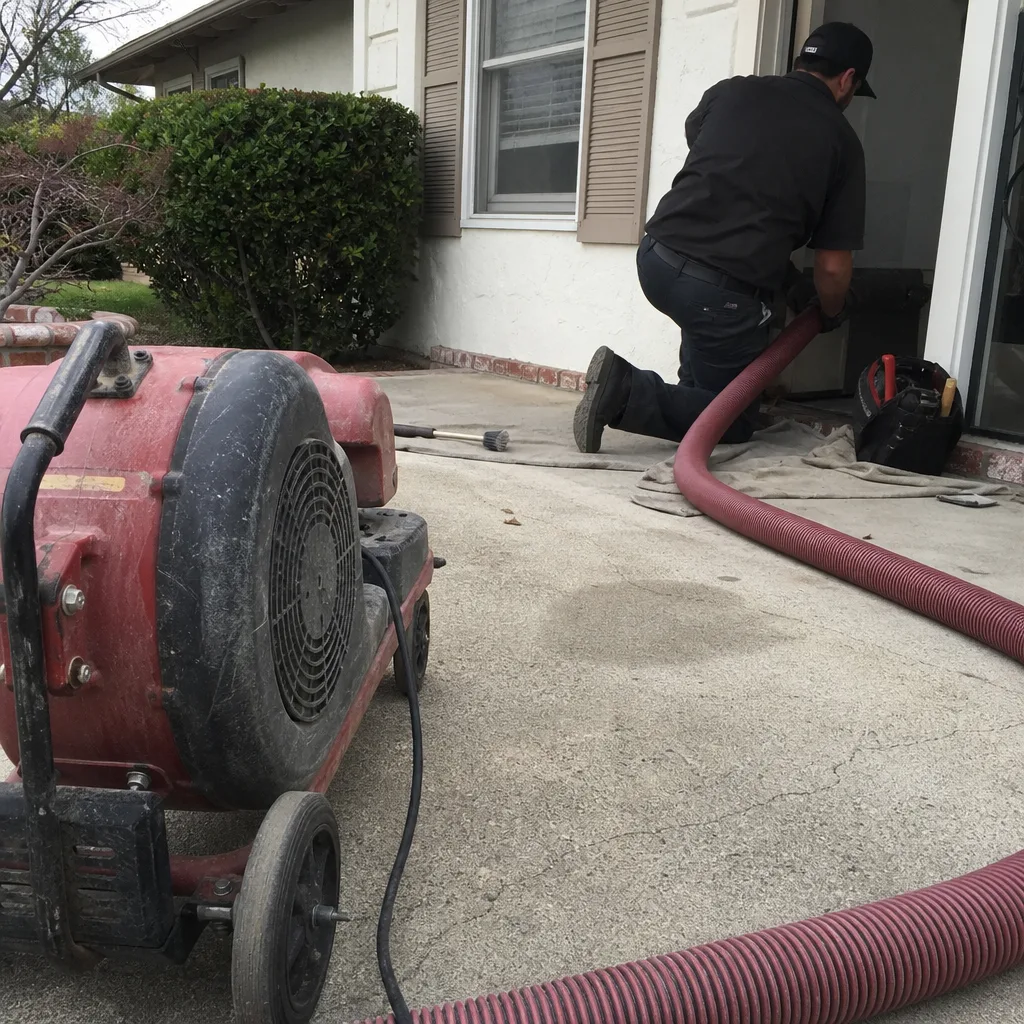
- Ask about containment. When we work on an Oak Park home, we seal registers during portions of the process where needed to maintain proper negative pressure, and we run air-scrubbing equipment (we use Abatement Technologies units) to capture airborne particulate that escapes during setup. That’s the difference between leaving your hallway dusty and leaving it clean.
A legitimate negative-pressure setup costs real money to buy and operate. That’s part of why real duct cleaning isn’t $99. We’ll get to pricing below, but understand that the equipment conversation and the price conversation are the same conversation. The low bid is low because the equipment is inadequate.
The Pre-Service Checklist: What to Look For in a Truck and Crew
You can evaluate a duct cleaning company in Oak Park before they ever walk through your door. Here’s the checklist we’d give a friend in Oak Park who’s evaluating quotes, and you can find more guides & resources on our blog:
- Look at the truck. A real duct cleaning operation runs a box truck or a cargo van with a mounted or large portable vacuum unit, not a sedan with a shop vac in the trunk. Mounted units are typically rated by CFM and should have visible hose reels for 8-12 inch diameter hose. If you can’t see a serious vacuum source on the truck, that’s the answer.
- Ask what brand of equipment they run. The answer should be a named professional system: Rotobrush, Nikro, or an equivalent commercial negative-air platform. If they say “we have a really powerful vacuum,” they don’t have professional duct cleaning equipment.
- Ask about square footage and CFM matching. A 1,200 square foot ranch needs less vacuum capacity than a 3,500 square foot two-story, but the company should be able to tell you what CFM their system pulls and how they match it to your system size. Blank looks are a hard pass.
- Ask if they inspect before they quote. A legitimate operation wants to see your furnace, your return drop, and a few registers before they give you a firm price. A company that quotes a flat price sight-unseen is the bait-and-switch pattern we warned about in this guide’s opening.
- Ask if they seal off the system. The crew should describe sealing off supply and return registers with plastic or foam plugs during cleaning, and running the system under negative pressure. If they describe “just vacuuming each vent,” that’s not duct cleaning, that’s vent dusting.
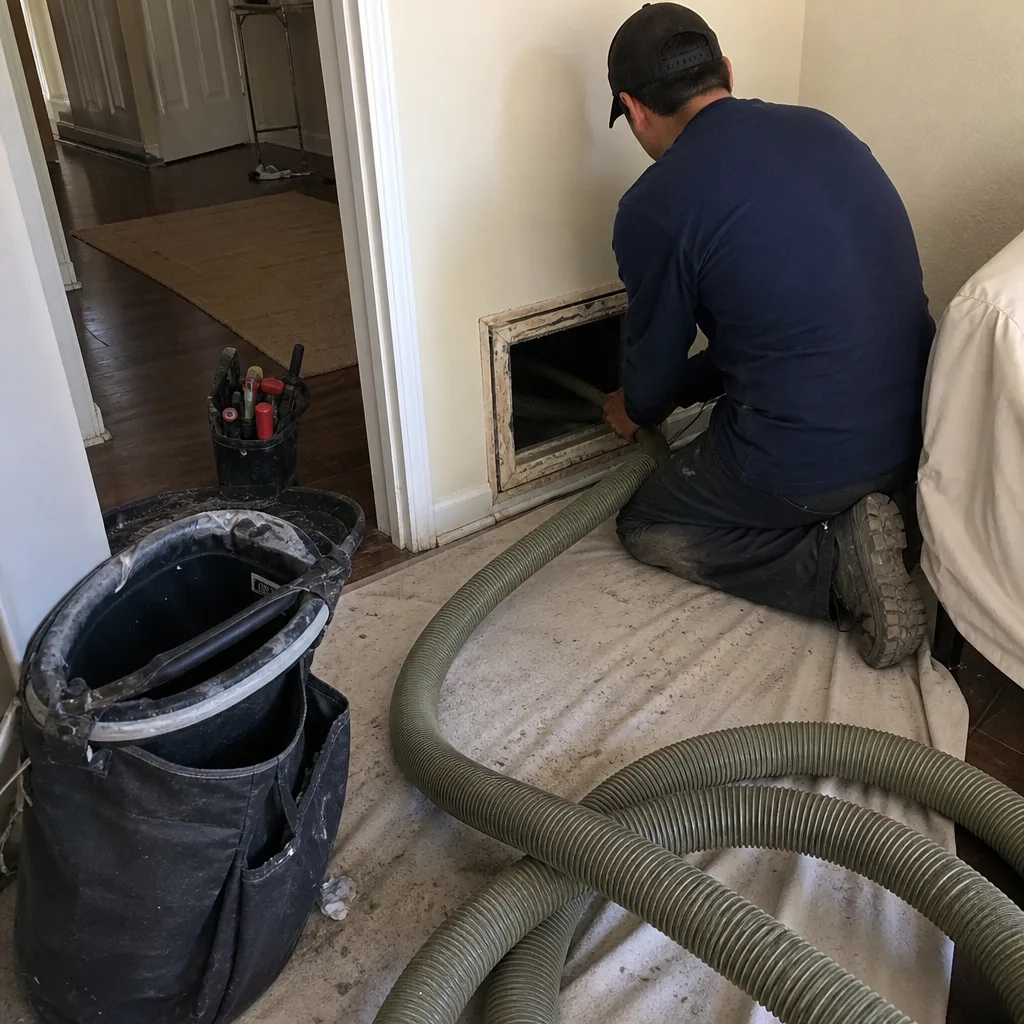
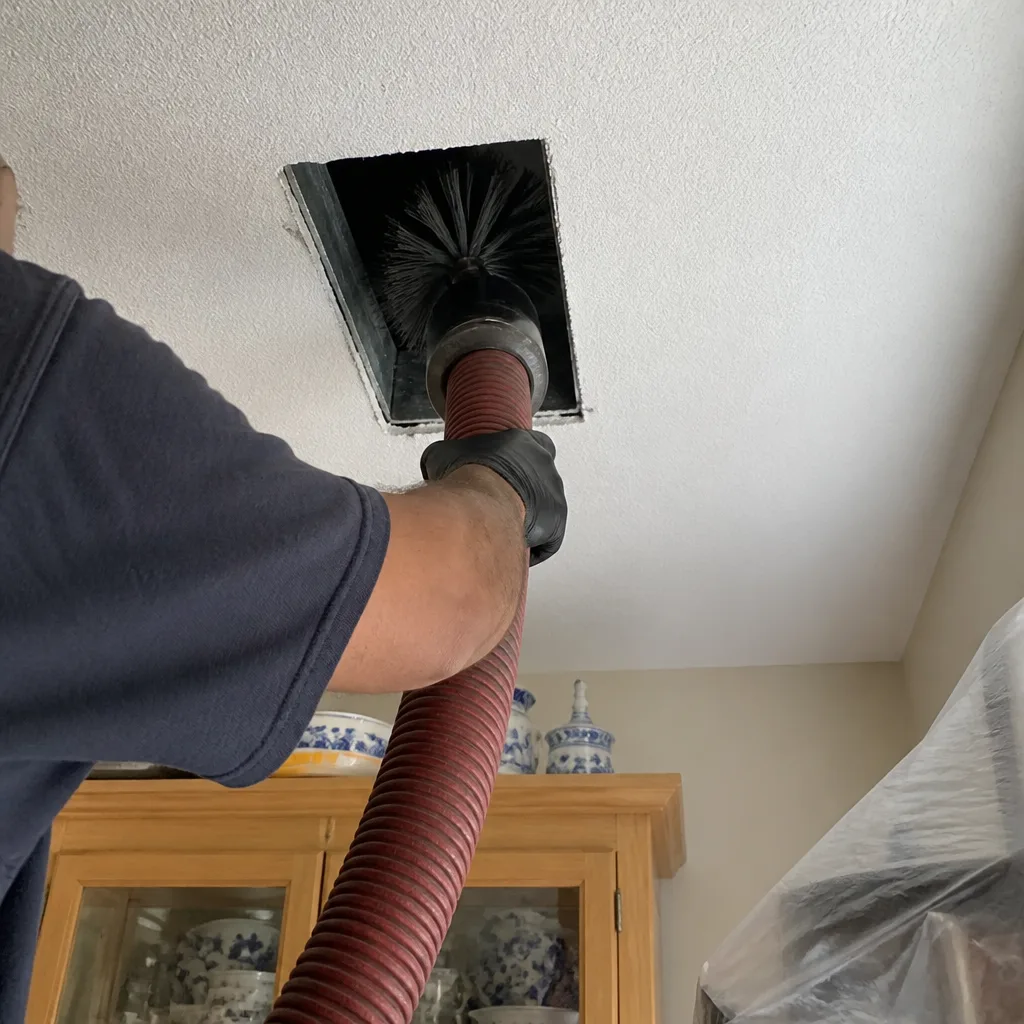
- Confirm what “clean” means. Ask what standard they work to. We use before-and-after photos of the inside of your ductwork so you can see the difference. If a company can’t show you what the inside of your ducts will look like after cleaning, they’re selling a feeling, not a service.
One more specifically Oak Park note: during wildfire smoke season, demand for duct cleaning spikes. Some companies will book five jobs a day and cut corners on seal time and negative-pressure procedure. Ask how many jobs the crew runs in a day. Two thorough jobs beats four rushed ones, every time.
How Much Air Duct Cleaning Really Costs in Oak Park
Here’s the direct answer: a legitimate whole-home air duct cleaning in Oak Park CA, done with professional-grade Rotobrush or Nikro equipment under proper negative pressure, for a typical 1,500-2,500 square foot home, runs between $350 and $800. Homes over 3,000 square feet, or homes with complex two-zone systems, run from $600 to $1,200. The variance is driven by system size, duct type, access difficulty, and the degree of buildup. If you’re being quoted $99 whole-home duct cleaning, you are not being quoted duct cleaning, you are being quoted a foot-in-the-door.
| System Size | Typical Price Range (Oak Park) | What Affects Price |
|---|---|---|
| 1,200-1,800 sq ft, single zone | $350-$550 | Sheet metal cleans fastest; flex takes more time |
| 1,800-2,500 sq ft, single zone | $450-$700 | Attic access, crawlspace returns, heavy buildup |
| 2,500-3,500 sq ft, two zone | $600-$900 | Two furnaces, longer trunk runs, more registers |
| 3,500+ sq ft, custom or multi-wing | $750-$1,200 | Multiple systems, high ceilings, long attic runs |
The price difference between a real duct cleaning and a fake one is not marketing markup. It’s equipment. A Rotobrush system alone costs more than a mid-size sedan. A commercial negative-air unit from a company like Abatement Technologies costs thousands more. Add 8-12 inch hose reels, register plugs, air-scrubbing units, and the labor of a crew that takes 3-4 hours to do a single home properly, and the $350-$800 price range is what honest math produces. The $99 coupon is a loss leader designed to get a technician into your home to upsell you.
We price each system as a single flat fee, agreed before work starts. No per-vent pricing. No surprise add-ons once we’re inside. That structure exists specifically because the per-vent model is the industry’s most common bait-and-switch mechanism. You should demand the same structure from any company you’re evaluating. Call (844) 620-0479 for an exact quote on your Oak Park home. Estimates are free, and we’ll tell you honestly if your ducts don’t need cleaning yet.
How Often Do Oak Park Ducts Actually Need Cleaning?
The National Air Duct Cleaners Association (NADCA) guideline is every 3-5 years for most homes. That’s a reasonable starting point, but Oak Park’s specific conditions push it in the shorter direction for some homes and longer for others:
- Clean every 2-3 years if: You ran your HVAC system continuously during wildfire smoke season, you have pets that shed heavily, anyone in the home has significant allergy or respiratory sensitivity, or you’ve done renovation work of any scale. Drywall dust and sawdust get pulled into the return side of your system and coat the duct walls within weeks.
- Clean every 3-5 years if: You have a well-sealed modern home with a MERV-11 or better filter that you change consistently, no recent renovations, no pets, and you close your home up during heavy smoke events rather than running the system.
- Clean every 5-7 years if: Your home is a second residence or is unoccupied for large stretches of the year, with minimal air movement through the system.
You’ll know you’re overdue when you see dust accumulating on registers faster than normal, when rooms smell stale even after airing out, or when your system’s filter is loading up with visible gray-black material in less than 4 weeks. On the filter point: if you can hold a dirty filter up and see the particulate is dark and fine rather than light and fluffy, that’s the aerosolized particulate signature we described earlier. It’s in your ducts, not just your filter.
One common Oak Park-specific timeline we see: homeowners who moved into a home during 2020-2022 and have never cleaned the ducts since buying. A lot of Oak Park homes changed hands during those years, and many new owners inherited whatever was in the duct system from the previous occupants. If you’re in that group, your 3-5 year clock started, at best, on the day you moved in, and more likely before that. If you don’t know when the ducts were last cleaned, assume it’s been longer than you’d like.
When Cleaning Isn’t Enough: The Repair Question
Here’s where cheap duct cleaning companies do Oak Park homeowners a quiet disservice: they clean around problems and call the job done. Cleaning reveals what’s actually wrong with your duct system. It doesn’t fix it. If your system has disconnected flex runs, crushed duct sections, open plenum joints, or compromised returns, cleaning that system is like vacuuming a cracked pipe: you’re spending money on a system that’s still leaking conditioned air into your attic and pulling attic air into your home.
This is why air duct repair in Oak Park matters as a standalone service. Before we clean, during the cleaning process, and during our post-cleaning inspection, we look for:
- Disconnected or sagging flex duct sections in the attic
- Crushed duct runs, usually caused by someone stepping or storing things on flex duct
- Open or leaking seams in sheet metal trunks
- Return air chase leaks that pull attic air into the system
- Missing or improperly seated register boots
If we find damage, we’ll show it to you and quote the repair separately. We never clean around a broken duct and call it done. This is the Air Duct Repair in Oak Park service we built specifically because too many cleaning companies lack the skill or willingness to address what the cleaning reveals. If a company tells you they “only clean,” ask them what happens if they find a disconnected run. If the answer is “not our problem,” find another company.
Common Mistakes to Avoid
- Hiring before identifying your duct type. A sheet-metal system can handle contact-based Rotobrush cleaning; a flex system may be safer with pneumatic agitation. If you don’t know what you have, you can’t evaluate whether the company’s proposed method is correct for your home.
- Choosing the cheapest quote. The $99 whole-home coupon is not a discount. It’s an entry point for a hard upsell once the technician is in your home, and the equipment behind that price cannot achieve a real clean on any system type.
- Falling for a shop vac labeled as duct cleaning. If the “system” fits in the tech’s passenger seat, it’s not a duct cleaning system. Real negative-air cleaning uses truck-mounted or large portable vacuum units pulling 2,000+ CFM through 8-12 inch hose.
- Skipping the post-clean inspection. Never accept a cleaning where the technician doesn’t show you before-and-after photos of the inside of your ducts. If you can’t see the result, you’re taking it on faith, and faith is not a service deliverable.
- Ignoring the dryer vent. Dryer vents are a separate system and a separate fire-safety issue. A company that offers air duct cleaning but doesn’t mention your dryer vent is not looking at your home holistically. Dryer vent cleaning in Oak Park is a fire-safety service, not an add-on afterthought.
- Cleaning on a fixed calendar without checking condition. Some Oak Park homes with excellent filtration genuinely don’t need cleaning at 3 years. Some need it at 2. Pull a register and check the condition before you spend the money.
- Using a generalist HVAC company for duct cleaning. A company that installs furnaces and does duct cleaning as a side service is not focused on duct cleaning. The equipment, the training, and the standards are different. Specialist operations exist for a reason.
See the difference
 Before
 After
 Before
 After
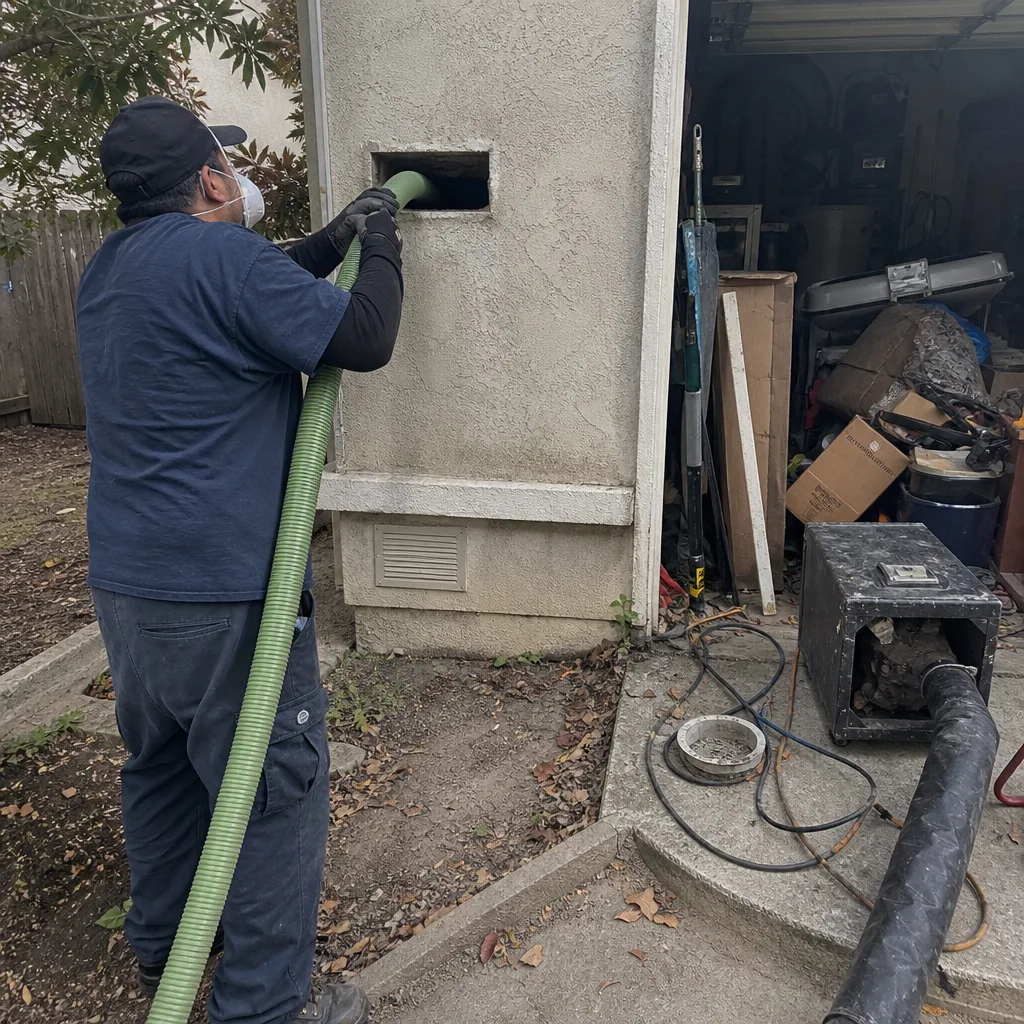 Before
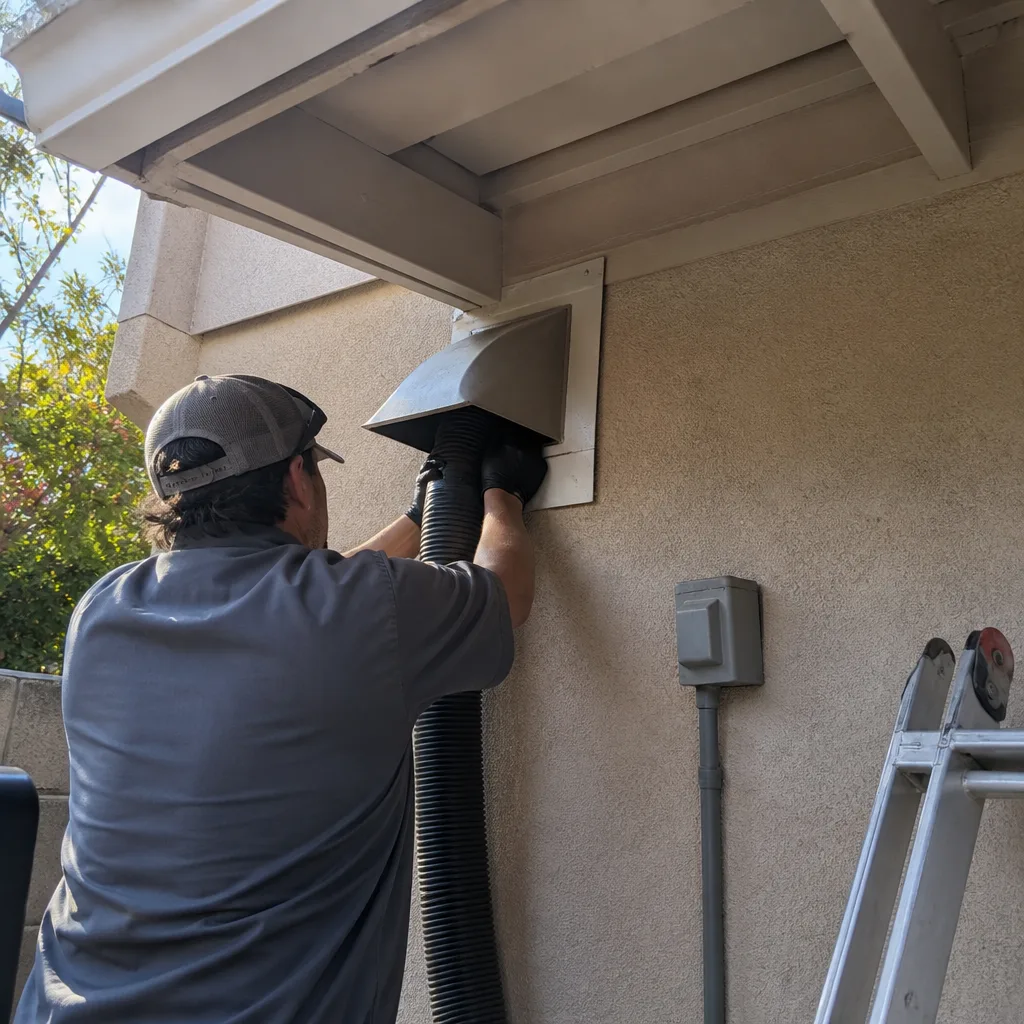 After
When to Call a Professional
Call a professional duct cleaning company when you can see visible dust accumulation on registers, when your filter is loading with dark fine particulate in under a month, when rooms smell stale despite cleaning, when you’ve completed any renovation work, or when you’ve lived in your Oak Park home for 3+ years without knowing whether the ducts have ever been cleaned. If you pull a register and see the fine gray-black coating we’ve described, that’s the answer. If you suspect disconnected or damaged duct runs, you need an operation that repairs as well as cleans, because cleaning a broken system wastes your money. Duct Cleaning Oak Park offers free estimates throughout Oak Park. Call (844) 620-0479 and we’ll tell you honestly what you need, and what you don’t.
Frequently Asked Questions
Air duct cleaning in Oak Park CA typically costs $350 to $800 for a standard 1,500-2,500 square foot home, with larger or multi-zone systems running up to $1,200. The price is driven by system size, duct type, access difficulty, and buildup level. Any quote below $200 for a whole-home cleaning is a foot-in-the-door price, not a real service price, and you should expect aggressive upsells. Call (844) 620-0479 for a flat-rate quote on your specific system. Estimates are free.
Some air duct cleaning quotes are dramatically cheaper because the company is not running professional-grade equipment, is not maintaining proper negative pressure during the service, and is using a low price as a sales entry point rather than an honest reflection of the work. Shop vacs cost a few hundred dollars; a Rotobrush or Nikro negative-air system costs tens of thousands. The pricing difference is equipment and thoroughness, not marketing margin.
You know duct cleaning work was actually done when the company provides before-and-after photos showing the interior walls of your ductwork, taken from inside the system during the service. If a company cannot show you the inside of your ducts after cleaning, you have no way to verify the work. Always request photographic documentation as part of the service.
Air ducts in Oak Park homes typically need cleaning every 3-5 years, but homes that ran heavily during wildfire smoke season, have pets, or went through renovations may need service every 2-3 years. The best way to know is to pull a register and inspect the duct interior with a flashlight. If you see a fine gray-black coating, you’re due.
Air duct cleaning can meaningfully reduce the volume of accumulated particulate circulating through your home, which for many allergy sufferers translates to fewer symptoms, especially during Oak Park’s spring pollen season. The benefit depends on what’s in your ducts and the thoroughness of the cleaning. A system cleaned properly under negative pressure removes the reservoir of dander, pollen fragments, and fine wildfire particulate that re-circulates every time the blower runs.
Yes. Lint accumulation in dryer vents is a leading cause of residential house fires in the United States, and Oak Park’s dry climate makes built-up lint even easier to ignite. Dryer vent cleaning service in Oak Park should be scheduled annually for a household that runs the dryer regularly. It’s a fire-safety service, not a convenience add-on.
The Bottom Line
Your air ducts are only as clean as the equipment cleaning them. Oak Park homeowners should identify their duct system type before booking any service, demand professional-grade equipment (Rotobrush, Nikro, or equivalent) with proper negative-pressure containment, and expect to pay $350-$800 for a legitimate whole-home cleaning. The $99 coupon is a bait-and-switch pattern, not a discount. If your system shows damage during cleaning, get it repaired, not cleaned around. And if you’re unsure whether your home needs service, pull a register, look inside, and call for an honest assessment. (844) 620-0479. We’ll tell you what we’d tell a neighbor.
Written by the team at Duct Cleaning Oak Park, serving Oak Park since 2017.