Last updated November 3, 2026
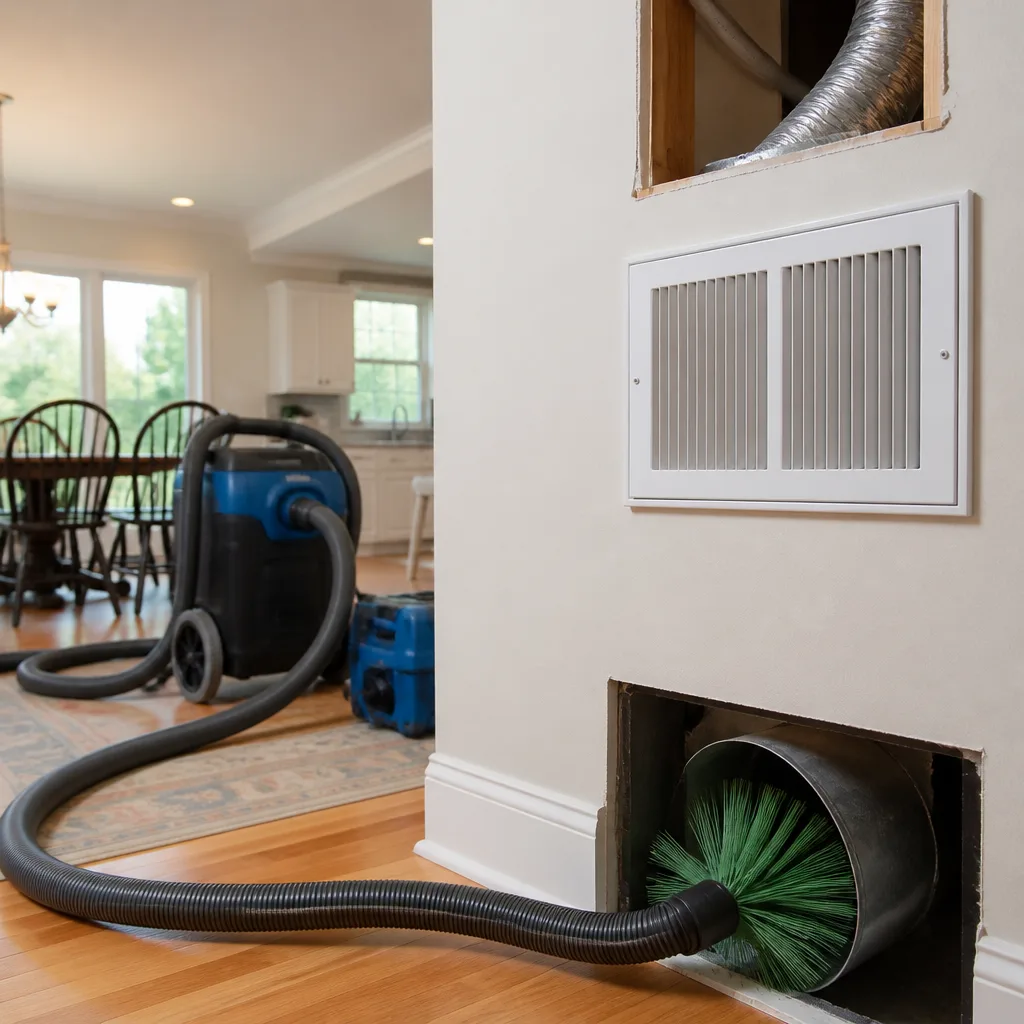 Whole-home duct cleaning
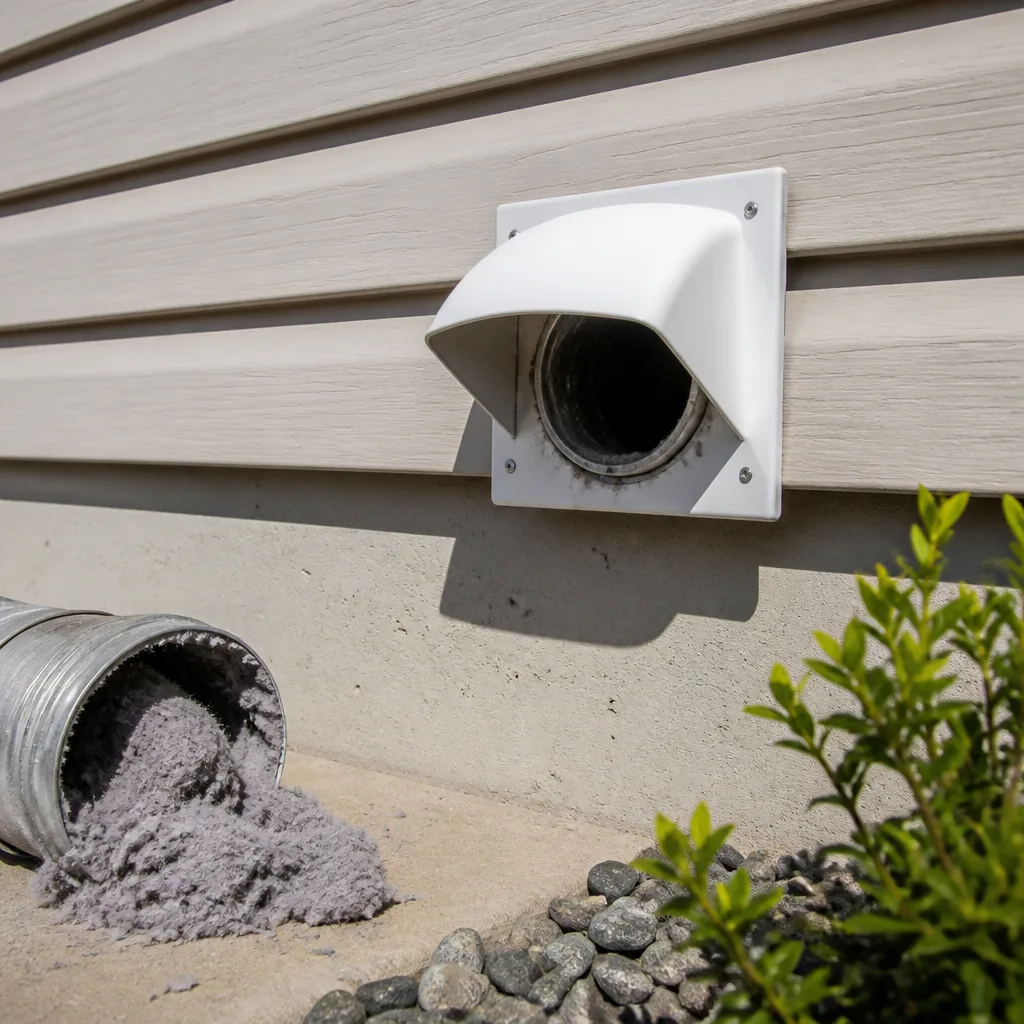 Dryer vent cleaning
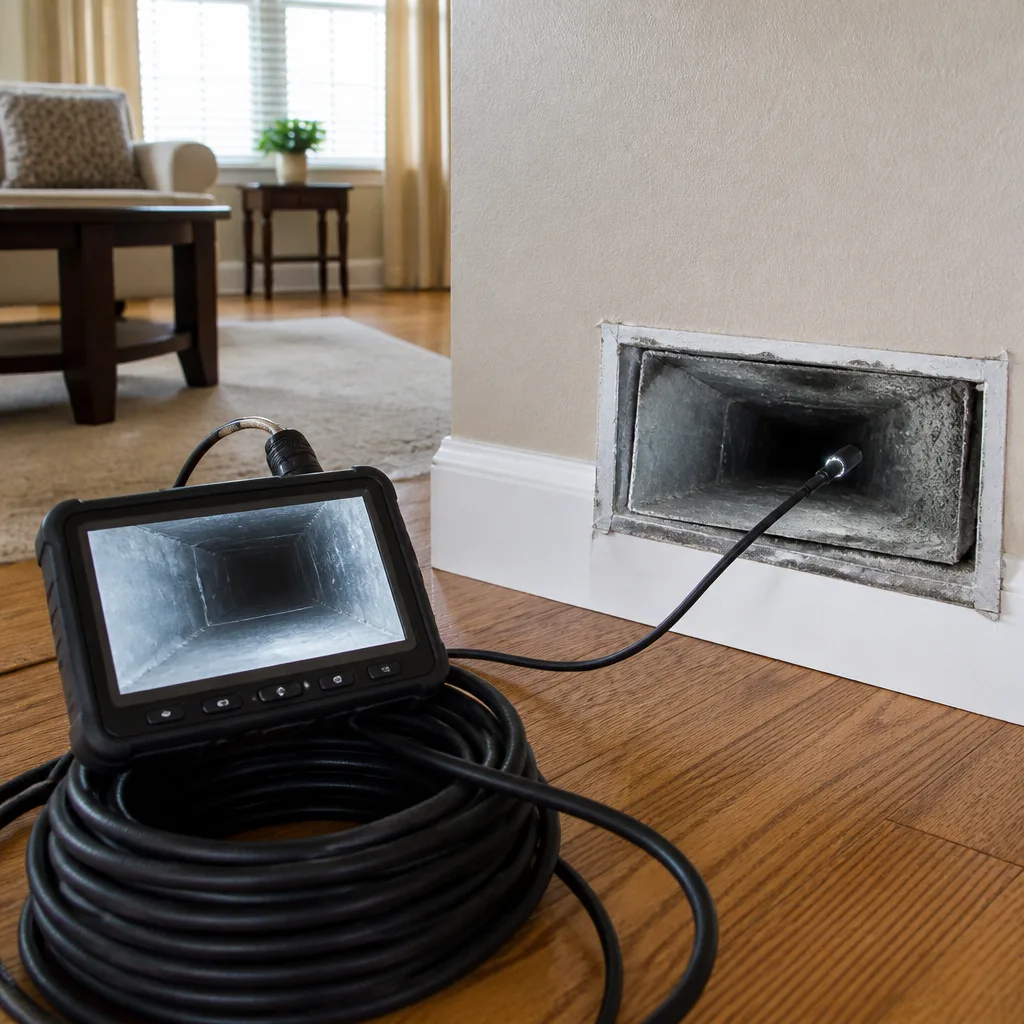 Camera inspection
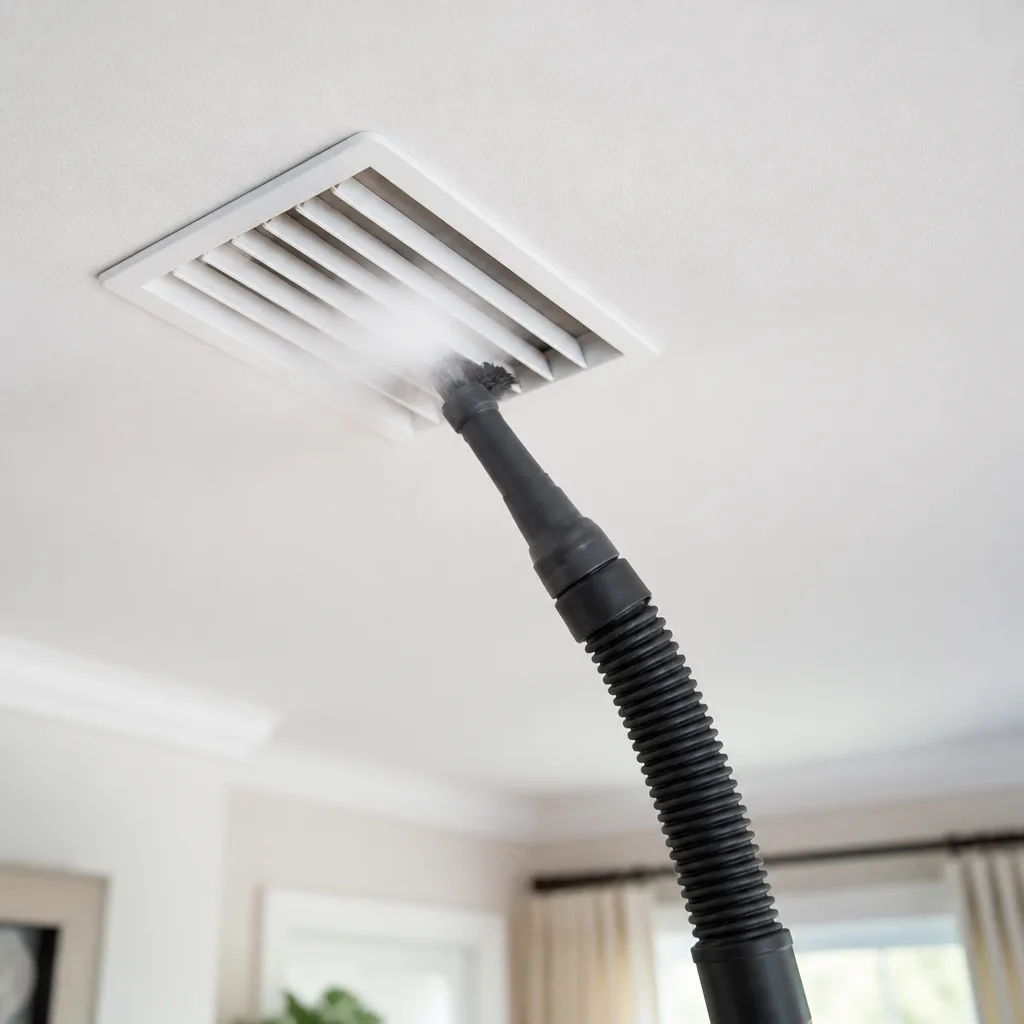 Sanitizing & deodorizing
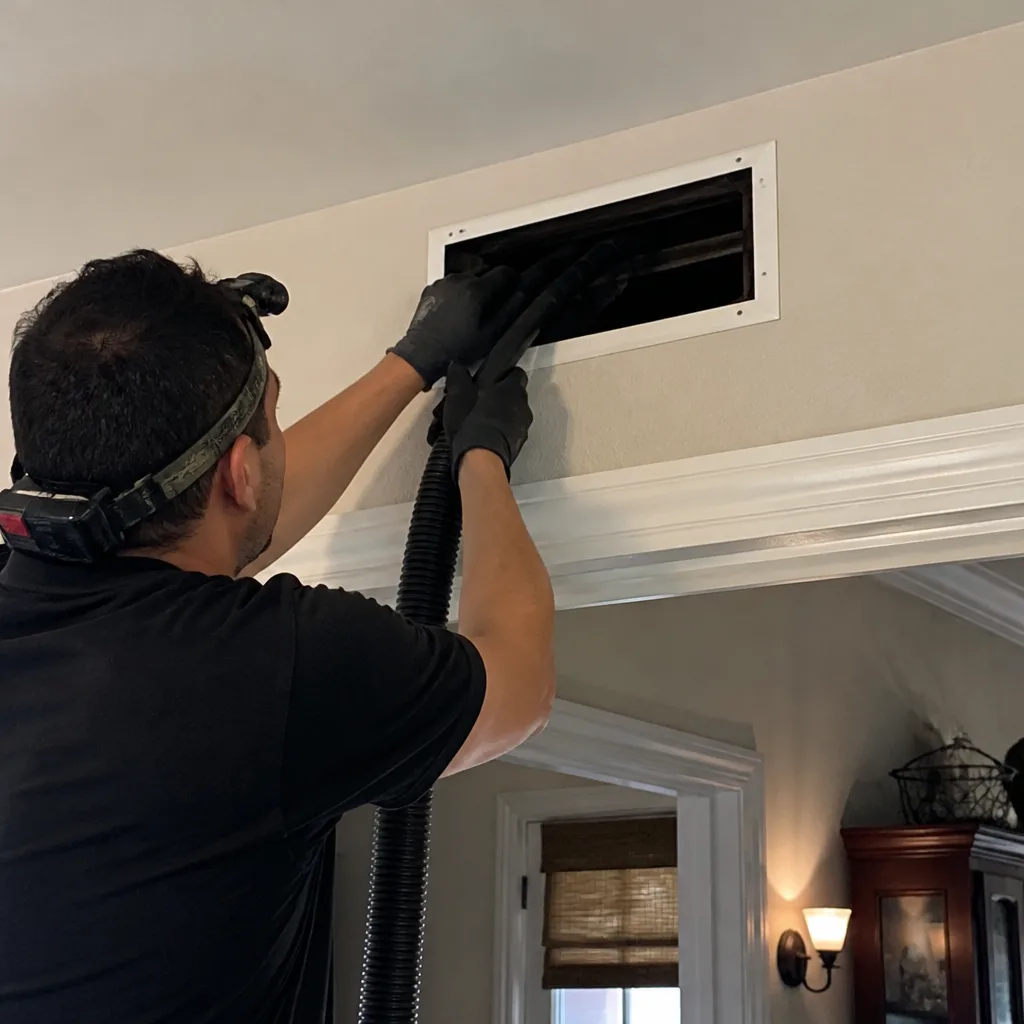
Whole-system duct and dryer vent check with before-and-after photos - you see exactly what came out of your vents
That "$99 whole-house special" is a bait ad - the real number appears once they are in your hallway, or the "clean" is a shop-vac at the register. We photograph the inside of your ducts before and after instead.
Choosing the Right Air Duct Cleaning Brand: A Buyer’s Guide for Oak Park
Here’s a number that surprises most Oak Park homeowners: the air duct cleaning equipment used by contractors in this area ranges from $300 shop-vac attachments to $45,000 negative-air systems with HEPA filtration. Both will be marketed as “professional duct cleaning.” The difference doesn’t show up in the ad copy or the coupon mailer. It shows up in what actually gets removed from your ductwork, and in whether the air in your home is cleaner or just stirred up. This guide walks through the equipment brands that matter, the questions that expose the difference, and how to evaluate any Air Duct Cleaning services company before you book.
Quick Answer
The right air duct cleaning brand in Oak Park is one that names its equipment: systems from Rotobrush or Nikro for duct agitation and suction, plus Abatement Technologies for air scrubbing and containment. Vague language like “professional-grade tools” signals a shop-vac operation. Ask three questions and you’ll separate equipment-serious contractors from low-investment competitors in under five minutes.
Styles & brands we work with
- Whole-home duct cleaning
- Dryer vent cleaning
- Camera inspection
- Sanitizing & deodorizing
Table of Contents
- The Equipment Brands That Actually Matter
- What a Rotobrush System Actually Does
- What Nikro Units Bring to the Job
- What Abatement Technologies Adds: Air Scrubbing and Containment
- Why a Duct Cleaning Specialist Outperforms an HVAC Generalist
- What NADCA Certification Actually Requires (and What It Doesn’t)
- The Three Questions That Expose Any Contractor’s Equipment Reality
- Oak Park Context: Why Local Dust and Climate Matter
The Equipment Brands That Actually Matter
Most homeowners evaluate duct cleaning companies the way they evaluate plumbers or electricians: reviews, price, responsiveness. That works for trades where the outcome is visible. A toilet either flushes or it doesn’t. But duct cleaning is different. The work happens inside walls you can’t see, and the “before” and “after” differences are measured in dust particles and airflow rates, not obvious visual cues. That’s why the equipment brand is the single most reliable proxy for what a company can actually accomplish.
In the duct cleaning industry, three manufacturer names dominate the professional tier: Rotobrush, Nikro, and Abatement Technologies. Each serves a distinct mechanical function. Rotobrush systems combine rotary brush agitation with simultaneous vacuum capture. Nikro builds negative-air machines with HEPA filtration. Abatement Technologies specializes in containment and air-scrubbing equipment originally designed for environmental remediation. A contractor who names one or more of these brands is signaling a real capital investment in equipment. A contractor who says “we use professional tools” without naming anything is signaling the opposite.
The floor for entry-level duct cleaning is depressingly low. A contractor can buy a portable vacuum, some flexible hose, and a drill attachment for under $500 and start booking jobs the same week. That toolset is genuinely incapable of cleaning the full length of a residential duct run. The brush doesn’t reach, the suction doesn’t hold, and the debris gets knocked loose only to settle back into the ducts. In Oak Park, where many homes are 1950s and 1960s construction with original duct runs in tight crawlspaces, the physical demands on the equipment are even higher. Long lateral runs and hard-to-access returns expose cheap tools immediately.
What a Rotobrush System Actually Does
Rotobrush is the brand name most associated with professional duct cleaning because of one design feature: the brush and the vacuum operate simultaneously at the point of contact. That’s mechanically important. A spinning brush head agitates the debris bonded to the duct wall while a suction port immediately behind the brush captures it. Debris doesn’t get a chance to become airborne and resettle elsewhere in the system.
Cheaper setups separate these functions. A drill-powered brush knocks debris loose, then a separate vacuum is run through afterward. That sequence misses a significant percentage of the material because dust kicked into the air during agitation resettles before the vacuum pass reaches it. Rotobrush eliminates the problem by design. The brush contacts, the vacuum captures, in one continuous motion.
The other advantage of thinking in terms of a Rotobrush system specifically is reach. Professional units ship with extension rods and line sets that can service the full length of residential duct runs, including vertical risers and 90-degree elbows. This matters in Oak Park where floor plans vary widely, from compact El Sereno ramblers with short runs to larger single-story builds with long return lines. The question to ask is not just “do you use a Rotobrush” but “can your agitation head reach the entire run length in my home, including corners and transitions?” A company that owns the equipment can answer that immediately. A company that doesn’t will deflect.
Check out our Air Duct Cleaning in Oak Park page for more on how we run the full Rotobrush system, from access-point setup to final negative-air pass.
What Nikro Units Bring to the Job
Where Rotobrush handles contact agitation, Nikro equipment handles the containment side of the equation. Nikro builds industrial negative-air machines: powerful fans that create continuous negative pressure inside the duct system while service is performed. That pressure differential does two things. It keeps loosened debris from escaping into the living space, and it gives the technician a continuous, measurable airflow that pulls particulate matter toward the collection point rather than letting it drift.
Negative air is the difference between cleaning ducts and pushing dust around your house. Without negative pressure, any agitation work leaks debris through whatever seams, cracks, or loose register connections exist in the system. Homes in Oak Park have had decades of temperature swings and structural settling. Duct seams open. Connections loosen. Negative pressure is the engineering answer to the reality of imperfect ductwork.
Nikro systems also bring HEPA filtration to the exhaust stream. A standard vacuum picks up visible dust but exhausts finer particulate back into the air. A HEPA-filtered negative-air unit captures particles at 0.3 microns. That’s the scale at which allergens, soot, and fine construction dust persist long after the visible material is gone. If you’re cleaning ducts because of allergies, this filtration standard is the whole point. If the contractor’s equipment doesn’t filter to HEPA standard, the allergy relief you’re paying for is partial at best.
We use Nikro-powered negative-air setups on every job. On our Duct Cleaning Oak Park home page, you’ll find details on how we set up the negative-air containment field before any brush work begins.
What Abatement Technologies Adds: Air Scrubbing and Containment
Abatement Technologies makes equipment for a different world: asbestos abatement, mold remediation, lead dust control. Their air scrubbers and containment systems are designed for environments where airborne particulate is genuinely hazardous, not just dusty. Using Abatement Technologies equipment on a residential duct cleaning job signals a remediation-level standard of care. It’s the difference between cleaning visible dust and treating the air itself as the thing being cleaned.
The practical benefit for an Oak Park homeowner is straightforward. During duct cleaning, the agitation process inevitably introduces some particulate into the indoor air, even with negative pressure running. Running an Abatement Technologies air scrubber during service continuously filters the room air, capturing what escapes regardless. The air leaving the room during and after service is measurably cleaner than the air that was there before the work started. That’s the standard most people assume they’re getting. It’s the standard only a minority of contractors actually deliver.
When evaluating a company, asking whether they use containment-grade air scrubbing will produce a telling range of responses. Companies that own the equipment answer yes and describe where they place the scrubber relative to the work area. Companies that don’t own it pause, ask what you mean, or mumble something about “a HEPA vacuum.” That pause is your answer.
Why a Duct Cleaning Specialist Outperforms an HVAC Generalist
The HVAC generalist is everywhere in Oak Park. You see their vans on surface streets and their ads on local radio. They install furnaces, service AC units, replace thermostats, and, somewhere near the bottom of the service menu, clean ducts. The equipment for that last service is often an afterthought: a vacuum attachment stored on a shelf in the warehouse, pulled out for the occasional job. The technician running it spent the morning on a condenser compressor and will spend the afternoon in a crawlspace with a brush. Neither the equipment nor the focus is specialized.
A dedicated duct cleaning operation has no other revenue stream to fall back on. The ductwork is the entire job. That creates pressure to buy the right equipment, because cheap equipment means repeat callbacks and a reputation that sinks the business. It also creates depth of knowledge. A specialist sees hundreds of duct systems a year in the same metro area and builds a mental map of what fails where: which Oak Park neighborhoods have older flex-duct that collapses, which homes have returns that are undersized and prone to heavy buildup, which dryer vent runs are corkscrewing through two-story walls and need special attention. That accumulated pattern-matching is impossible to fake with a generalist’s occasional duct job.
Mechanically, think of it in terms of tool amortization. A specialist who runs three to five duct cleaning jobs a week can justify a Rotobrush system, a Nikro negative-air unit, and an Abatement Technologies scrubber. That’s a $60,000-plus equipment stack. A generalist who cleans ducts twice a month amortizes the same equipment over 24 jobs a year. The math doesn’t work, so the generalist doesn’t buy the equipment. The generalist buys a vacuum attachment. The customer gets a vacuum-level clean and pays the same price.
What NADCA Certification Actually Requires (and What It Doesn’t)
NADCA, the National Air Duct Cleaners Association, is the industry’s most recognizable credential. A NADCA-certified contractor has paid for membership, gone through training on industry standards, and passed an exam covering proper cleaning methodology, safety practices, and consumer protection. That’s not nothing. It signals a baseline of professionalism and a willingness to be held to an industry standard.
What NADCA certification does not do is prescribe equipment brands. A NADCA-certified contractor can use a Rotobrush system or a drill attachment and a wet-dry vac. Both are technically compliant with NADCA’s performance standard as long as the work is performed “professionally” and the customer is satisfied with the result. The certification certifies process knowledge, not equipment capability. That’s a critical distinction most buyers miss. They see “NADCA certified” and assume it means “uses professional-grade equipment.” It doesn’t. It means the operator was trained on what good cleaning looks like. What the operator can physically achieve on a given duct system still depends entirely on the tools in the van.
The practical guidance for an Oak Park homeowner: ask about NADCA certification and then immediately ask the equipment question. Certification plus named equipment is a strong signal. Certification plus vague wording about “professional tools” should be treated with the same skepticism as no certification at all. And a company that names its equipment but lacks NADCA certification may still do excellent work, though the absence of the credential means you’ll want to verify their process details and review history more carefully. There’s no shortcut through the equipment question.
The Three Questions That Expose Any Contractor’s Equipment Reality
You don’t need to become a duct cleaning equipment expert to evaluate contractors effectively. You need three questions, asked in order, with a good ear for the answers. Here’s the framework, along with what strong and weak answers sound like.
- “What specific brand of agitation and vacuum equipment do you use on the ductwork?”
A strong answer names a manufacturer: “Rotobrush with simultaneous vacuum capture.” A weak answer uses adjectives: “professional-grade,” “top-of-the-line,” “commercial quality.” Adjectives are what people say when they don’t own the equipment. If you hear only adjectives, ask again. If you hear more adjectives, the answer is no. - “Do you run negative air pressure with HEPA filtration during the entire job?”
A strong answer is quick and specific: “Yes, we run a Nikro negative-air unit in the room with the access point, HEPA-filtered, for the full service.” A weak answer hesitates, says something about “a really strong vacuum,” or explains that negative air “isn’t really necessary for residential work.” It is. That explanation is a dodge. - “Can you show me the equipment when the technician arrives?”
This is the question that ends the conversation for low-investment operations. A legitimate contractor says yes without hesitation, because the answer is sitting in the truck. A contractor who deflects, mentions “the equipment is at another job,” or suggests you just trust the reviews is telling you what you need to know. The equipment either exists or it doesn’t, and an honest contractor has no reason to hide it.
As a specialist operating in Oak Park, we run equipment that answers all three questions with named brands: Rotobrush for brush-contact agitation with simultaneous vacuum, Nikro for negative-pressure containment with HEPA filtration, and Abatement Technologies air scrubbers running during service. Our Air Duct Repair in Oak Park page explains how the same professional-grade standard applies when we diagnose and fix ductwork issues beyond cleaning.
Oak Park Context: Why Local Dust and Climate Matter
Oak Park’s climate shapes what accumulates in ductwork more than most homeowners realize. The warm, dry summers mean windows stay closed and HVAC systems run continuously for months. The mild winters mean the same systems cycle less but still pull in whatever particulate is in the air. The result inside the ducts is a year-round accumulation of fine dust, much of it from outside sources: road dust, construction particulate, and the fine debris that drifts through open doors and windows. With long stretches between rain events, that material stays dry, light, and easily redistributed by airflow. That’s why agitation equipment has to capture at the point of contact. Dry dust travels.
Oak Park’s housing stock adds its own layer. Many homes in the area were built in the mid-20th century, and a substantial number retain original or lightly-updated ductwork. Metal ducts from that era are robust but often poorly sealed at the seams. Flex ducts installed in later renovations can sag, compress, or delaminate internally. Both conditions change how cleaning must be performed. Loose seams mean negative pressure matters more because there are more leak paths. Sagging flex means brush pressure has to be controlled to avoid tearing. A contractor running cheap equipment may not notice or care; the job gets completed and the check gets cashed. A specialist who sees these systems every week knows to check for exactly these conditions before beginning work.
There’s also the issue of what’s in the ducts beyond dust. Older Oak Park homes often have construction debris in the returns: drywall chunks, paint flakes, even old toy parts or utensils dropped through registers over the years. That larger debris requires the right tool to dislodge and enough suction to pull it all the way back through the run. It’s the clearest test of equipment capability. Cheap suction leaves the debris in the duct, where it continues to trap fine dust and restrict airflow. Quality suction removes it. The equipment makes the difference visible.
For homes where the ducts show signs of damage during inspection rather than just accumulation, see our Dryer Vent Cleaning in Oak Park page for what a thorough airway inspection and cleaning looks like. The same eye for equipment-serious evaluation applies to dryer vents, where buildup carries a fire risk and cheap tools won’t get the job done.
Common Mistakes to Avoid
- Trusting a coupon price without asking about equipment. A $99 whole-house duct cleaning “special” is only possible with a shop-vac-grade setup and a 45-minute service window. You get what the equipment can do, not what the coupon promises. In Oak Park, where duct runs in older homes are longer and dirtier than newer construction, a low-bid price is a signal the contractor is working fast, not well.
- Assuming “NADCA certified” means equipment-serious. As covered above, NADCA certifies the process, not the tools. Certification is useful context, not a substitute for the three equipment questions.
- Believing the camera is optional. Any legitimate duct cleaner should offer before-and-after photos or video from inside the ducts. If the company can’t show you the interior of your own ductwork after the job, you’re paying for a claim, not a result.
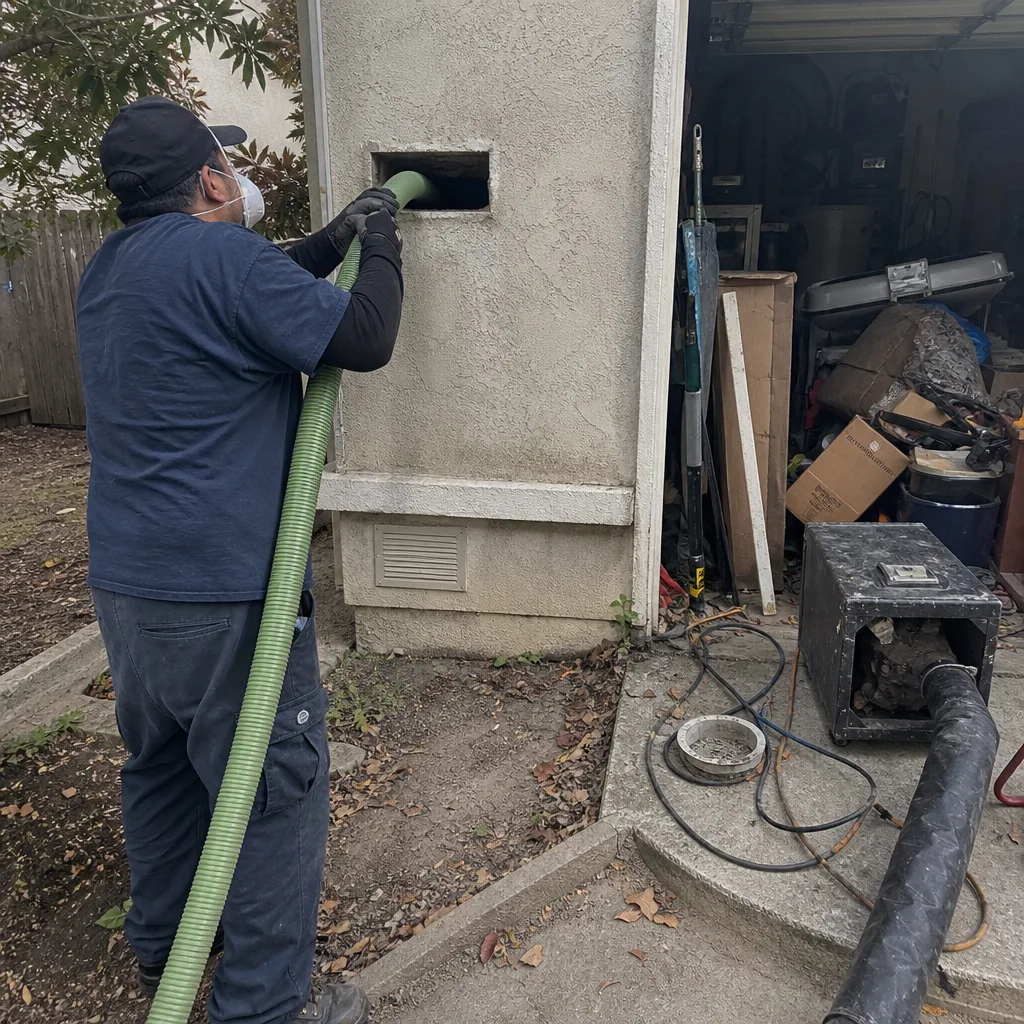
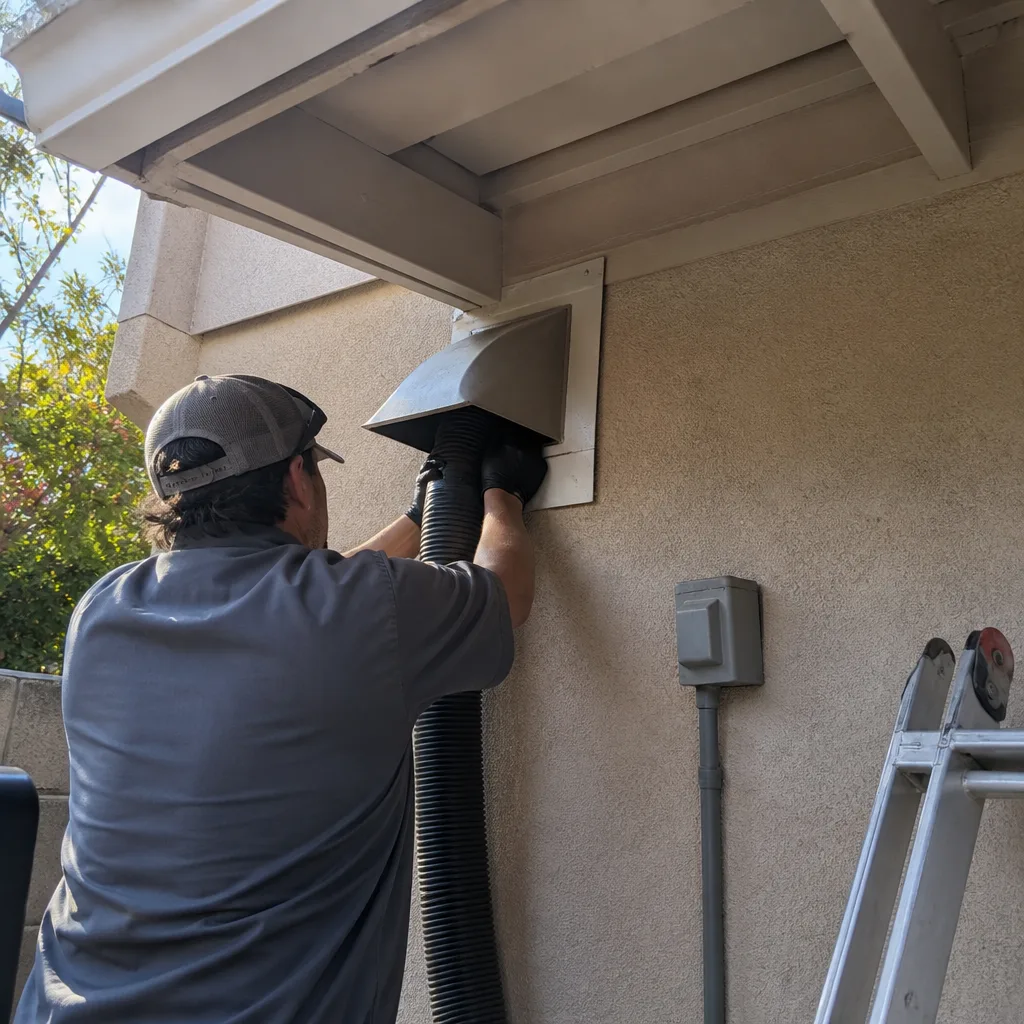
- Confusing air duct cleaning with dryer vent cleaning. These are separate services with separate equipment and separate standards. A duct cleaning brush system is not the right tool for lint removal in a dryer exhaust run. Make sure the contractor does both properly, or hire separately for each. A clogged dryer vent is a house fire hazard before it’s an efficiency problem.
- Ignoring the time commitment. A proper whole-home duct cleaning on an average Oak Park house should take three to five hours with two techs. Anything dramatically shorter means corners were cut. Ask about the expected time window before you book, and treat a “we’ll be in and out in an hour” answer as a red flag.
- Hiring a generalist for a specialist job. The HVAC company that installs a great furnace may not own a single piece of proper duct cleaning equipment. The service menu is long; the tool inventory is not.
- Skipping the repair conversation. Cleaning finds problems. Loose connections, crushed flex, disconnected registers. Some companies clean around these issues and leave them. Ask whether the contractor can diagnose and quote duct repairs on the spot. A company that only cleans and never repairs is leaving performance-killing conditions in place, and you’ll be paying to clean the same system again sooner than you should.
See the difference
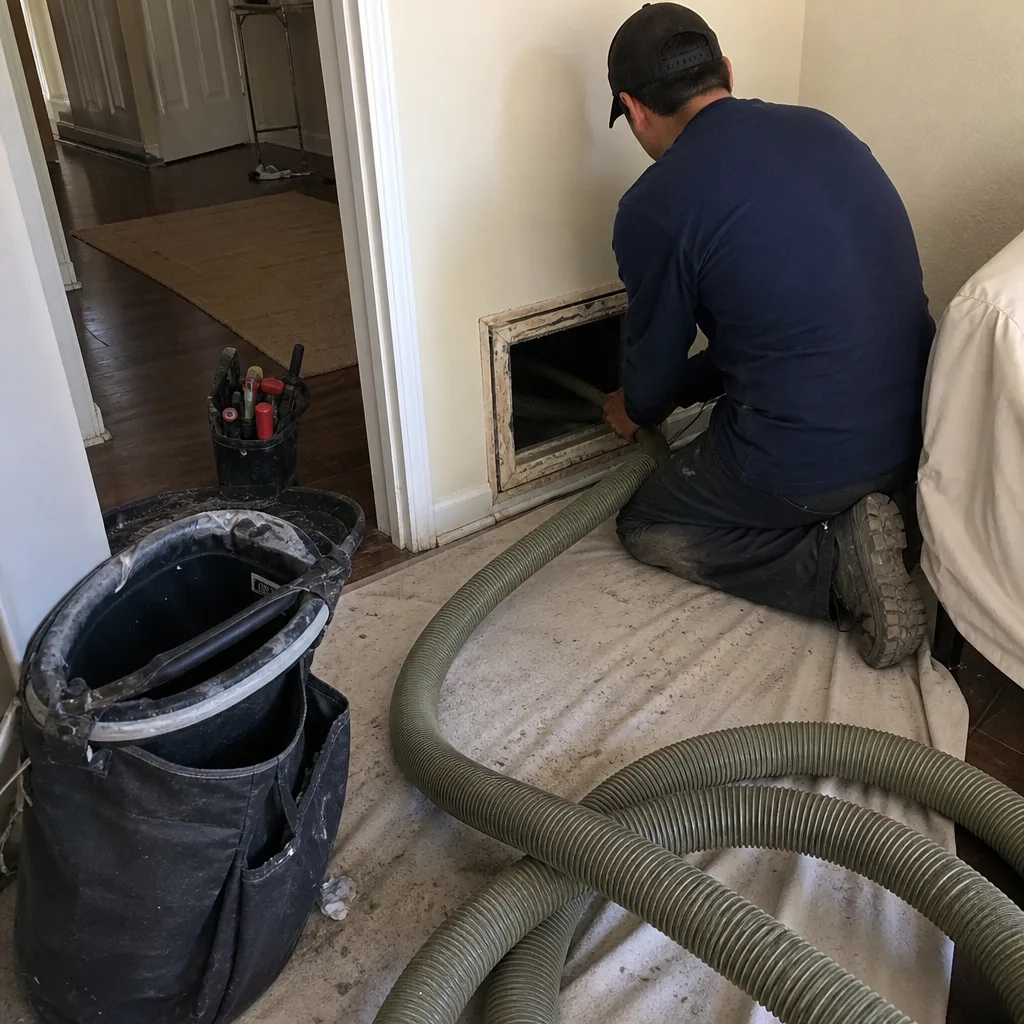 Before
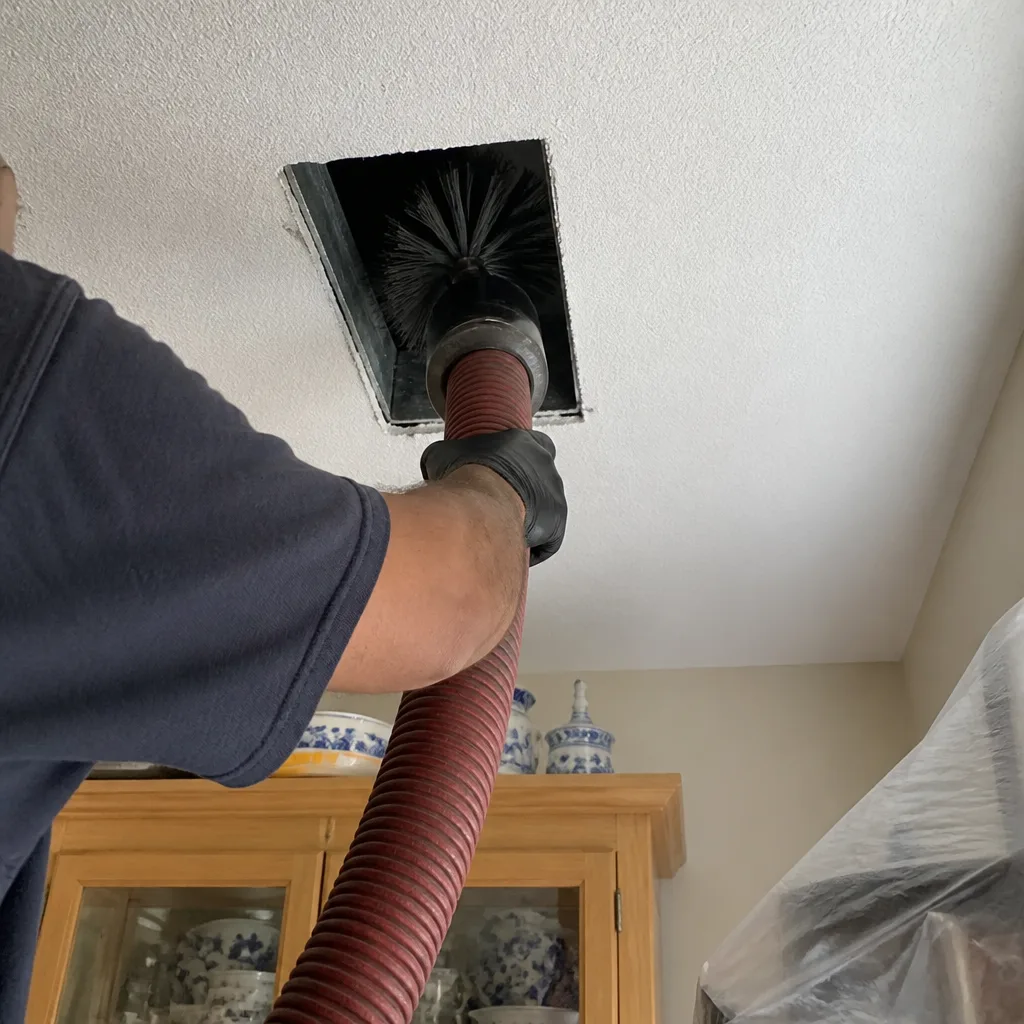 After
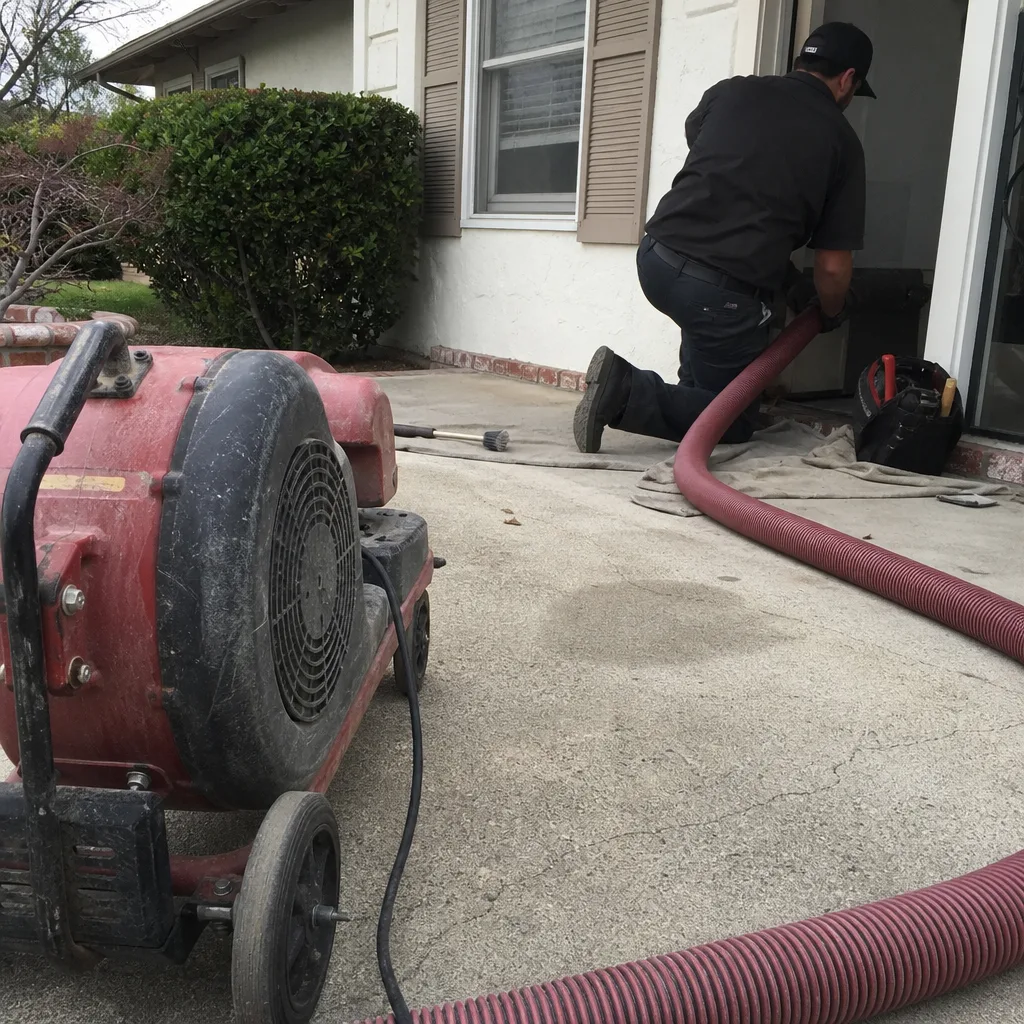 Before
 After
 Before
 After
When to Call a Professional
Some signals are worth acting on quickly. If you can see dust puffing out of registers when the system kicks on, that’s not normal and it’s not minor. If allergies get noticeably worse when the heat or AC runs, the ductwork is distributing an irritant. If you open a register and find gray, fuzzy looking buildup on the register or the visible interior of the duct, that’s accumulated debris being conditioned into your living space. If rooms in your Oak Park home never quite reach the same temperature as the rest of the house, restricted airflow from dirty or damaged ducts is a likely culprit and deserves an inspection. And if your dryer takes 45 minutes to dry a regular load, don’t wait. This is a fire-safety issue, not an inconvenience. The lint accumulating in that exhaust run is highly flammable, and restricted airflow raises dryer operating temperatures every cycle. Duct Cleaning Oak Park offers free estimates in Oak Park. Call (844) 620-0479 and we’ll take a look.
Frequently Asked Questions
The best Oak Park air duct cleaning company is one that names its equipment brands: Rotobrush for brush-contact agitation with simultaneous vacuum, Nikro for negative-air pressure with HEPA filtration, and Abatement Technologies for air scrubbing during service. Duct Cleaning Oak Park runs all three, plus dedicated dryer vent and duct repair services, and every job includes before-and-after documentation. Call (844) 620-0479 to schedule a free estimate.
Air duct cleaning in Oak Park typically ranges from $350 to $700 for a single-family home, depending on square footage, number of returns, accessibility of the duct runs, and whether additional services like dryer vent cleaning or repair work are included. Quotes that come in far below this range are almost certainly not delivering a complete clean with professional-grade equipment. For an exact price on your home, call (844) 620-0479 and we’ll give you a free, specific estimate before any work is scheduled.
Cheap duct cleaning quotes almost always reflect cheap equipment. A contractor running a drill-powered brush and a shop vac can offer $99 or $149 because their cost basis is tiny and the job takes under an hour. The result is incomplete debris removal and sometimes damage to the ductwork from aggressive uncontrolled brushing. Contractors running Rotobrush, Nikro, and Abatement Technologies equipment have a higher cost per job because the equipment investment, labor time, and attention to detail are all meaningfully greater. You’re not paying for the same service at different prices; you’re paying for different services marketed under the same name. Call (844) 620-0479 for a fair quote on a complete clean.
Ask for before-and-after photo or video documentation from inside the ducts. Any equipment-serious contractor can provide this; the camera runs through the same access points the cleaning tools use. Review the images to confirm the duct interior went from coated to clean metal. If a company cannot or will not provide documentation of the duct interior before and after service, treat the job as unverified. Duct Cleaning Oak Park provides documentation on every job as a standard part of the service; see The Complete Air Duct Cleaning Guide for Oak Park Homeowners for more on what to expect.
For most Oak Park homes, air duct cleaning is appropriate every three to five years. Homes with pets, smokers, recent construction or renovation, high seasonal allergies, or residents with respiratory conditions may benefit from cleaning more frequently. If you can see dust buildup inside the ducts or notice dust actively puffing from registers when the system cycles on, the interval doesn’t matter; the ducts need attention now. A post-renovation clean is particularly important in Oak Park’s older homes, where construction debris frequently ends up in the returns. Call (844) 620-0479 for an evaluation.
It depends more on the construction process than the age of the house. New construction and recent renovations leave behind drywall dust, sawdust, paint particles, and other construction debris inside the duct system. That debris is then circulated by the HVAC system the moment it switches on. Oak Park homes built in the last few years with builder-grade duct installation frequently show surprising levels of construction debris inside the returns. A professional cleaning with genuine equipment removes material that the system was literally installed with. If you’ve recently moved into a newly built home and notice fine dust settling on surfaces quickly, duct cleaning is worth considering.
The Bottom Line
The air duct cleaning industry is full of companies offering the same service at wildly different price points. The difference is almost never the marketing copy. It’s the equipment in the van. Rotobrush, Nikro, and Abatement Technologies are the brand names that indicate a contractor has made a real capital investment in professional-grade tools. Without them, the job is a vacuum pass that leaves the worst of the particulate exactly where it was. With them, the job is a measurable improvement in the air you breathe and the efficiency of the system moving it. Ask the three questions. Name the names. Watch how the contractor answers. The right company for your Oak Park home will be the one who can tell you exactly what they run, why they run it, and show it to you when they arrive.
Ready to get your ducts inspected and cleaned with professional-grade equipment? Duct Cleaning Oak Park offers free estimates for air duct cleaning, dryer vent cleaning, and air duct repair throughout Oak Park, CA. Call (844) 620-0479 to schedule your free estimate today.
Written by the team at Duct Cleaning Oak Park, serving Oak Park since 2017. Explore more guides & resources from our team.