
Last updated November 2, 2026
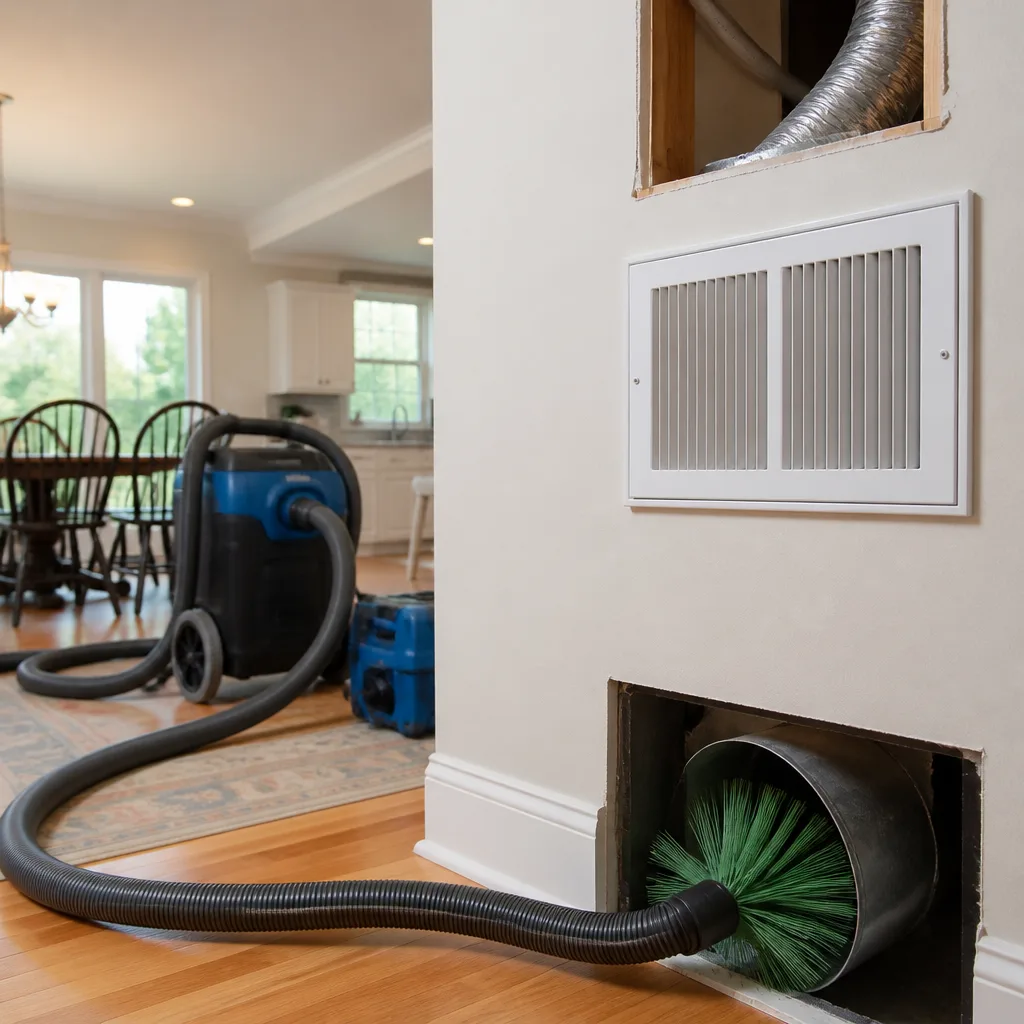 Whole-home duct cleaning
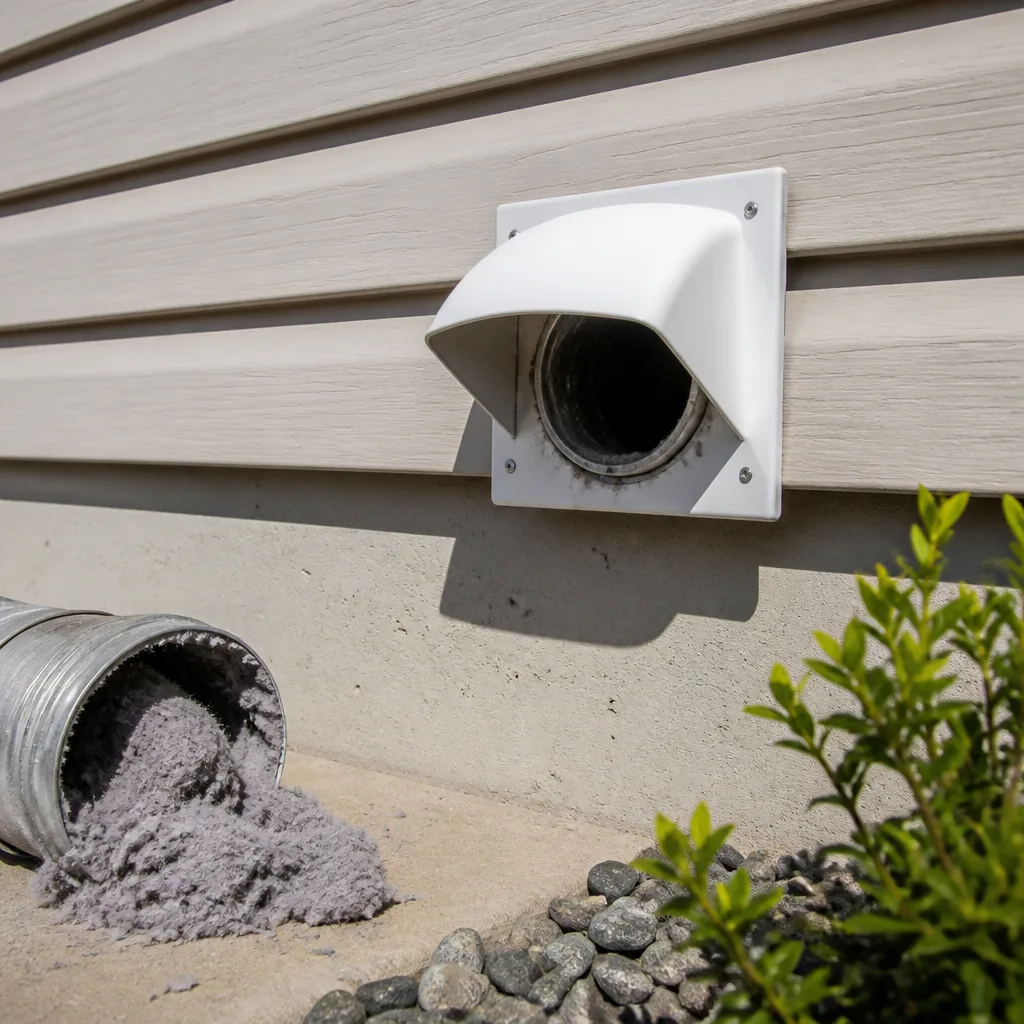 Dryer vent cleaning
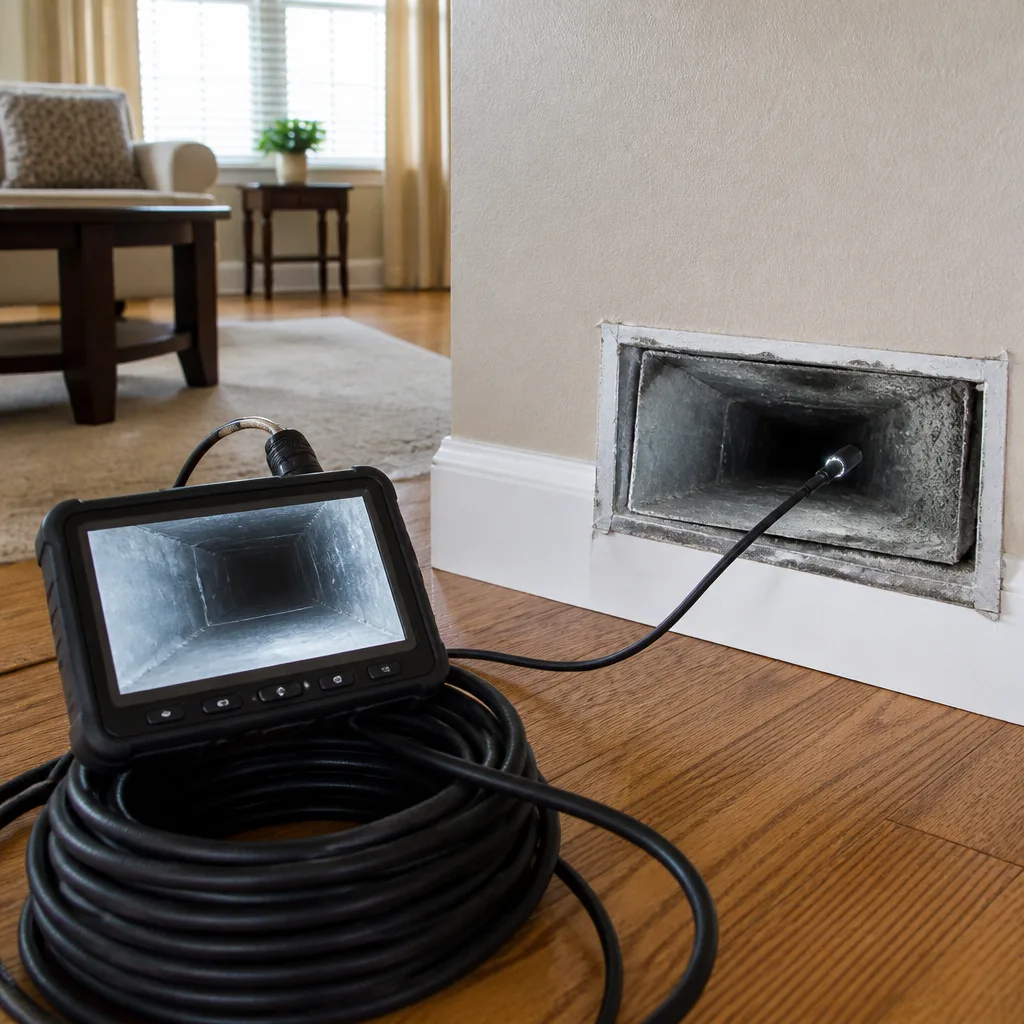 Camera inspection
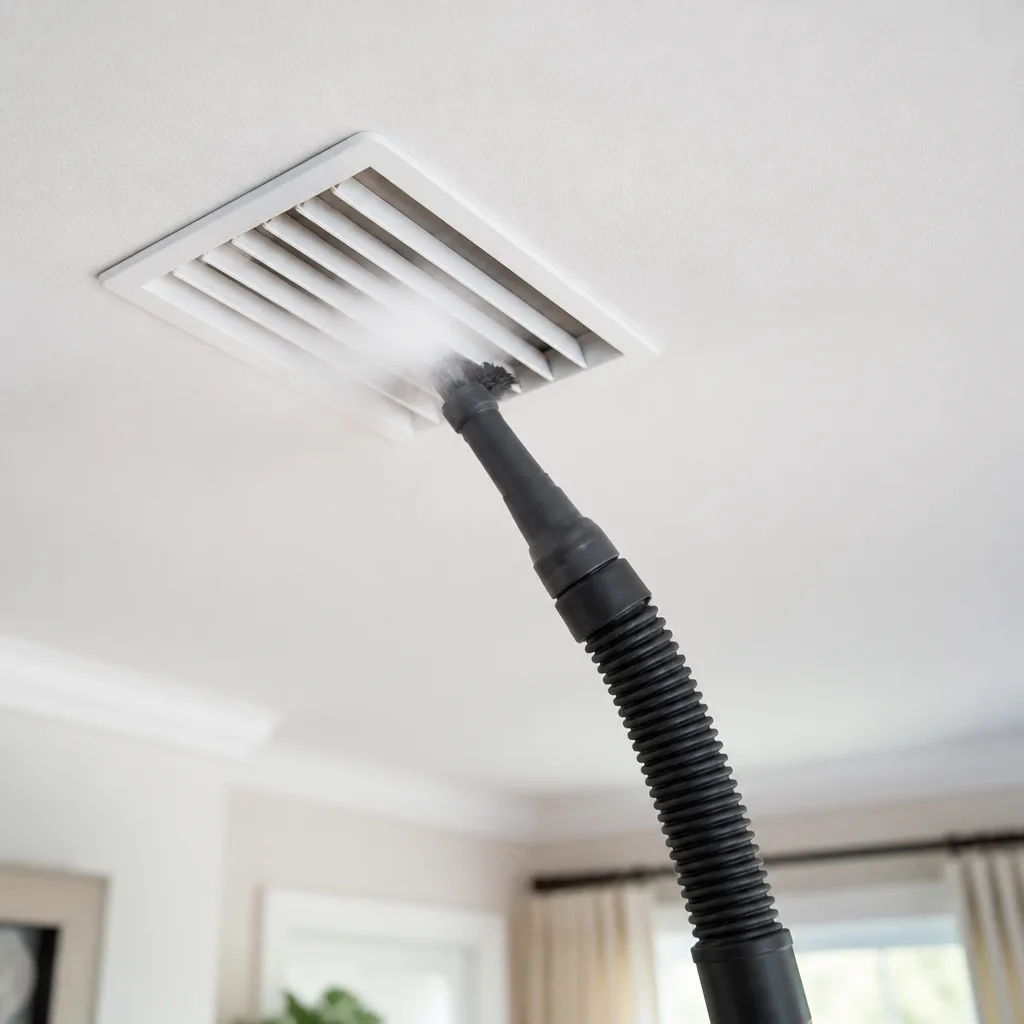 Sanitizing & deodorizing
Whole-system duct and dryer vent check with before-and-after photos - you see exactly what came out of your vents
That "$99 whole-house special" is a bait ad - the real number appears once they are in your hallway, or the "clean" is a shop-vac at the register. We photograph the inside of your ducts before and after instead.
Air Duct Cleaning Cost Breakdown: The Oak Park Homeowner’s Reference for 2026
Here’s a number that should make you pause: in Oak Park, the spread between the cheapest duct cleaning quote and the most expensive one for the same address can exceed $1,000. Not because someone is ripping you off. Usually. It’s because “duct cleaning” is not one service. It’s a spectrum. It can mean a guy with a shop vac and a drill attachment, or a three-person crew running negative-pressure containment with HEPA-filtered air scrubbers. Both will send you an invoice that says “duct cleaning.” One of them actually cleaned your ducts. This guide breaks down exactly what drives cost in the Oak Park market in 2026, so you can read a quote like a contractor instead of a mark.
Quick Answer
Air duct cleaning in Oak Park, CA typically runs $380 to $950 for a whole-home system in a 1,500-2,500 sq ft house as of 2026, with smaller homes starting around $280 and larger or heavily contaminated systems reaching $1,200+. The single biggest cost variable is not square footage. It’s the equipment and containment standard the contractor uses, followed by the number of vents and the level of contamination.
Styles & brands we work with
- Whole-home duct cleaning
- Dryer vent cleaning
- Camera inspection
- Sanitizing & deodorizing
Table of Contents
- The Real Cost Drivers: What Actually Moves the Price
- Why Equipment Quality Changes the Price, Not Just the Result
- 2026 Line-Item Pricing for Oak Park Homes
- Add-Ons Decoded: What’s Worth It and What’s an Upsell
- Red Flags in Low Quotes: What Gets Skipped at $199
- How to Get Comparable Quotes: The Information Contractors Need
- Oak Park-Specific Notes: Climate, Age, and Construction
- Common Mistakes to Avoid
- When to Call a Professional
- Frequently Asked Questions
- The Bottom Line
The Real Cost Drivers: What Actually Moves the Price
Before we talk numbers, let’s kill the idea that square footage alone determines duct cleaning cost. It doesn’t. A 2,000 sq ft ranch with a crawlspace and 14 vents can cost more than a 2,400 sq ft two-story with 10 vents, because the crew is working on their backs in a 30-inch crawlspace threading a rotating brush through 40 feet of trunk line. Here’s what actually moves the number.
Number of Vents (Supply and Return)
Every vent is an access point. Every access point takes time. A supply vent means pulling a register, running a brush or air whip down that branch line, and sealing it back up. A return vent is often a larger opening but a dirtier run, especially in older Oak Park homes where returns were run through wall cavities rather than dedicated ducts. The industry standard assumption is 10-12 vents for a typical 3-bedroom home, but we’ve worked on 1940s Oak Park bungalows with 16 supply registers and only two returns. Every extra vent adds $15 to $35 to the job, depending on how the ducting was installed.
Duct Material and Configuration
Flexible duct is the cheapest to clean. It’s smooth-walled, relatively forgiving, and a rotary brush moves through it without much resistance. Rigid sheet metal is also straightforward, though it can hold more caked-on debris in corners and seams. The expensive configuration is duct board, which was common in Sacramento-area construction from the 1970s through the early 1990s. Duct board has a fibrous interior surface that grabs dust and can be damaged by aggressive brushing. We clean it at lower agitation and rely more on negative air pressure and air whips, which means more time per linear foot. If your Oak Park home has original duct board, expect to be quoted at the upper end of any range.
Access Difficulty
Oak Park’s housing stock is a mix of 1920s-1940s single-story homes, postwar ranchers, and some mid-century split-levels. The older the home, the weirder the access. Attics with blown-in insulation that needs to be carefully moved. Crawlspaces with 24 inches of clearance. Closets that were never meant to house a furnace. If a tech has to spend 45 minutes clearing a path or removing sections of duct to reach the trunk line, that labor is on the invoice. Some companies charge an “access fee” of $50 to $150. We prefer to just quote the actual job honestly up front rather than surprising anyone.
Contamination Level
This is the one cost driver that’s entirely fair and entirely unpredictable until the system is opened. A home with a smoker, three cats, and 20-year-old carpet is not going to clean at the same speed as a newly built house with a MERV 13 filter that’s been changed faithfully. The labor difference often shows up as a “heavy contamination” surcharge, which we justify by the simple fact that the crew has to make more passes, change collection bags more often, and clean the cleaning equipment itself between rooms. For most Oak Park homes, contamination is the difference between a $425 job and a $650 job.
Why Equipment Quality Changes the Price, Not Just the Result
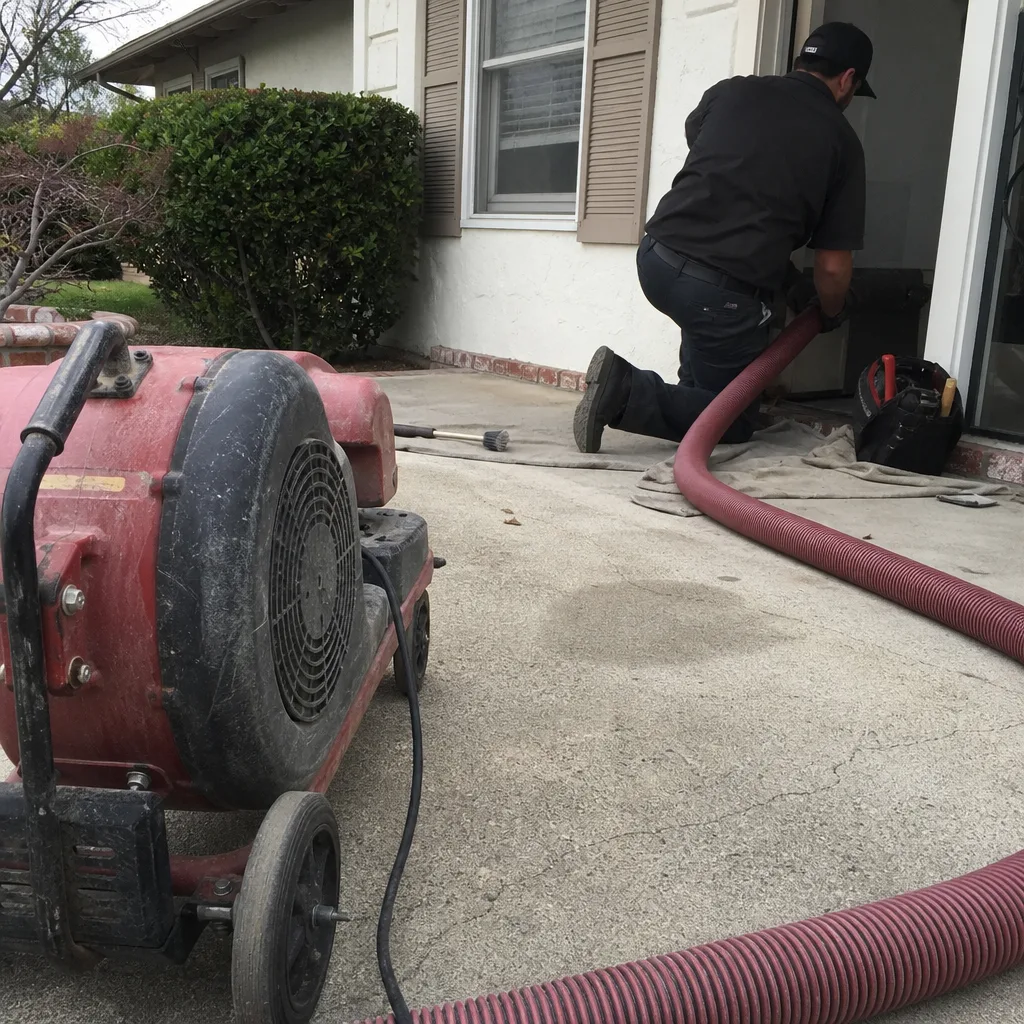
Here’s the part most pricing guides skip, because it’s uncomfortable. The same duct system in the same house will be quoted at different price points by different companies because their equipment costs are radically different. A truck-mount vacuum with a 6-inch hose and a spinning brush costs a contractor maybe $10,000 and runs on the truck’s motor. A Nikro negative-air machine, a Rotobrush rotary brush system, and Abatement Technologies containment and air-scrubbing setup represents well over $50,000 in equipment, and the operator has to know how to use all of it properly. Those costs are real, and they show up in the quote.
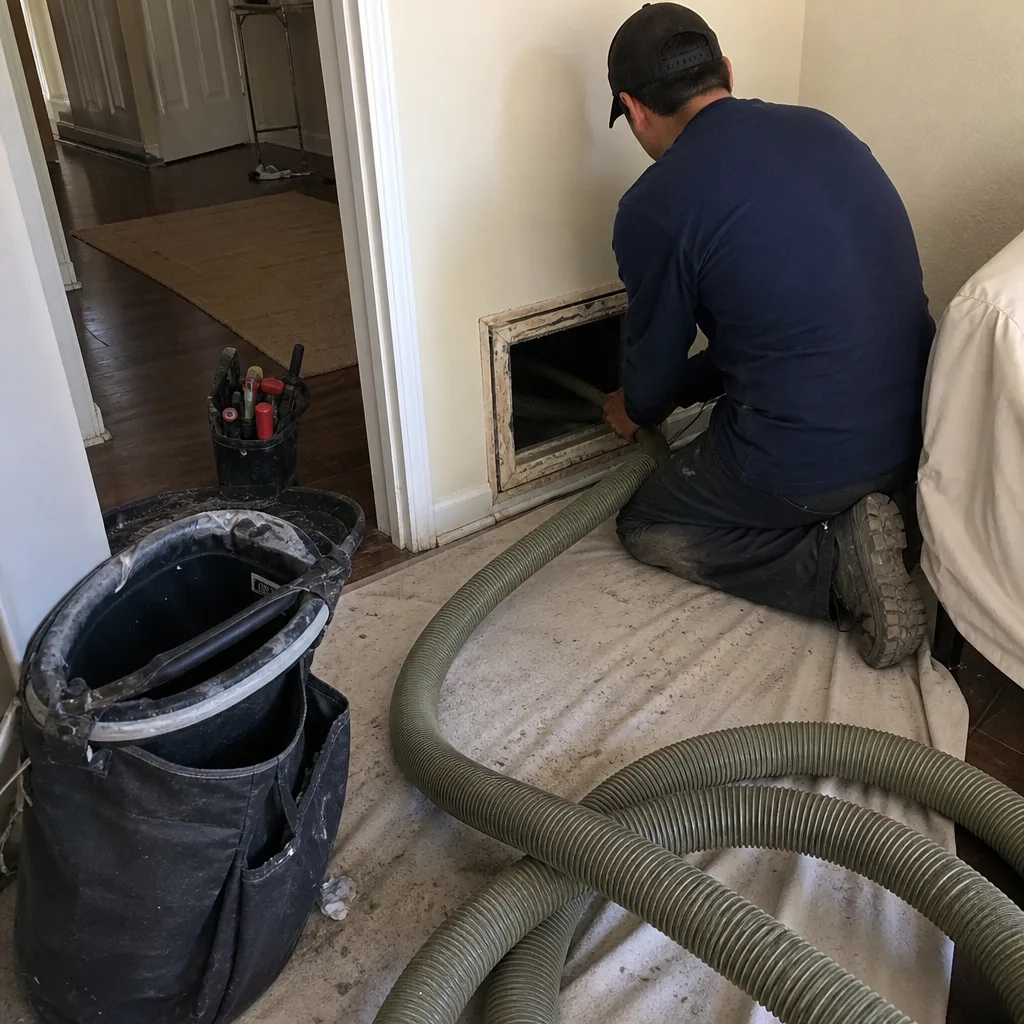
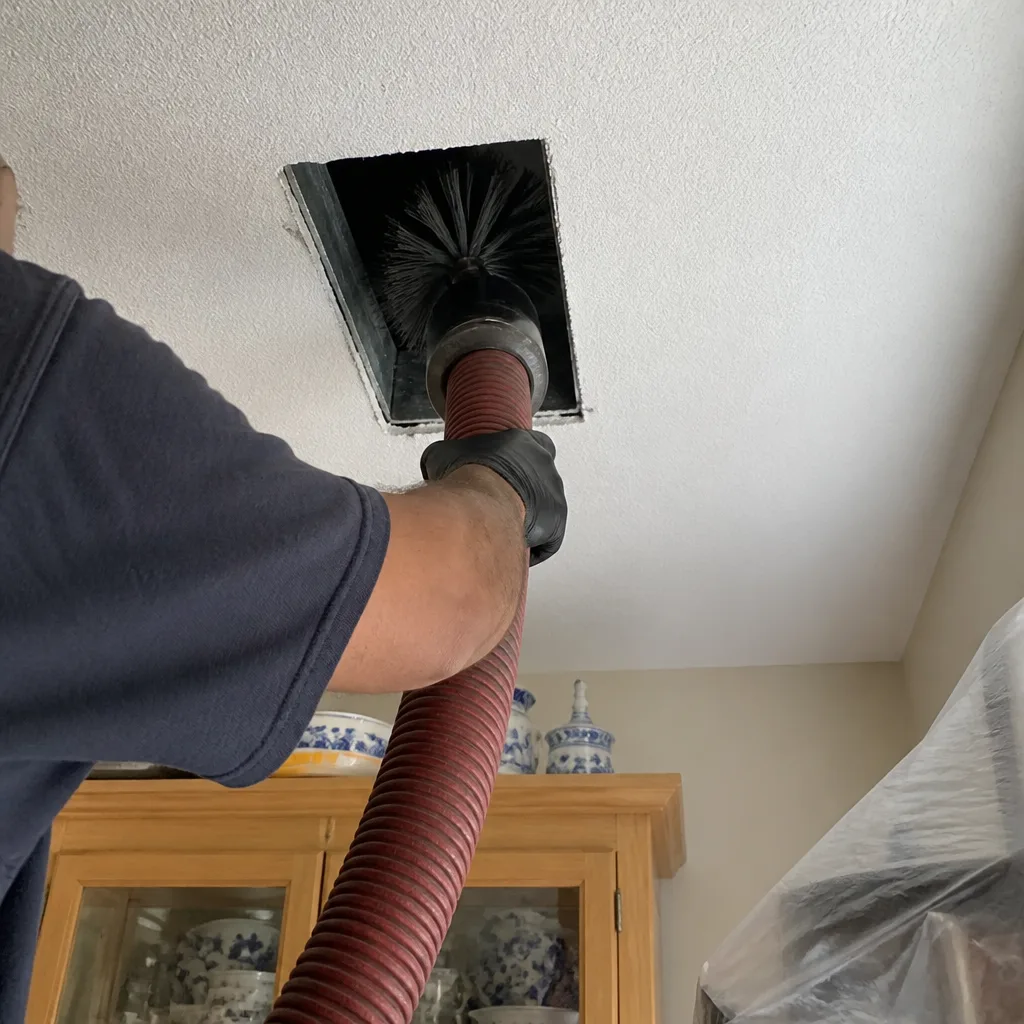
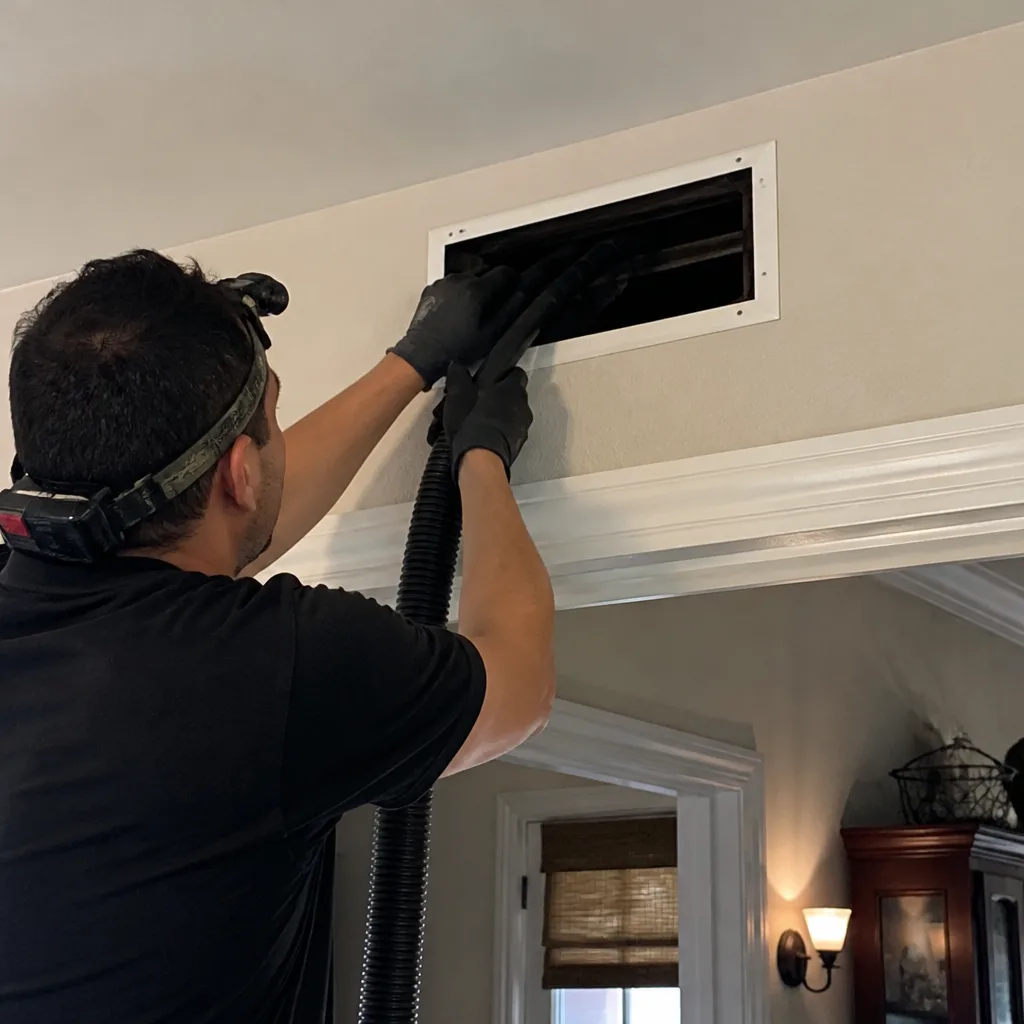
What does the higher-end equipment actually buy you? Proper negative pressure. When we set up Nikro-powered suction at the furnace and seal the rest of the system, we’ve created a controlled pull through every branch as we work it. Dust doesn’t get an opportunity to drift into the living room, because the entire system is under vacuum. Add Abatement Technologies air scrubbers running in the space, and you’re capturing the fine particulate that gets stirred up when registers are pulled and ducts are disturbed. That’s not fancy language. That’s the difference between cleaning the ducts and moving the dust around your house.
Low-bid operators don’t run this setup because they can’t afford it and their clients can’t tell the difference until three days after the job, when the dust has resettled on the furniture. The price difference isn’t markup for its own sake. It’s the cost of a service that actually contains what it dislodges.
We run Duct Cleaning Oak Park home service calls with the same protocol regardless of house size: negative pressure first, agitation second, containment always. It costs more to run than a shop-vac setup. We think that’s the point.
2026 Line-Item Pricing for Oak Park Homes
What follows are honest ranges based on what we’ve seen across Oak Park, Curtis Park, and the surrounding Sacramento market in 2025 and early 2026. These are whole-system prices, not teaser numbers. If a company advertises a per-vent price, read the section on red flags before you book.
| Scope | Typical Range (2026) | What Moves It |
|---|---|---|
| Apartment or condo (up to 6 vents) | $250 – $400 | Shared plenum access, building rules |
| Small home, 800-1,200 sq ft (8-10 vents) | $300 – $500 | Crawlspace vs attic access |
| Mid-size home, 1,200-2,000 sq ft (10-14 vents) | $400 – $700 | Duct material, contamination, number of furnaces |
| Large home, 2,000-3,000 sq ft (14-18 vents) | $550 – $900 | Two-story runs, multiple returns, hard access |
| Very large or dual-system home, 3,000+ sq ft | $800 – $1,400 | Two HVAC systems, extensive trunk lines |
| Heavy contamination surcharge | $100 – $300 added | Smokers, pets, renovation dust, never-cleaned systems |
| Dryer vent cleaning (standalone or add-on) | $90 – $180 | Vent length, roof vs wall termination |
| Sanitizing fog or antimicrobial treatment | $150 – $400 | Product used, system size |
These ranges assume a licensed contractor with professional equipment. If your quote comes in significantly below the floor for your home size, go read the red flags section. If it comes in well above the ceiling, ask for a line-item explanation of what’s driving the extra cost. Both directions deserve scrutiny.
One more thing. Some Oak Park homes have a separate return air plenum that was converted from an old floor furnace duct when central HVAC was added. Those conversions create tight, oddly-angled returns that are genuinely time-consuming to clean. If your 1930s bungalow has been retrofitted, tell the contractor up front and expect the number to land on the higher side of your size bracket. That’s not padding. That’s the real labor.
Add-Ons Decoded: What’s Worth It and What’s an Upsell
Duct cleaning companies make their margin on add-ons. The base job keeps the lights on; the sanitizing fog and the UV lamp pay for the owner’s truck. Some add-ons are legitimate services with measurable benefits. Some are theater. Here’s the honest breakdown.
Dryer Vent Cleaning: Almost Always Worth It
This is not a luxury add-on. Lint-clogged dryer vents are a documented fire cause, and the U.S. Fire Administration attributes roughly 2,900 home dryer fires a year to them. Cleaning the duct system while leaving a packed dryer vent is like detailing the car and skipping the brakes because it wasn’t in the package. We run Dryer Vent Cleaning in Oak Park as a standalone service for exactly this reason, and we recommend it alongside any duct job where the vent hasn’t been cleaned in the last two years. At $90 to $180, it’s the cheapest fire insurance you can buy.
Sanitizing Fog / Antimicrobial Treatment: Sometimes Worth It
A fogging treatment runs a fine mist of an EPA-registered antimicrobial through the duct system to kill mold spores, bacteria, and odor-causing organisms. If your ducts have never been cleaned and you’ve got 40 years of accumulated biological material in there, or if you’ve had a water event in the system, a fog treatment after mechanical cleaning has real value. If a company pitches it as a mandatory add-on for a clean, dry system, politely decline. Clean ducts in a dry California climate don’t need to be fogged. The mechanical cleaning already removed the substrate that organisms need.
UV Lamps: Usually Not Needed
In-duct UV lamps do what they say: they sterilize air passing directly over the lamp. That’s useful in a humid climate where the evaporator coil stays wet and grows mold. Oak Park’s summer humidity rarely sustains coil mold for long, and most Sacramento-area HVAC systems dry out between cycles. If a technician opens your blower compartment and shows you visible biological growth, that’s a different conversation. As a routine upsell, pass. UV lamps cost $500 to $1,200 installed and need yearly bulb replacement at $100 to $300. The ROI is marginal for most homes in this climate.
Air Filter Upgrades: Good Knowledge, Not a Sales Gimmick
A good contractor will tell you what filter your system currently uses and whether a higher-MERV option is compatible. We work with Honeywell and Aprilaire media cabinets regularly enough to know that a 4-inch media filter is often a legitimate upgrade over a 1-inch spun fiberglass filter, not just because it cleans better but because it protects the evaporator coil. That said, the right time to discuss that is during a duct cleaning, when we can see the condition of the blower and coil. It should never feel like a pitch. If it does, it probably is.
Red Flags in Low Quotes: What Gets Skipped at $199
Every Oak Park mailbox gets the postcard: “Whole house duct cleaning, $199, this week only.” That price is possible. But it is not possible for the job described in this guide. Here’s what that $199 buys you and what it doesn’t.
- The “clean” takes 45 minutes. A proper negative-pressure cleaning of a 1,500 sq ft home with 12 vents takes 3 to 5 hours including setup and breakdown. At $199, no company can afford three hours of labor, equipment amortization, and disposal fees.
- Returns are skipped or speed-brushed. Returns are dirtier and harder to access than supplies. Low-bid crews often hit the visible supply registers and give the returns a quick once-over, leaving the dirtiest part of your system untouched.
- No negative pressure, no containment. They push a spinning brush down the duct, which dislodges dust, and then run a small vacuum at the register. Without negative pressure at the plenum and containment in the living space, that dislodged dust migrates out of the registers and into the air.
- The equipment is not designed for the task. You will see a shop-vac with a long hose attachment and a drill-powered brush. That equipment cannot create the airflow velocity needed to pull debris from 30 feet of branch line, let alone the trunk.
- Bait-and-switch at the door. This is the oldest game in the industry. The $199 price gets the tech in your home. Ninety minutes later, you’re looking at a $1,100 quote for “necessary additional services” like coil cleaning, sanitizing, and duct repair, with a high-pressure close. The $199 was never real.
- No before-and-after photos. A legitimate contractor documents the job. If the company cannot or will not show you before-and-after photos of your actual ducts, you have no way to verify the work was done at all. We photograph the supply plenum, the returns, and the trunk line before and after on every job, because it’s the only honest way to prove the result.
The defensible rule: if the quote is less than half of what a professional-equipment company quotes, the service is not the same service. You’re not paying for the same thing and getting a deal. You’re paying for less work and getting less.
See the difference
 Before
 After
 Before
 After
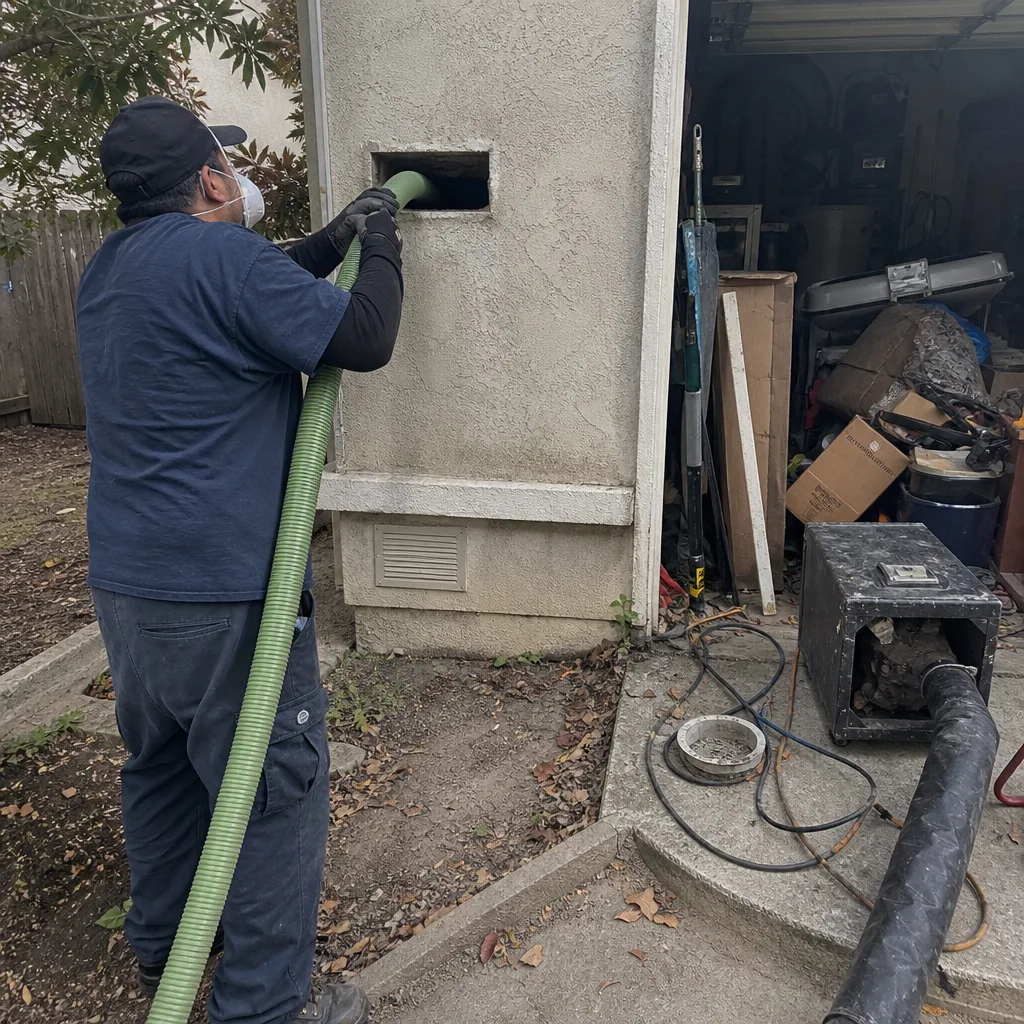 Before
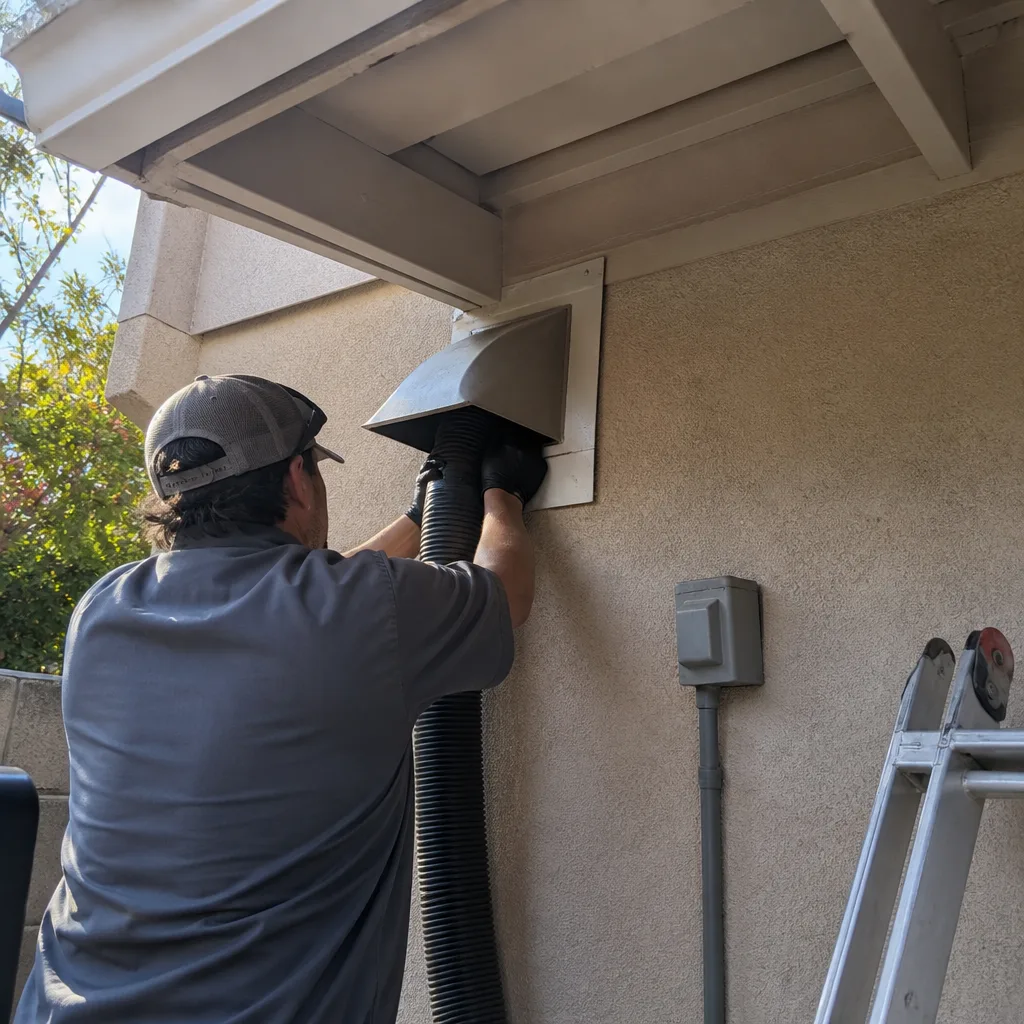 After
How to Get Comparable Quotes: The Information Contractors Need
The most common phone call we get starts with “How much does duct cleaning cost?” and the honest answer is “It depends on about seven things, and I need to know five of them before I can give you a real number.” If you call three companies and give each one different information, you will get three non-comparable quotes. Here’s the information to have ready so every contractor is bidding the same scope.
- Square footage of conditioned space. This isn’t the whole picture, but it’s the starting metric every estimator uses.
- Number of supply registers and return grilles. Count them. Walk the house and count every vent you can see, plus the large return grilles, which are usually located in hallways or central common areas. If you have zoned HVAC with dampers, mention that too.
- Duct material and location, if you know it. “Flexible duct in the attic” or “rigid metal under the crawlspace” or “duckboard from the 1980s, I think” is useful. If you don’t know, say so. A contractor who asks is already more serious than one who doesn’t.
- Age of the home and any recent work. A 1950s home that had its ducts replaced in 2016 is a very different job than an original-system 1950s home. If you’ve had renovation work done, especially anything that generated drywall dust, disclose it. Renovation dust is one of the worst contaminants in a duct system and it changes the labor estimate.
- Whether you’ve ever had the ducts cleaned. If the answer is “never” or “not in the 20 years I’ve owned the home,” say so plainly. That tells the contractor to expect heavier contamination and quote accordingly, rather than discovering it on-site and issuing a change order.
- The type of dryer vent setup. If you want the dryer vent done as part of the job, know where it terminates: roof, wall, or crawlspace. Roof terminations are more involved and take longer.
Give every company the exact same list. If they quote numbers more than 30 percent apart, ask the higher one what they include that the lower one doesn’t, and ask the lower one how they achieve that number. The answers will be revealing.
Oak Park-Specific Notes: Climate, Age, and Construction
Oak Park has a few characteristics that affect duct cleaning cost and scheduling more than most pricing guides admit. It’s worth knowing them before you start calling for quotes.
Older housing stock. The neighborhood’s core residential areas were built between 1910 and 1950, with a second wave of construction in the 1960s and 70s. Many of these homes have had HVAC retrofits, meaning the duct layout was adapted to a structure that wasn’t designed for central air. Adaptations mean irregular duct shapes, sharp 90-degree bends where a gradual elbow should be, and returns that were routed through things that were never meant to be ducts. These systems take longer to clean properly. A 1930s two-bedroom in Oak Park can bill at the same rate as a 1990s three-bedroom in Elk Grove because the access is older and the ducting is weirder.
The dust profile. Sacramento’s summer heat and the surrounding Central Valley agriculture produce fine particulate dust that runs through HVAC systems more than most residents realize. Add to that the fact that many older Oak Park homes have original-era duct insulation breaking down inside the runs, and you get a specific kind of debris: fine brownish dust mixed with fibrous material. It’s not hazardous, but it is heavier per cubic foot than the dust in a newer suburban tract home, and it means the collection bags fill faster and need changing more often during a cleaning.
Crawlspace terrain. A significant portion of Oak Park homes are pier-and-beam construction with crawlspace access to the duct runs. In the summer, those crawlspaces are dry, dusty, and fine to work in. In the winter, after rain, they can hold moisture and become uncomfortable or unsafe for equipment crews. If you’re scheduling a duct cleaning for winter months, be aware that an outdoor-access crawlspace job may get rescheduled if the ground is saturated. A good contractor won’t send a tech into standing water, and the delay is about safety, not laziness.
These conditions also explain why Air Duct Cleaning in Oak Park doesn’t work on a fixed flat-rate schedule the way some national franchises do. The home-to-home variation is too wide to flatten into one price.
Common Mistakes to Avoid
- Choosing the cheapest quote and assuming all duct cleaning is the same service. It is not. The equipment and process differences described above are not marketing language. The $199 postcard is for a different activity than what we do. Identify what’s actually being sold before comparing prices.
- Waiting for visible dust or an allergy flare-up before cleaning. Duct contamination builds gradually. If you wait until you can see black streaks around your registers or your allergies are unmanageable, the job is going to be more work and cost more than if it had been done five years prior. Schedule by time, not by symptom.
- Replacing an HVAC system without cleaning the ducts first. If you’re putting a new furnace and coil on an old duct system, you’re blowing treated air through ten years of accumulated debris. Get the ducts cleaned before the new equipment is commissioned, or on the same day if the HVAC contractor will coordinate.
- Believing that a higher-MERV filter makes duct cleaning unnecessary. Filtration and cleaning are different functions. A good filter reduces what enters the return air, but the duct surface area accumulates debris over years regardless. Duct cleaning addresses what’s already in the system; filtration addresses what’s trying to get in.
- Not verifying that the company actually did the work. Demand before-and-after photos. If they can’t provide them, you have no objective evidence the ducts were cleaned. We photograph every job because we want the homeowner to see the same evidence we do.
- Ignoring the dryer vent because the duct cleaning quote didn’t include it. The dryer vent is a fire-safety issue, not a secondary consideration. If your vent hasn’t been cleaned in recent memory, add it to the scope or schedule it separately. It is not a device to be cleaned by the duct crew as a courtesy.
- Assuming a home warranty or utility rebate covers the real cost of proper duct cleaning. Most home warranty duct cleaning allowances are structured around the lowest-bid model. If you use a warranty benefit, understand what you’re getting: a basic pass, not a full negative-pressure cleaning. Paying the difference for a proper job is often the right call, but know what you’re paying for.
When to Call a Professional
You should call for a professional duct inspection and cleaning estimate if you’ve owned your home for more than five years and have never had the ducts cleaned, or if you’ve recently completed renovation work that generated drywall or plaster dust, or if you can see dust accumulations around your registers that return within days of dusting the room. Also call if you’ve bought an older home and the inspection noted the ducts but you don’t have records of their condition, or if a family member has developed persistent respiratory symptoms that improve when they leave the house. These are not vague wellness signals; they are objective indicators that your duct system is either directly contributing to poor indoor air or has accumulated enough material to warrant a professional assessment. Duct Cleaning Oak Park offers free estimates in Oak Park. Call (844) 620-0479 and we’ll send someone out to look at your system and give you a real number.
Frequently Asked Questions
Expect to pay $380 to $950 for a whole-home duct cleaning in Oak Park in 2026, with most mid-sized homes landing between $450 and $650. The final number depends on the number of vents, duct material, access difficulty, and how heavily contaminated the system is. Call (844) 620-0479 for an exact quote. Estimates are free.
Because the service being sold is not the same. Low-cost operators typically use truck-mount vacuums or shop-vac-level equipment without negative-pressure containment, skip returns or clean them superficially, and complete a job in under an hour that takes a proper crew three to five. The lower quote reflects less labor, less equipment, and less actual cleaning. Call (844) 620-0479 for an exact quote. Estimates are free.
Ask for before-and-after photos of the supply plenum, return ducts, and trunk line. A legitimate contractor documents the job and provides these photos as standard practice. If the company cannot or will not provide visual evidence, walk away and call a contractor who will. Call (844) 620-0479 for an exact quote. Estimates are free.
Every 5 to 7 years for most Oak Park homes, more often if you have heavy shedding pets, a smoker in the house, recent renovation work, or a household member with severe allergies or asthma. Also clean after any major construction or if you move into an older home with no service records. Call (844) 620-0479 for an exact quote. Estimates are free.
Done properly with professional equipment, duct cleaning removes real accumulated debris that contributes to dust accumulation, odors, and reduced airflow. Done improperly, it dislodges dust into your living space and does little to the system. The variable is not the concept. It’s the contractor and the equipment. If you want to know what the actual condition of your ducts is, schedule a professional assessment. Call (844) 620-0479 for an exact quote. Estimates are free.
Not necessarily. Some companies bundle them; others, including ours, treat them as separate services because they use different access methods and equipment. We offer standalone Dryer Vent Cleaning in Oak Park service because dryer vent maintenance is a fire-safety issue, not a courtesy add-on. Ask any contractor you’re considering whether the dryer vent is included in their quoted price or billed separately. Call (844) 620-0479 for an exact quote. Estimates are free.
The Bottom Line
Duct cleaning cost in Oak Park in 2026 is a product of three things: the actual condition of your duct system, the equipment and containment standard of the contractor, and the time required to do the job honestly. Cheap quotes are cheap because they skip something, usually the time. Expensive quotes are worth questioning if they can’t justify the line items. The right number is the one that reflects a real cleaning with negative pressure, real agitation, real containment, and photographic proof. In a neighborhood with the housing stock and dust profile Oak Park has, that usually means $450 to $650 for a typical home. If you want a real number rooted in what your specific system actually needs, schedule an assessment. And if you need duct repair rather than cleaning, we do that too.
Written by the team at Duct Cleaning Oak Park, serving Oak Park since 2017.