
Last updated November 2, 2026
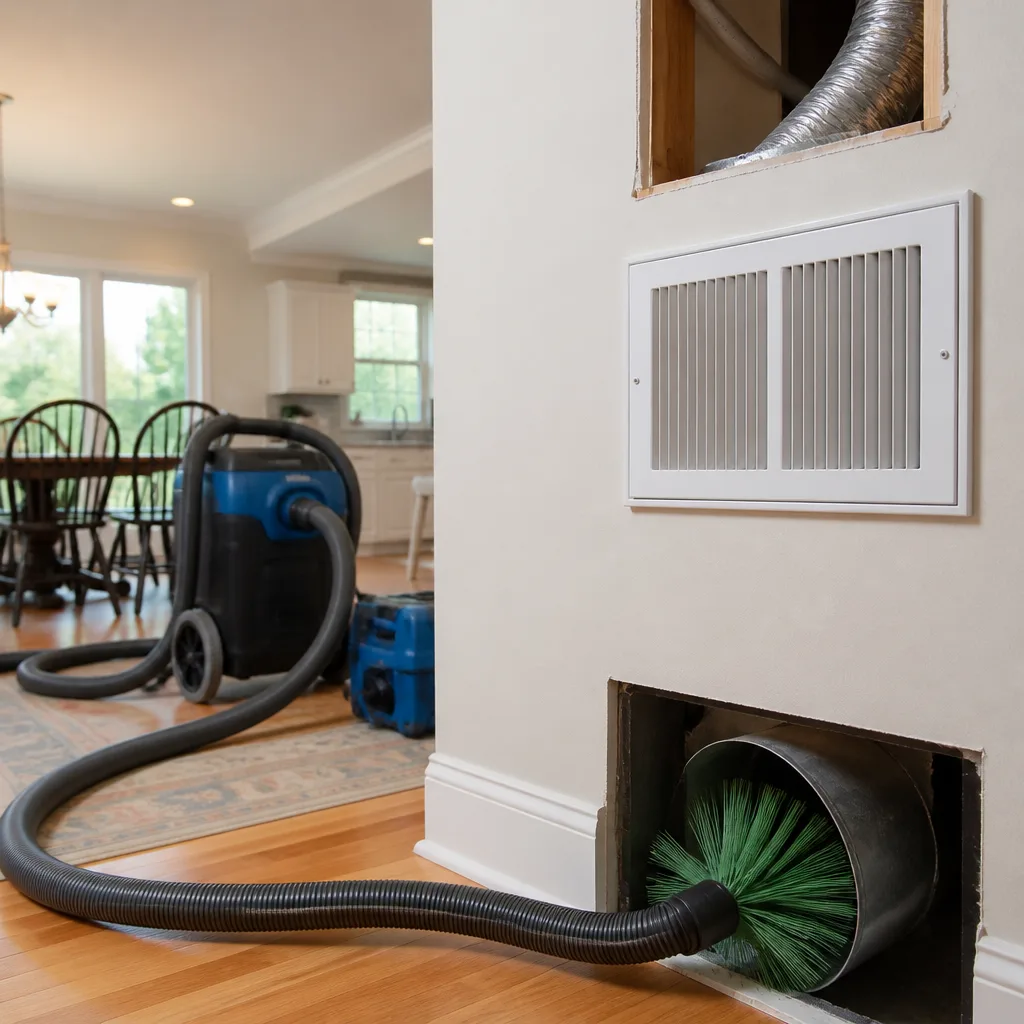 Whole-home duct cleaning
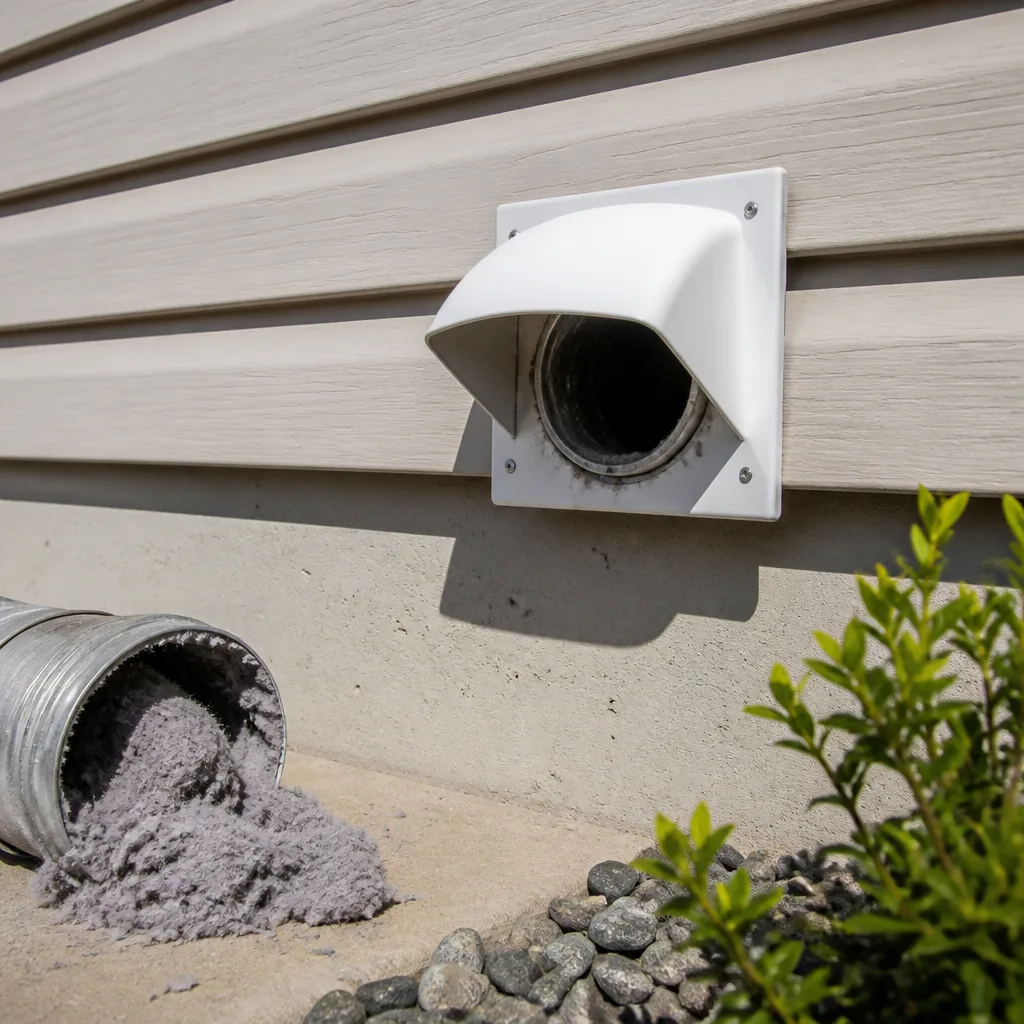 Dryer vent cleaning
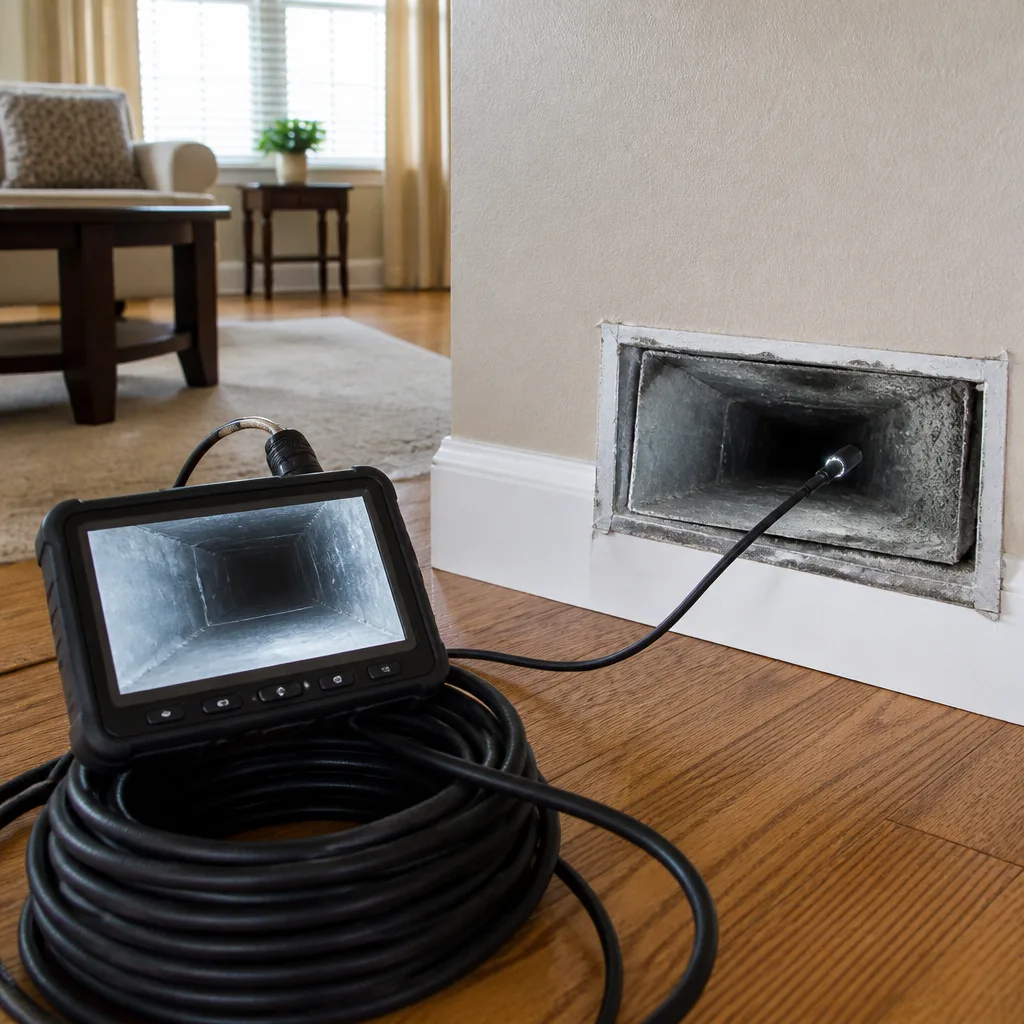 Camera inspection
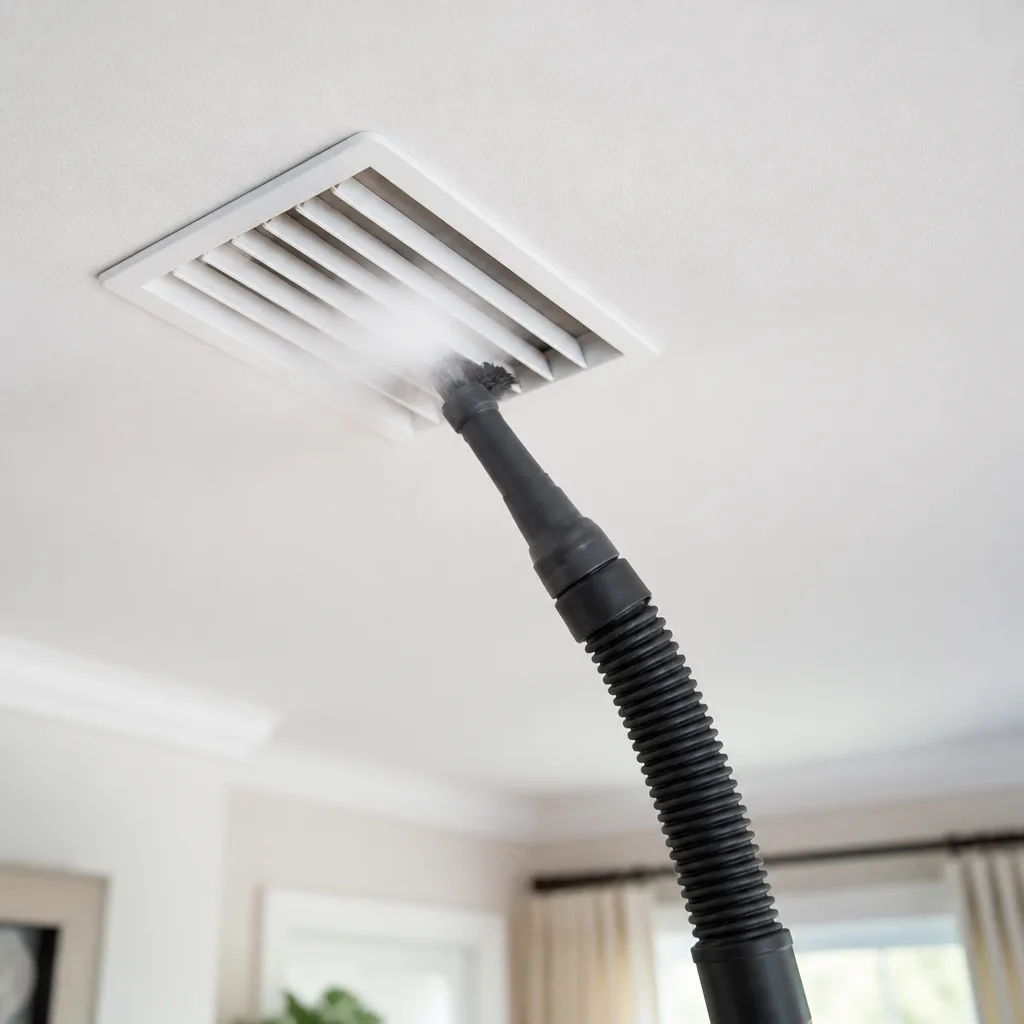 Sanitizing & deodorizing
Whole-system duct and dryer vent check with before-and-after photos - you see exactly what came out of your vents
That "$99 whole-house special" is a bait ad - the real number appears once they are in your hallway, or the "clean" is a shop-vac at the register. We photograph the inside of your ducts before and after instead.
Air Duct Cleaning Maintenance Checklist for Oak Park Homeowners
The filter slot is the most honest reporter in your HVAC system. What you find stuck to it, and when you find it, tells you more about your duct health than any salesperson’s inspection. Oak Park homeowners deal with a specific set of airborne contaminants: fine gray ash from Ventura County brushfires, dust from the 101 corridor, and the persistent grit that comes with living in a canyon-adjacent community. This guide gives you a month-by-month system for reading those signals, knowing what to document, and understanding exactly when a finding on your checklist means it’s time to call a professional with real equipment rather than ignore it for another season.
Styles & brands we work with
- Whole-home duct cleaning
- Dryer vent cleaning
- Camera inspection
- Sanitizing & deodorizing
Quick Answer
An air duct cleaning maintenance checklist for Oak Park homeowners should follow a seasonal rhythm: inspect your filter monthly during Santa Ana wind season and wildfire months, document what you find (ash, fiber, biological growth), check supply registers and return grilles every 60 to 90 days, and schedule professional Air Duct Cleaning every 3 to 5 years, or sooner if you see visible dust accumulation on register covers or notice declining airflow. The single most important habit is photographing your filter before replacing it, because the contamination pattern on a filter is a diagnostic tool that tells you whether you’re dealing with outdoor particulate, construction debris, or something growing inside the system.
Table of Contents
- Oak Park Seasonal Maintenance Calendar
- How to Read Your Filter Like a Diagnostic Tool
- Register and Grille Inspection: What Homeowners Can Do Themselves
- What to Document Between Professional Cleanings
- When Checklist Findings Should Escalate to a Professional Call
- Why the Equipment Used Matters More Than the Checklist Itself
- Common Mistakes to Avoid
- When to Call a Professional
- Frequently Asked Questions
- The Bottom Line
Oak Park Seasonal Maintenance Calendar
Oak Park’s climate doesn’t follow the gentle four-season pattern you’d find on a national HVAC blog. We have three distinct environmental phases that dictate when ducts get loaded with contaminants, and each requires a different maintenance response. Here’s the month-by-month breakdown that matches how your home actually behaves in this specific microclimate.
September through November: Santa Ana Wind Season
This is when your ducts take their biggest hit. Santa Ana winds push dry, particulate-laden air through the canyons, and every gap in your home’s envelope becomes an intake point for fine dust. During these months, inspect your filter every two weeks, not every 90 days. What you’re looking for is fine gray or tan powder accumulating faster than it should. If your filter looks loaded after two weeks during Santa Ana season, that’s normal for Oak Park, but it’s also a sign your duct system may be pulling unfiltered air through gaps in return runs. Tighten the schedule, and note whether the dust appears on both sides of the filter media or just the upstream side.
December through February: Post-Winter HVAC Startup and Seal Check
When temperatures dip and your furnace cycles on for the first sustained period, any debris that settled in the ductwork during the mild months gets kicked loose. This is the time to do a full register walk-through. Turn the system fan to “On” (not Auto) and hold a tissue near each supply register. A tissue that flutters weakly while others blow strongly indicates a blockage or a disconnected run. Check every return grille for visible dust caked on the backside of the louvers. This is also the right time to confirm that all registers are fully open and unblocked by furniture or rugs, because airflow starvation during heating season forces the blower to work harder and pulls more air through any available gap, including gaps in the duct joints themselves.
March through August: Brushfire Smoke and Pollen Loading
Wildfire smoke in Southern California doesn’t respect a calendar, but late spring through early fall is the window when you’re most likely to see it. Smoke particulate is far finer than the dust from Santa Ana winds, and it penetrates filter media that would stop normal household dust. During any week where you see haze or smell smoke, run your system fan continuously for 48 hours with the highest MERV filter your HVAC system can safely accommodate, then inspect and replace it. Pollen from Oak Park’s mature oak canopy and surrounding open space loads filters quickly in April and May. If anyone in your home has seasonal allergies, this is the window where a professional Air Duct Cleaning in Oak Park makes the most measurable difference, because it removes the accumulated pollen burden that continues recirculating every time the blower runs.
How to Read Your Filter Like a Diagnostic Tool
Most homeowners treat a filter as an item on a to-do list: swap it, move on. But the material caught on that filter is a record of what’s traveling through your return air stream, and the specific characteristics of that material point to specific sources. Here’s how to interpret what you’re seeing.
Fine Gray or Tan Powder
This is almost always outdoor particulate: ash from brushfires, dust from open space, or road grit. In Oak Park, this is the default finding during Santa Ana season and after any wildfire event within 30 miles. The concern with this type of loading isn’t the filter itself, it’s what’s already passed through before the filter caught it. Fine ash is small enough to stay suspended in air and travel deep into the system. If you’re seeing heavy powder accumulation on a filter that’s only two weeks old, your ducts are likely carrying a similar load on their interior surfaces. This is a finding to document, not immediately panic over. If it recurs for more than two consecutive months or through the end of fire season, schedule an inspection.
Fiber and Textile Debris
Fibers caught on your filter come from inside the home: carpet, upholstery, clothing, and pet hair. If you see a dense mat of fiber on every filter change, that’s a sign your return air is pulling heavily from floor-level air, which is normal, but it also means your duct interiors are likely accumulating the same fibers. Fiber accumulation is a primary food source for dust mites, and in higher-humidity pockets of the duct system it can support biological growth. Oak Park homes with pools or heavy landscape irrigation should pay particular attention to this, because the elevated localized humidity near return ducts running through unconditioned spaces creates conditions where fiber loads turn into something more problematic.
Biological Growth: Green, Black, or Musty-Smelling Residue
This is the one filter finding that should stop you mid-step. If you see green, black, or gray-brown patches on the filter media, or if the filter has a musty, earthy odor when you pull it from the slot, you’re not looking at ordinary dust. This indicates active biological growth somewhere in the air stream. Do not try to clean this yourself. Shut the system down, leave the filter in place, and call a professional who can identify the source rather than just treating the symptom. In Oak Park’s dry climate, this is less common than in coastal communities, but homes with evaporative coolers, chronic plumbing leaks near return runs, or poorly ventilated crawlspaces can absolutely develop these conditions.
Register and Grille Inspection: What Homeowners Can Do Themselves
You don’t need specialized tools to gather useful diagnostic information from your registers and grilles. A flashlight and your phone camera are enough to build a documentation record that will save you time and money when you do call a technician. Here’s the step-by-step process we recommend to Oak Park homeowners.
- Turn off the HVAC system at the thermostat. You want the blower off so you’re not moving air while you inspect.
- Remove one supply register cover from a room your family uses daily, like a bedroom or the living room. Most covers lift straight out or unscrew with two screws.
- Shine the flashlight into the register boot, the metal box that connects the register to the duct run. Look at the interior surfaces of the boot and as far down the duct as you can see.
- Photograph what you see, even if it looks clean. A clean reference photo is useful for comparison six months from now.
- Run a finger along the inside of the boot (wear a glove if you prefer). What you’re feeling for is a fine, clingy film that resists wiping away with a dry finger. That film is the accumulation of particles too small to see individually.
- Check the backside of the return grille in your main hallway or wherever your central return is located. The return side sees the dirtiest air, and grilles here accumulate a visible coating faster than anywhere else.
- Repeat on two or three supply registers in different parts of the house. Compare findings. If one room shows heavy accumulation while others are clean, that points to a localized issue: a disconnected run, a filter bypass, or an animal that found its way into that section.
Do this inspection every 60 to 90 days. It takes 15 minutes, and the photo record you build becomes a timeline that shows exactly how quickly your system is loading up. When a technician arrives, that timeline is far more useful than a verbal description, because it shows trends rather than a single snapshot.
What to Document Between Professional Cleanings
Maintenance records for duct systems are like maintenance records for cars: the value isn’t in any single entry, it’s in the pattern. Here’s what to capture, and where to keep it.
Filter Log
Every time you replace a filter, write the date on the filter frame with a permanent marker before installing it. When you pull it out, photograph both sides. Keep these photos in a dedicated folder on your phone or a simple notebook. Note the filter’s MERV rating as well, because changing filter grades changes what you’re catching, and that affects how you interpret what you see. A MERV 8 filter that looks clean after 90 days means something very different than a MERV 13 filter that looks clean after the same period.
Visual Register Record
The register inspection described above should be logged the same way: date, rooms checked, and photo references. Note any changes since the last inspection. A register that was clean in March and shows film in June tells you loading is accelerating, which might correspond to construction nearby, fire season, or a change in how the home is being used.
HVAC Service Events
Whenever an HVAC technician services your furnace, air handler, or coil, add a line to your log. What was done, when, and whether they made any note about duct condition. If they mention that your evaporator coil was dirty, that’s a direct signal about what’s passing through your return air. A dirty coil means your filter is either too low-grade, not seated properly, or bypassed entirely.
When you eventually call for a professional cleaning, share this log. A technician who can see six months of filter photos and register notes can diagnose faster and target the cleaning where it’s actually needed. That’s the difference between a meaningful service call and a generic once-over.
When Checklist Findings Should Escalate to a Professional Call
The checklist exists to separate routine maintenance from conditions that need professional attention. Here are the specific thresholds, in plain language, for when a finding crosses from “note it” to “call now.”
Escalate Immediately
- Visible biological growth on any filter, register, or visible duct surface. Green, black, or gray-brown patchy growth is not a cleaning project, it’s an investigation. Call a professional the same day you find it.
- Persistent musty odor that returns within days of replacing the filter and doesn’t trace to an obvious source like a drain or garbage disposal. This suggests growth somewhere in the air stream.
- Rodent activity: droppings, nesting material, or chew marks near registers, in the filter slot, or heard as scratching sounds from inside walls near duct runs. Animal contamination requires removal, not just brushing.
- Visible dust blowing from registers when the system runs. If you see particles actively exiting a supply vent, the interior duct surfaces are loaded enough that airflow is picking them up and delivering them to living spaces.
Escalate Within 30 Days
- Filter loading in under 30 days with normal system usage and a properly seated filter. Rapid loading means either a compromised return air path or unusually high particulate load in the home.
- Significant airflow differences between rooms that persist even after confirming all registers are open and unblocked. This points to a disconnected or collapsed duct run.
- Increased dust accumulation on surfaces throughout the home despite regular filter changes. If you’re dusting more often and the dust feels fine and slightly oily, your ducts are likely recirculating captured particles.
- Higher energy bills without a corresponding change in usage or rates. Restricted airflow from duct buildup forces the blower to run longer to hit temperature setpoints.
None of these thresholds require immediate panic, but they do mean the condition won’t resolve on its own. Duct systems don’t self-clean. What’s in the ducts stays there until someone with the right equipment removes it, or repair work addresses the underlying problem.
Why the Equipment Used Matters More Than the Checklist Itself
A checklist is only as good as the service that follows it. One thing we’ve learned from years of working in Oak Park homes is that the difference between a duct cleaning that changes your indoor air quality and one that just makes a receipt isn’t the technician’s attitude. It’s the equipment on the truck.
Most low-bid duct cleaning companies use equipment that amounts to a large shop vac and a spinning brush on a flexible rod. It knocks some debris loose, but it doesn’t create the negative pressure needed to pull that debris out of the system and contain it while the work happens. The result is often a duct system that looks marginally better near the registers but is still carrying the same load deeper in the runs.
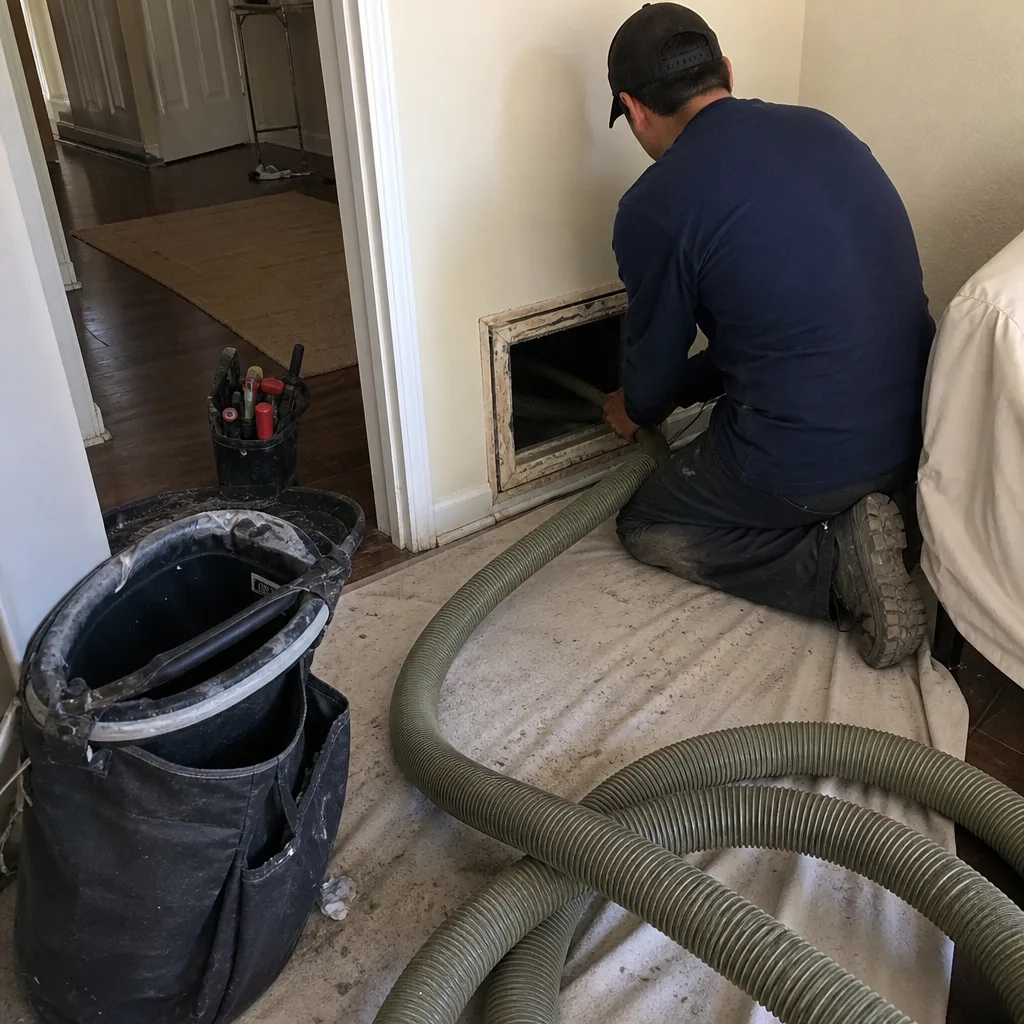
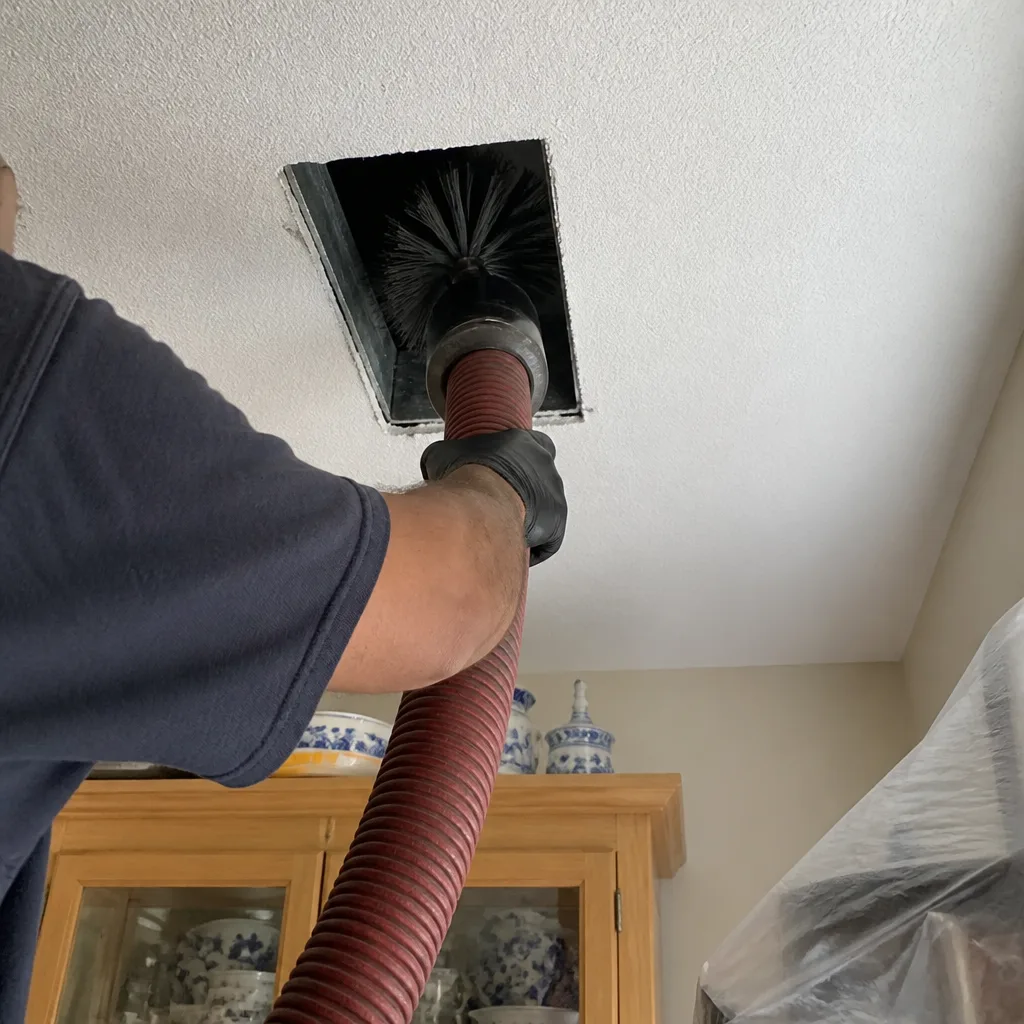
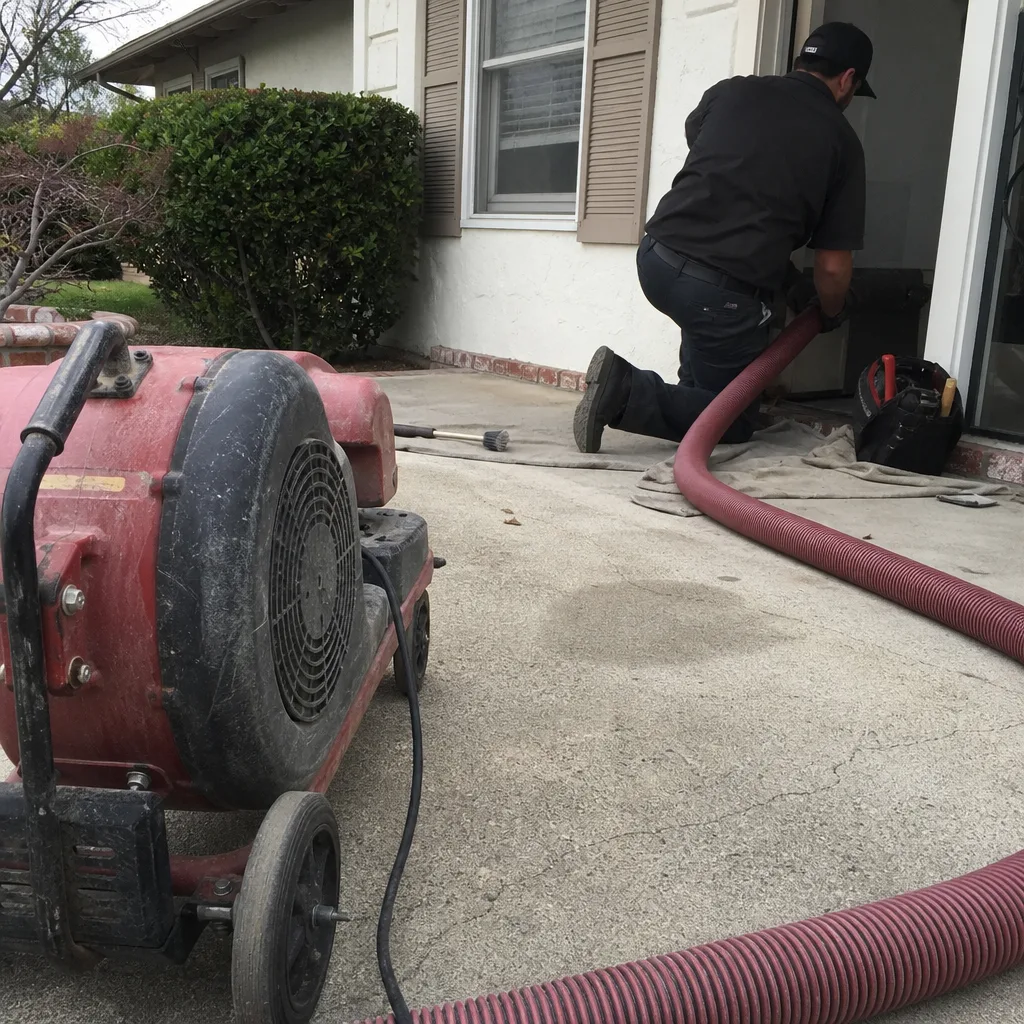
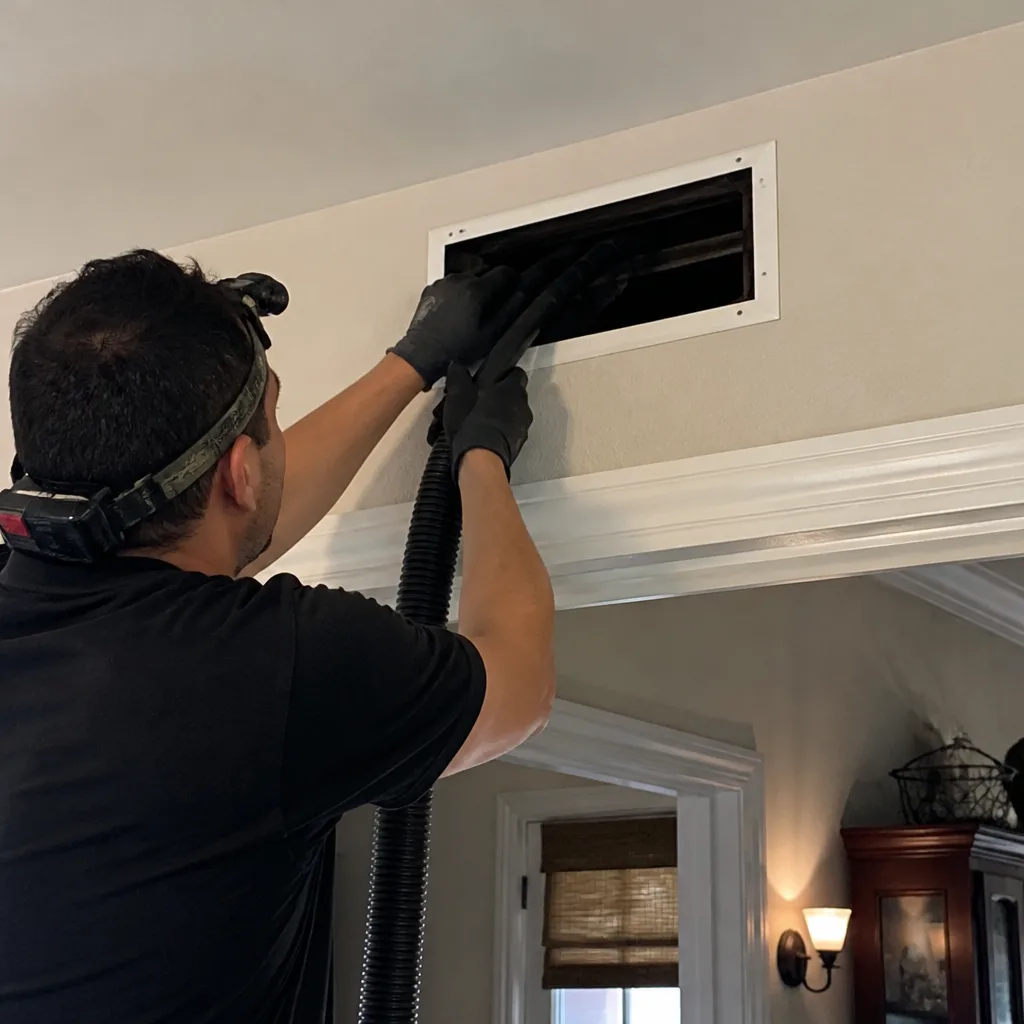
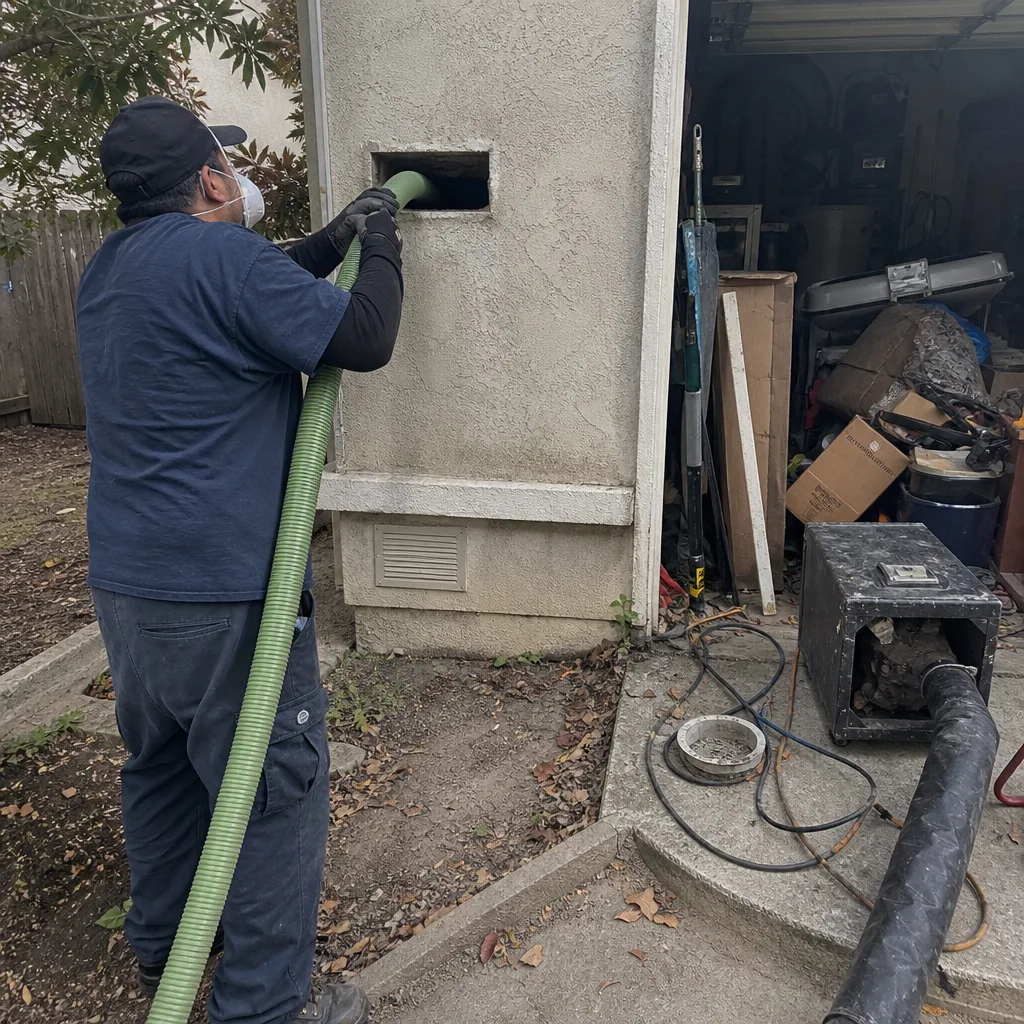
Professional-grade systems operate differently. A Rotobrush rotary-brush system physically agitates the interior duct surfaces while a Nikro-powered vacuum creates continuous negative pressure throughout the run, pulling the dislodged material out as it’s loosened. Abatement Technologies containment and air-scrubbing equipment captures airborne particles during the service so the dust removed from the ducts doesn’t end up settling back into the home’s living spaces. This is the same containment approach used in professional remediation work, and it’s the standard that Oak Park homeowners should expect from a focused Duct Cleaning Oak Park home service.
There’s also a repair angle that most generalist companies skip entirely. If your duct system has disconnected runs, crushed sections, or failing joints, cleaning around those problems is a temporary fix at best. A company that provides Air Duct Repair in Oak Park can address the structural issue during the same visit, so the cleaned system stays clean instead of re-contaminating through the same gap that let the dirt in originally.
Common Mistakes to Avoid
- Replacing the filter without looking at it. A filter pulled from the slot and thrown straight into the trash is a diagnostic record that just got discarded. Photograph it first, every time.
- Running the highest MERV filter available without checking whether your system can handle the pressure drop. A filter that’s too restrictive starves the blower, reduces airflow, and can cause the system to pull air through gaps in the return ducts rather than through the filter itself.
- Treating a duct cleaning as a one-time event. Ducts continue accumulating particulate after any cleaning. The question is the rate, not whether it happens. A good cleaning resets the clock. Your checklist habits determine how quickly the clock runs.
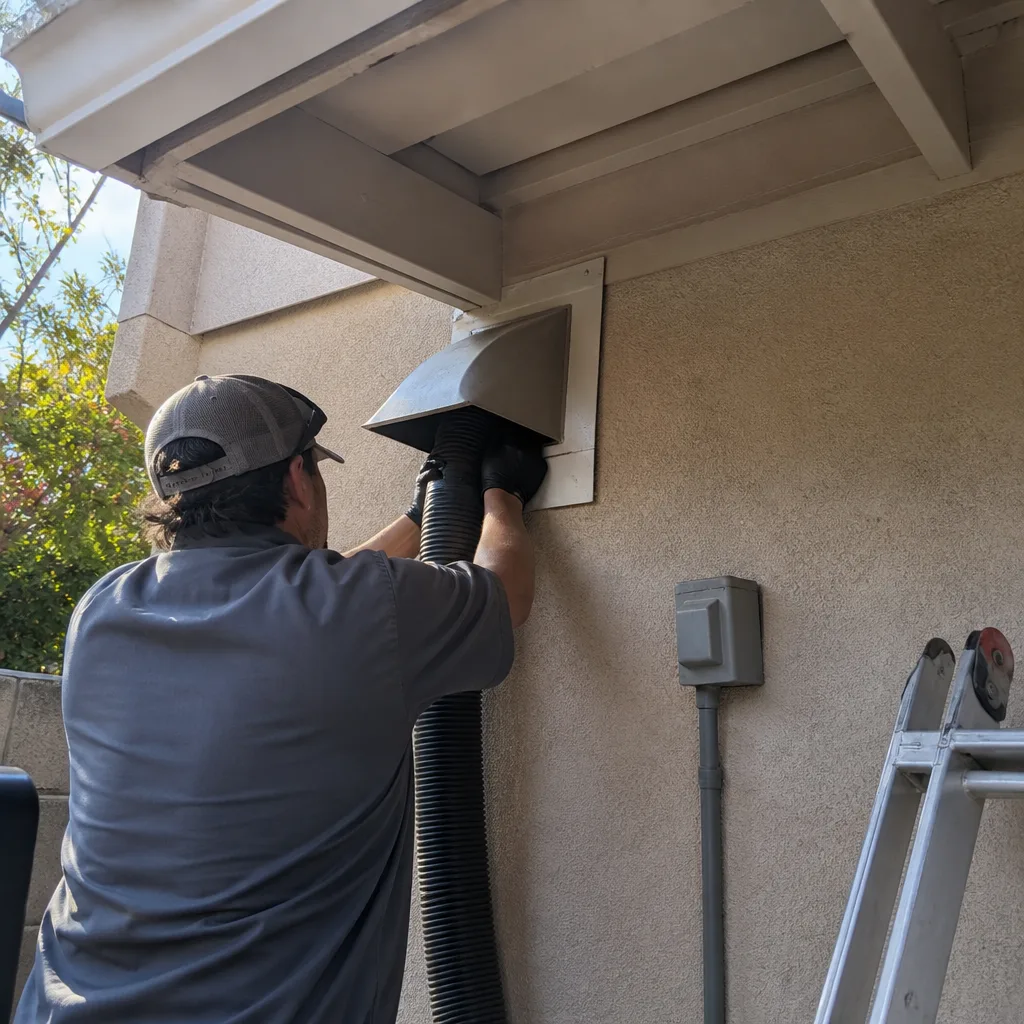
- Ignoring the dryer vent while maintaining the HVAC ducts. Dryer vents clog faster than HVAC ducts in most Oak Park homes, and the consequences are more severe. Dryer Vent Cleaning in Oak Park addresses a fire risk that HVAC duct maintenance never touches.
- Assuming a clean-looking register means clean ducts. The interior of a duct run can carry significant accumulation while the visible register surfaces remain relatively clean. The register is the exit point, not a window into the system.
- Waiting for a problem to appear before scheduling service. By the time you see dust blowing from a register or smell something musty, the system has been accumulating for months or years. Maintenance schedules exist to catch loading before it becomes visible.
- Using duct cleaning coupons without verifying what equipment will be used. A low price tied to low-grade equipment often produces a result that doesn’t last, which means paying twice: once for the cheap cleaning and again for the proper one.
When to Call a Professional
The checklist handles routine monitoring. A professional should handle anything that falls into the immediate escalation categories above, plus any situation where you’ve lived in the home for three or more years without a duct inspection. New home purchases are another automatic trigger, because previous owners’ maintenance habits, pets, and renovation projects all leave their mark on the duct system. If you’re seeing persistent allergy symptoms at home that improve when you’re away, or if your energy bills are climbing without an obvious cause, a professional assessment is the right next step. Duct Cleaning Oak Park offers free estimates in Oak Park. Call (844) 620-0479 to schedule an inspection, and bring your documentation log with you when we arrive.
Frequently Asked Questions
Most Oak Park homes benefit from professional air duct cleaning every 3 to 5 years, but the right interval depends on what your checklist reveals. Homes near open space with heavy Santa Ana wind exposure may need service more frequently, while homes with no pets, no smokers, and tight construction can often go longer. Use your filter inspection findings as the guide: if filters are loading heavily in under 30 days, if register boots show visible film at the 60-day mark, or if anyone in the home has unexplained allergy symptoms, shorten the interval. Call (844) 620-0479 for an assessment and we’ll give you an honest recommendation based on what we find, not a generic schedule.
Brushfire ash is fine enough to pass through many standard filters, especially the MERV 8 fiberglass filters found in many Oak Park homes. The particles that don’t pass through still accumulate on the filter surface, but the fraction that gets through travels into the duct runs and settles on interior surfaces. When the blower cycles on during the next heating or cooling season, some of that settled ash re-enters the living space. This is why a professional cleaning after a heavy fire season makes sense for homes downwind of burn areas.
You can clean the visible portions of register boots and the backside of grilles, which is what the inspection checklist covers. You cannot effectively clean the interior of duct runs with homeowner equipment. Duct runs extend 20, 30, or 50 feet through walls and ceilings, with multiple bends and joints. Reaching them requires professional rotary agitation equipment and negative-pressure collection systems that pull loosened debris out rather than pushing it deeper into the run. Attempting to clean ducts with a shop vacuum from the register opening removes almost nothing from the deep runs and can actually worsen the problem by dislodging material that then flows freely – see our Air Duct Cleaning Troubleshooting: Common Problems and How to Fix Them for more on what can go wrong.
The difference is mechanical agitation paired with true negative-pressure collection. We use Rotobrush rotary-brush systems that physically scrub the interior duct surfaces while Nikro-powered vacuums pull the dislodged material out of the run and into a contained collection system. Abatement Technologies air-scrubbing equipment captures airborne particles during the process. Low-bid operators typically use a spinning brush on a drill-driven rod connected to a portable vacuum that lacks the static pressure to pull debris from long runs. The result is a partial cleaning that leaves the majority of the accumulated load in place.
Ask for before-and-after photos of the interior of your duct runs. We photograph the interior surfaces during the inspection and again after cleaning so you can see exactly what was removed and what the surfaces look like afterward. Also ask about equipment before booking. A company that can name the specific machines they use, rather than describing “powerful vacuum equipment” generically, is more likely to be operating professional-grade tools. Finally, the register inspection you run 60 days after service should show clean boot surfaces. If film reappears immediately, the underlying issue wasn’t addressed.
Yes, and in Oak Park it’s arguably more urgent than HVAC duct cleaning. Lint accumulation in dryer vents is one of the leading causes of residential house fires, and it happens faster in homes where the dryer vent run is long or has multiple bends, which is common in two-story Oak Park floor plans. If your dryer takes more than one cycle to fully dry a normal load, or if the exterior vent flap doesn’t open fully when the dryer runs, the vent needs cleaning. Treat dryer vent maintenance as a fire-safety task, not an efficiency task.
The Bottom Line
Your duct system is constantly accumulating whatever floats through your Oak Park home’s air: ash from the canyons, dust from the 101, fibers from carpet and pets, and occasionally something worse. The maintenance checklist that actually works is the one that treats your filter and registers as instruments rather than chores. Photograph the filter every time you change it. Inspect the register boots with a flashlight every 60 to 90 days. Document everything, so when you eventually call a professional, the technician sees a timeline instead of a mystery. And when it’s time for the cleaning itself, remember that the equipment matters as much as the checklist. Your air ducts are only as clean as the equipment cleaning them. Call (844) 620-0479 for a free estimate from the team at Duct Cleaning Oak Park.
Written by the team at Duct Cleaning Oak Park, serving Oak Park since 2017.
See the difference
 Before
 After
 Before
 After
 Before
 After