
Last updated November 2, 2026
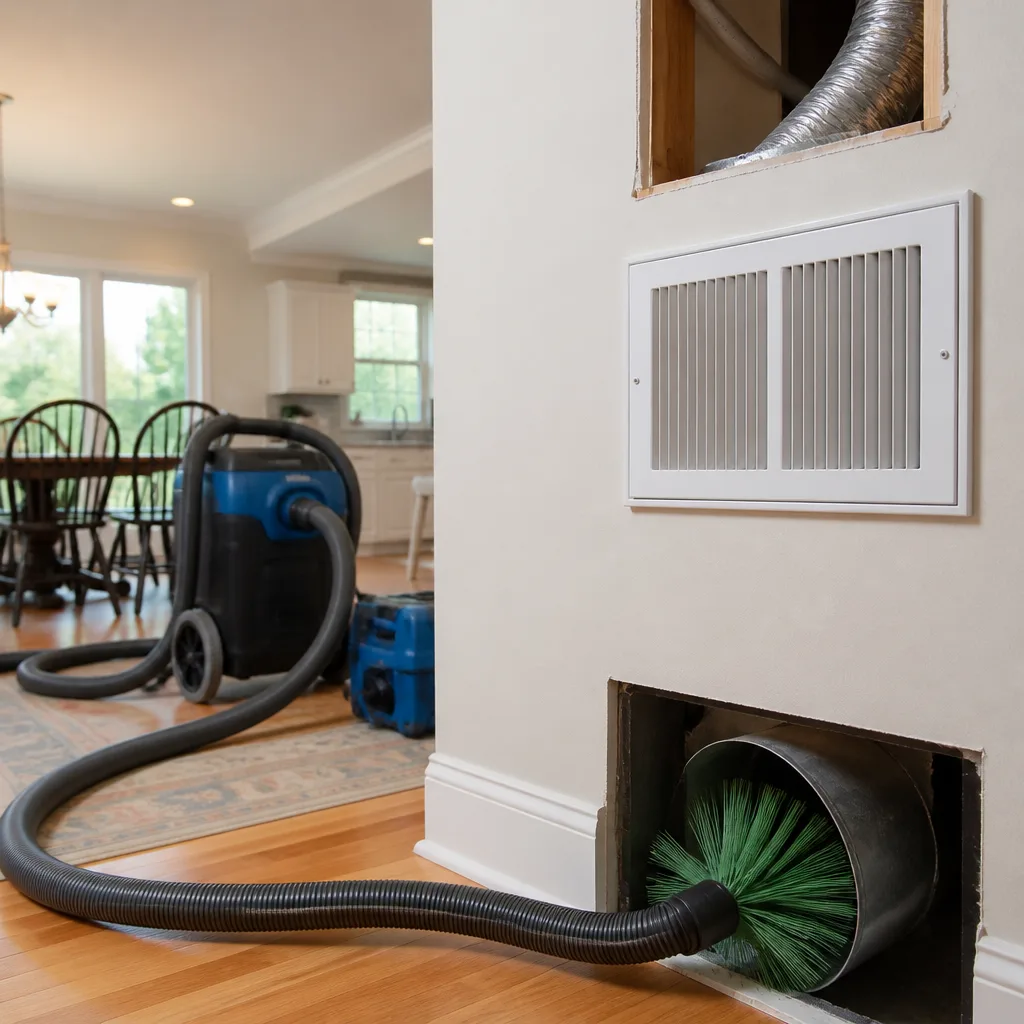 Whole-home duct cleaning
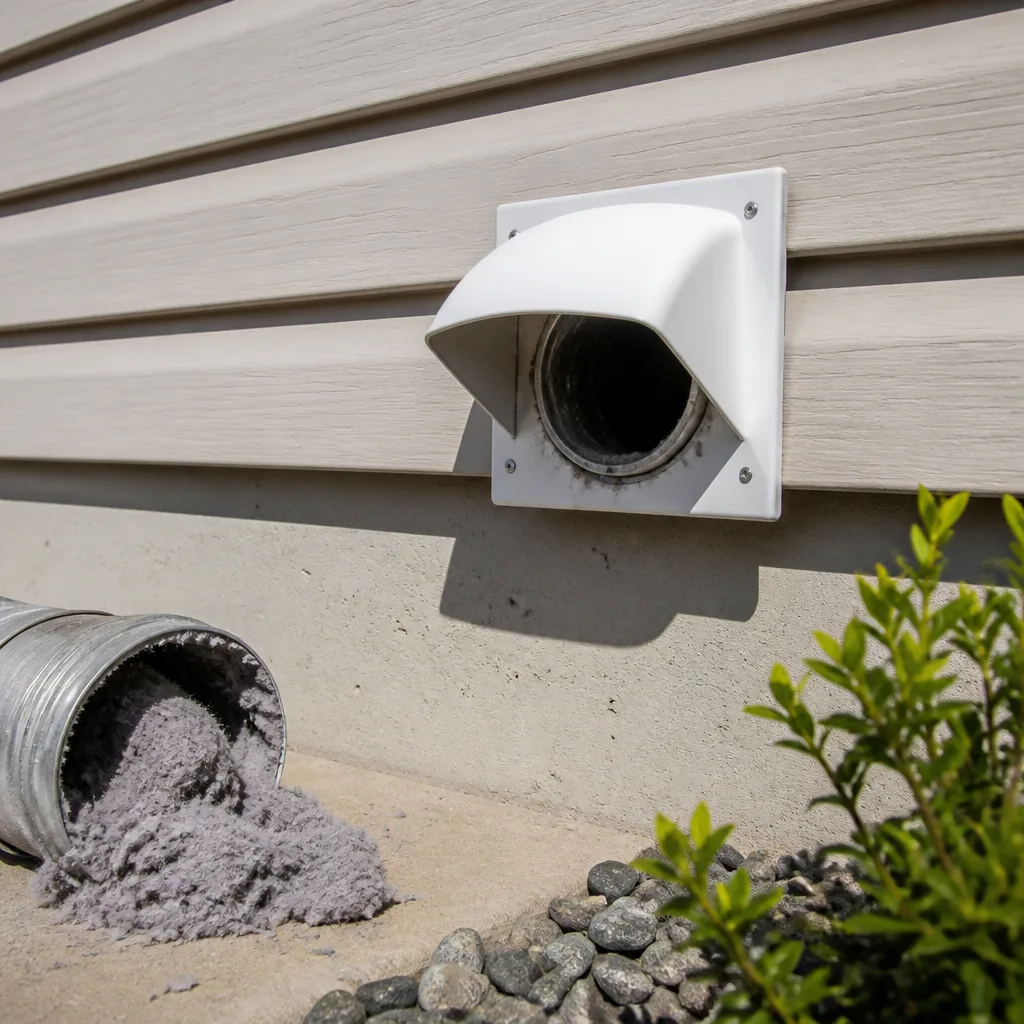 Dryer vent cleaning
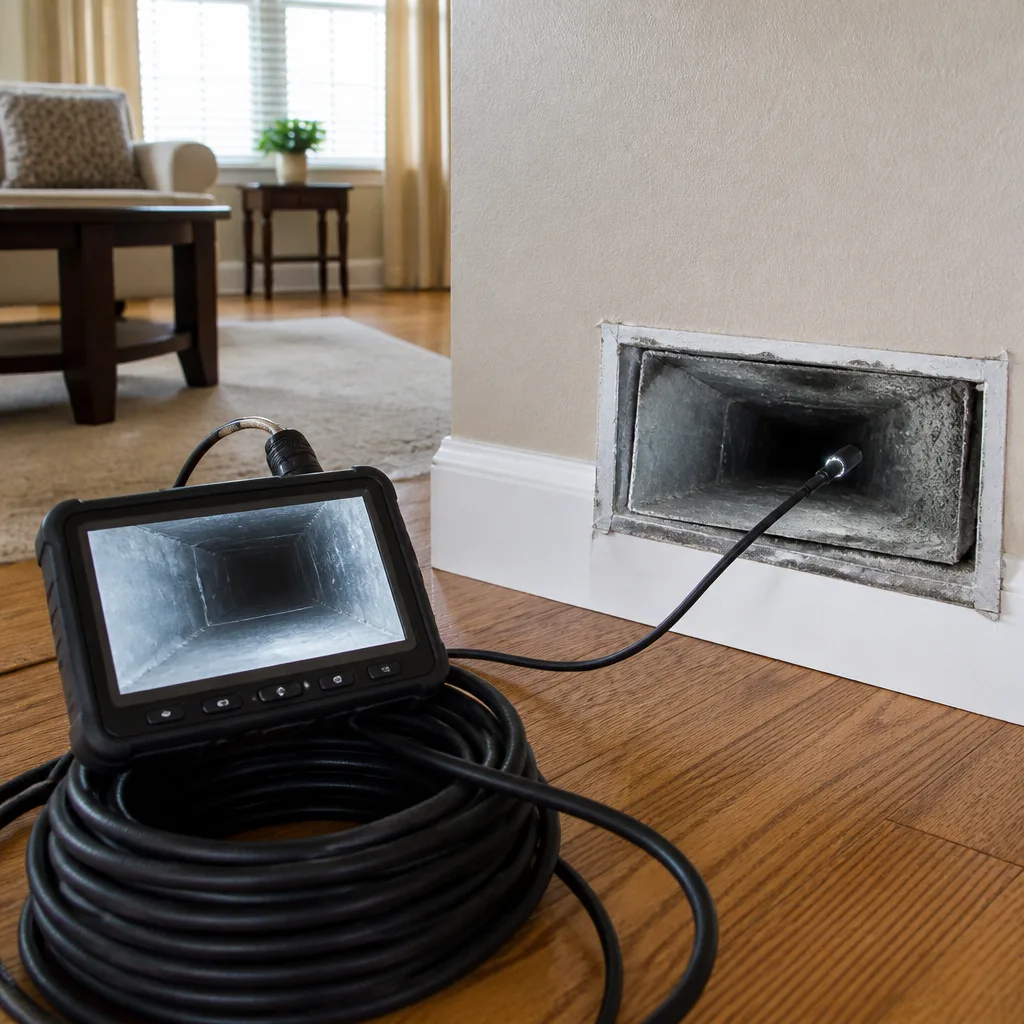 Camera inspection
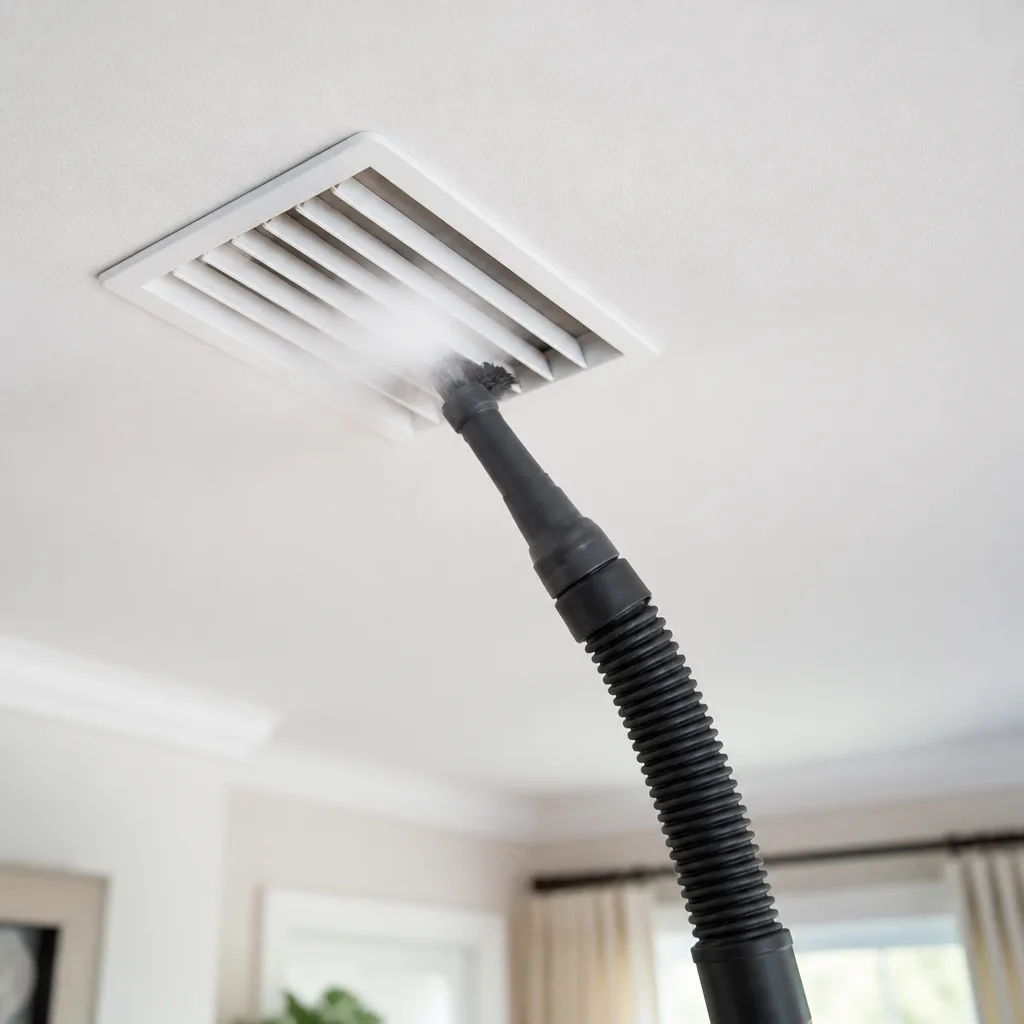 Sanitizing & deodorizing
Whole-system duct and dryer vent check with before-and-after photos - you see exactly what came out of your vents
That "$99 whole-house special" is a bait ad - the real number appears once they are in your hallway, or the "clean" is a shop-vac at the register. We photograph the inside of your ducts before and after instead.
Air Duct Cleaning Emergency Preparedness Guide for Oak Park Homes
During the 2018 Woolsey Fire, homes across Oak Park sat under smoke advisory for nearly a week. Most homeowners kept their HVAC systems running, believing indoor air was automatically cleaner than outdoor air. Here’s what few people understood at the time: every hour that system cycled, it pulled wildfire particulate into ductwork that then recirculated through bedrooms and living spaces for months after the sky cleared. This guide explains how to protect your duct system before, during, and after a smoke event in Oak Park, and what separates a genuinely useful response from the generic checklists most websites recycle.
Quick Answer
Air duct emergency preparedness for Oak Park homes means having a protocol for HVAC operation during wildfire smoke advisories, knowing what to inspect before restarting your system afterward, and understanding when duct contamination requires professional cleaning versus when a simple filter change handles it. The most effective action you can take today is installing a high-MERV or activated carbon filter rated for your system, and the most effective action after a smoke event is a documented duct inspection before you run the blower again.
Styles & brands we work with
- Whole-home duct cleaning
- Dryer vent cleaning
- Camera inspection
- Sanitizing & deodorizing
Table of Contents
- What to Do With Your HVAC System When a Smoke Advisory Is Issued
- Pre-Fire Upgrades: Filters and System Prep Before Smoke Season
- Shut Down or Recirculate: The Decision That Actually Matters
- Post-Smoke Duct Inspection Checklist: What to Check Before Restarting
- How to Prioritize Duct Service After an Emergency
- Documentation Steps for Insurance Claims After Smoke Infiltration
- Oak Park’s Specific Risk Profile: Why This Isn’t Theoretical Here
- Common Mistakes to Avoid
- When to Call a Professional
- Frequently Asked Questions
What to Do With Your HVAC System When a Smoke Advisory Is Issued
When the National Weather Service or Ventura County Air Quality Management District issues a smoke advisory for the Oak Park area, your HVAC system becomes either a filtration asset or a contamination source. The difference depends on three things: your filter’s MERV rating, whether your system can run in recirculation mode without drawing outdoor air, and how long the smoke event lasts.
Here is the step-by-step protocol we recommend for Oak Park homes, based on what actually happens inside ductwork during prolonged smoke exposure:
- Confirm your filter’s MERV rating before doing anything else. If you’re running a standard MERV 8 fiberglass filter, it is not stopping wildfire smoke particulate. The fine particles in smoke (PM2.5 and smaller) pass straight through. If your filter is MERV 13 or higher, the system can provide meaningful filtration while running. Check this first, because it determines your next step.
- Switch to recirculation mode if your system has that option. Most modern thermostats and HVAC control boards have a “fan on” or “recirculate” setting that runs the blower without pulling outside air. If yours does, and you have a MERV 13 filter installed, running the fan continuously is the single best protective action during a smoke event. The filter media captures particulate each pass.
- Close all fresh-air intake dampers. Some Oak Park homes, especially those built in the last 15 years, have dedicated outdoor air intakes for ventilation. Find the damper and close it. If you can’t locate one, assume your system draws some outside air and treat it accordingly.
- If you cannot confirm a MERV 13 or higher filter, shut the system down during the worst of the advisory. A system running a low-MERV filter during heavy smoke is actively loading your ductwork with particulate. This becomes a source of indoor pollution for months. Shut it down, use portable air purifiers if you have them, and run the blower only after you’ve upgraded the filter.
- Do not open windows at night expecting cooler air to help. Nighttime temperature inversions in the Conejo Valley often trap smoke closer to the ground. “Cooler” nighttime air during a smoke event is frequently more contaminated, not less.
- Plan for the smoke event to outlast the advisory. The advisory may lift, but particulate remains suspended in the air and inside your home. Treat the 72 hours after a smoke advisory the same way you treated the advisory itself.
In our experience serving Duct Cleaning Oak Park home owners, the homes that fare best during smoke season are those where a high-efficiency filter is already installed and the occupants know exactly which setting to flip when the first smoke smell appears. The homes that need full Air Duct Cleaning in Oak Park after a fire are almost always the ones where a low-grade filter ran through the entire event.
Pre-Fire Upgrades: Filters and System Prep Before Smoke Season
Wildfire smoke season in Southern California is no longer an anomaly. The Oak Park area sits in the wildland-urban interface, and the fire history of the surrounding hills, from the Woolsey Fire to smaller vegetation fires in the Santa Monica Mountains corridor, says clearly that smoke events will happen again. Preparing your duct system before smoke arrives is the difference between minor inconvenience and contaminated ductwork that needs professional intervention.
MERV Ratings: What Oak Park Homes Actually Need
A standard MERV 8 filter catches larger dust and lint. It does almost nothing for wildfire smoke. The particulate in wood smoke ranges from 0.3 to 2.5 microns. Here is what different MERV ratings mean in practical terms for an Oak Park home:
- MERV 8: Catches dust, pollen, and carpet fibers. Ineffective against wildfire smoke. Acceptable for normal operation, inadequate for smoke season.
- MERV 11: Captures some smaller particulate, roughly 20-40% of smoke particles. Better than nothing, but the smoke smell will still come through.
- MERV 13: Captures the majority of smoke particulate, including PM2.5. This is the minimum effective rating for smoke protection. Most modern air handlers can accommodate MERV 13 without significant airflow restriction.
- MERV 16 or activated carbon: Highest residential filtration capacity. Activated carbon also removes volatile organic compounds, which is why it addresses the smoke odor that MERV-only filters miss. These filters can be expensive and may require a system check to confirm compatibility.
The critical caveat: a higher-MERV filter creates more static pressure. If your blower motor or duct sizing can’t handle it, the system works harder and airflow drops. For most Oak Park homes, MERV 13 is the sweet spot. If you’re unsure, have a technician verify compatibility before running a high-efficiency filter continuously.
Keep a Supply On Hand
During a major smoke event, high-MERV filters sell out at hardware stores across Ventura County within 48 hours. The same thing happened with N95 masks during Woolsey. Order a three-pack of MERV 13 filters in May, before smoke season begins, and store them in a dry location. This is the difference between having protection ready and standing in an empty aisle while smoke fills the Agoura Hills corridor.
Know What’s Already in Your Ducts
If your ductwork hasn’t been cleaned in several years, you’re starting from a deficit. Old dust, pet dander, and construction debris sit in the ducts and become a sticky surface that smoke particulate adheres to. A clean system is more resilient. If you’ve never had Air Duct Cleaning in Oak Park, doing it before smoke season means the particulate a filter misses has nothing already in the ducts to bond with.
Shut Down or Recirculate: The Decision That Actually Matters
Most emergency preparedness advice for HVAC systems during fires is simplified to the point of being useless: “Just turn it off.” But shutting down a system in a hot climate brings its own problems. In an Oak Park summer, daytime temperatures routinely push past 90 degrees. A home with a shut-down HVAC system becomes uncomfortable quickly, especially for elderly residents, infants, or anyone with respiratory conditions.
The real question is not “on or off” but “what is the system doing while running?”
When Recirculation Mode Is the Right Choice
Run the blower continuously in recirculation mode when all three of these are true:
- Your filter is MERV 13 or higher and clean.
- Your system is confirmed to be pulling no outdoor air (fresh-air damper closed, no leaky return ducts).
- Indoor temperatures require cooling for safety or comfort.
A continuously running blower with an effective filter is a legitimate air-cleaning tool. Each hour, the full volume of your home’s air passes through the filter multiple times. This is the same principle behind professional air scrubbers, just at residential scale. The Abatement Technologies air-scrubbing equipment we use during duct service operates on this exact concept: pass air through filtration repeatedly until particulate counts drop.
When to Shut Down Completely
Shut the system down when any of these is true:
- Your filter is MERV 11 or lower. Running the system only loads your ducts with smoke particulate that will require cleaning later.
- You cannot confirm whether fresh air is being drawn in. If the system is pulling smoky outdoor air and distributing it through the house, you’re actively making things worse.
- Smoke is heavy enough that you can smell it indoors even with the system running. That smell means particulate and VOCs are penetrating your home’s envelope, and the first line of defense is the door and window seals, not the HVAC.
- The blower motor is old and debris-laden. A heavily soiled blower wheel distributes old residue along with new smoke particulate.
The Leaky Duct Problem
Here’s a factor almost no generic checklist mentions: return ducts in attics and crawl spaces can be leaky. In many Oak Park homes, the return side of the system pulls air not just from the living space but from the attic. If smoke is in the attic, a “recirculating” system is still drawing contaminated air. This is why we recommend Air Duct Repair in Oak Park as a standing part of emergency preparedness for homes with older systems. A properly sealed return duct is the difference between recirculation being a filter and recirculation being a smoke pump.
Post-Smoke Duct Inspection Checklist: What to Check Before Restarting
After the advisory lifts, the instinct is to turn the system back on and resume normal life. Resist that instinct. Here is a sequential inspection protocol for Oak Park homes before you restart the blower after a significant smoke event:
- Replace the filter, even if it looks fine. A filter that has captured smoke particulate is loaded. It restricts airflow even if visibly discoloration is minimal. Replace it with a fresh high-MERV filter. If you ran the system during the smoke event, consider the filter at the end of its service life regardless of age.
- Open the filter slot and inspect the housing with a flashlight. Look for an accumulation of fine gray or brown dust on the blower housing and the filter frame. This indicates particulate traveled past the filter and entered the blower. If you see it, do not run the system – the fine dust has also entered the ducts, where the blower will redistribute it throughout the house.
- Remove one or two supply registers and look inside with a flashlight. Supply registers are where conditioned air enters rooms. If smoke particulate has settled in the ducts, you’ll see fine gray film on the inside of the duct walls near the registers. Use a white cloth or tissue; wipe the inside of the duct. If it comes away discolored, professional cleaning is warranted before normal operation.
- Smell the air coming from a register while the system is off. Static smoke odor in the supply ducts is a telltale sign that particulate and residue remain. If the smell is distinct even days after the external smoke cleared, the ducts are holding contamination.
- Check the blower motor and evaporative coil if accessible. In many Oak Park homes, the air handler is in a garage, attic, or closet. If you can safely open the access panel, look for fine soot on the blower wheel blades. We use Nikro-powered negative-pressure equipment to clean blower assemblies correctly; if yours is visibly coated, you’re past the DIY point.
- Turn the system on and listen. After you’ve verified the filter, ducts, and blower, run the system for 10 minutes. Listen for any change in blower noise (an increase often means debris on the wheel) and pay attention to odors. The first few minutes may have a slight “burned dust” smell; that’s normal and resolves. If it doesn’t resolve, contamination is present deeper in the system.
If the inspection reveals anything beyond light dust, have a professional Air Duct Cleaning in Oak Park performed before running the system regularly. The cost of cleaning is far less than the cost of months of recirculated smoke particulate in the air your family breathes.
How to Prioritize Duct Service After an Emergency
In the weeks after a significant smoke event, demand for duct cleaning spikes across the region. If the inspection reveals contamination, you need to know what’s urgent versus what can wait for a scheduled appointment. Here’s the prioritization framework we use when Oak Park homeowners call us after fires:
Immediate Attention (Schedule Within 1-3 Days)
- Visible gray or brown film in supply ducts. This is smoke particulate actively being pushed into living spaces. It won’t dissipate on its own.
- Persistent smoke odor from registers two weeks after the event. Odor means VOCs and particulate are embedded. Every cycle redisributes them.
- A blower wheel visibly coated with soot. Running the system throws this material into the airstream and wears the bearing.
Can Wait for a Scheduled Appointment (Within 2-4 Weeks)
- Light dust accumulation with no odor. If inspection shows minor dust but no smoke smell, the system is functional. Schedule Air Duct Cleaning in Oak Park at a convenient time.
- Filter replacement and system is otherwise clean. If the filter did its job, a replacement may be the only action needed. This is the ideal outcome.
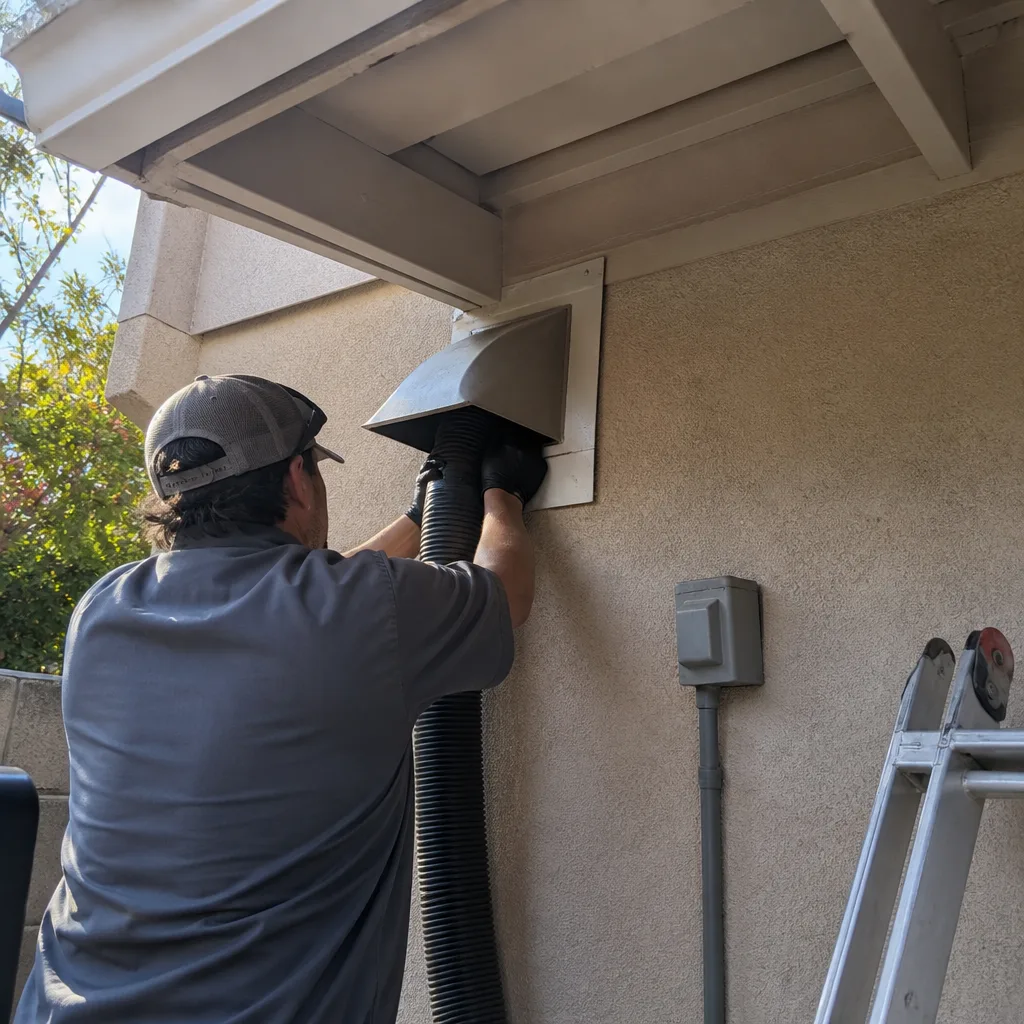
- Ducts are clean but the dryer vent wasn’t. Smoke particulate settles in dryer vents too, but this is a separate service call. We recommend Dryer Vent Cleaning in Oak Park as part of post-smoke recovery whenever a smoke event occurred.
What Professional Cleaning Actually Involves
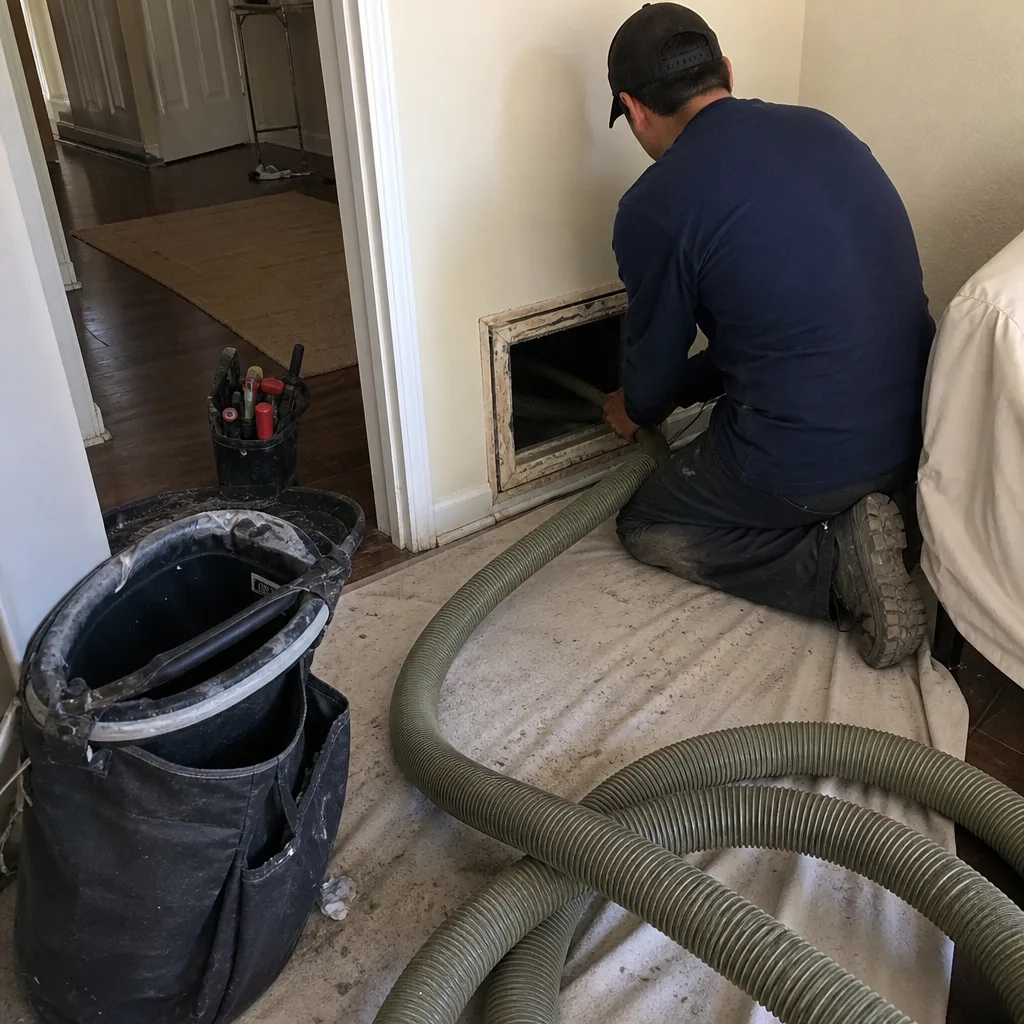
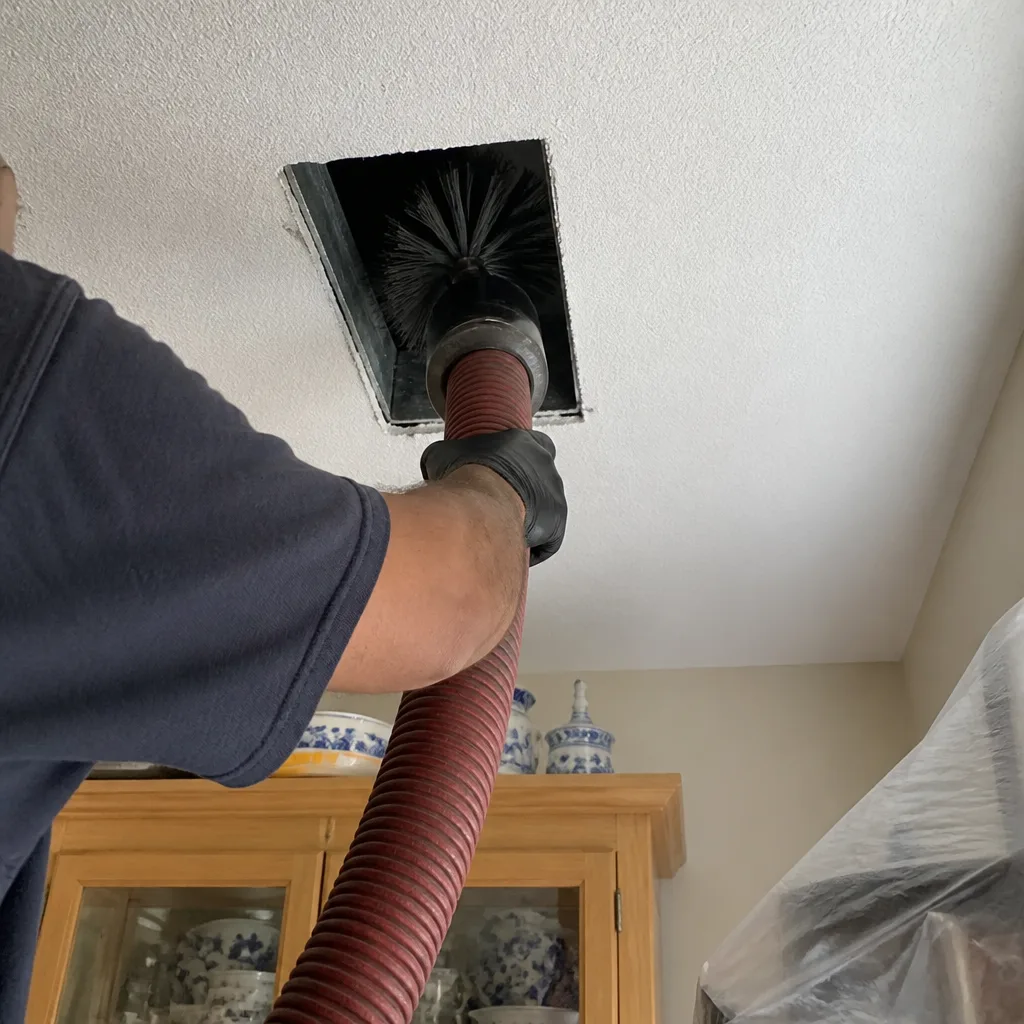
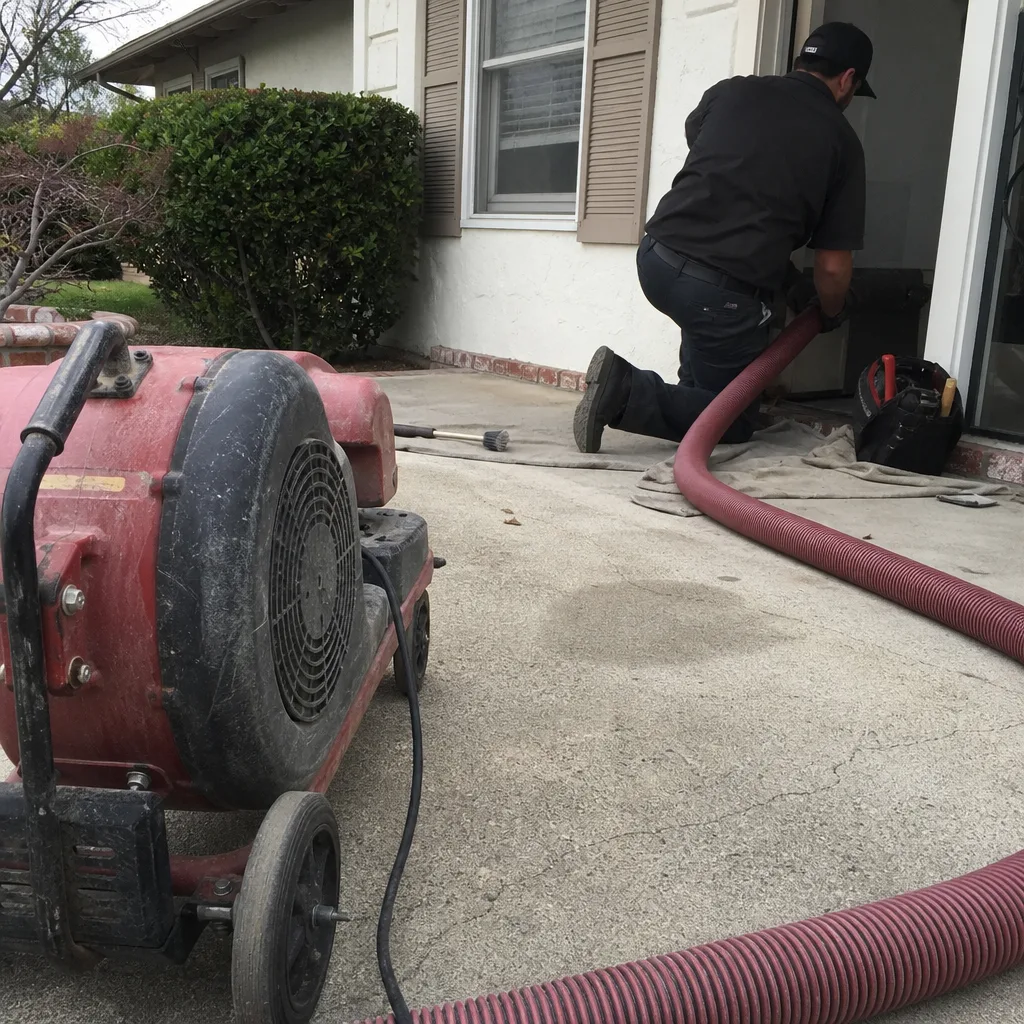
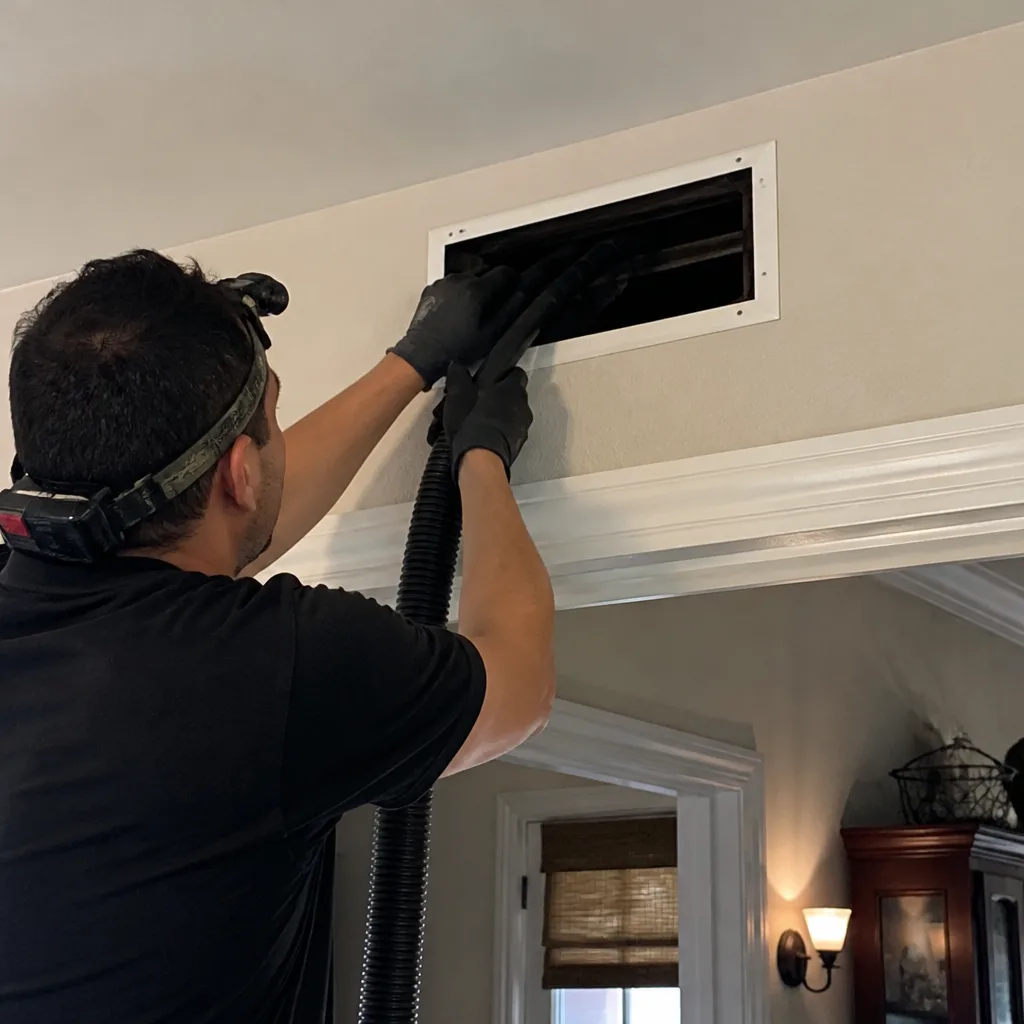
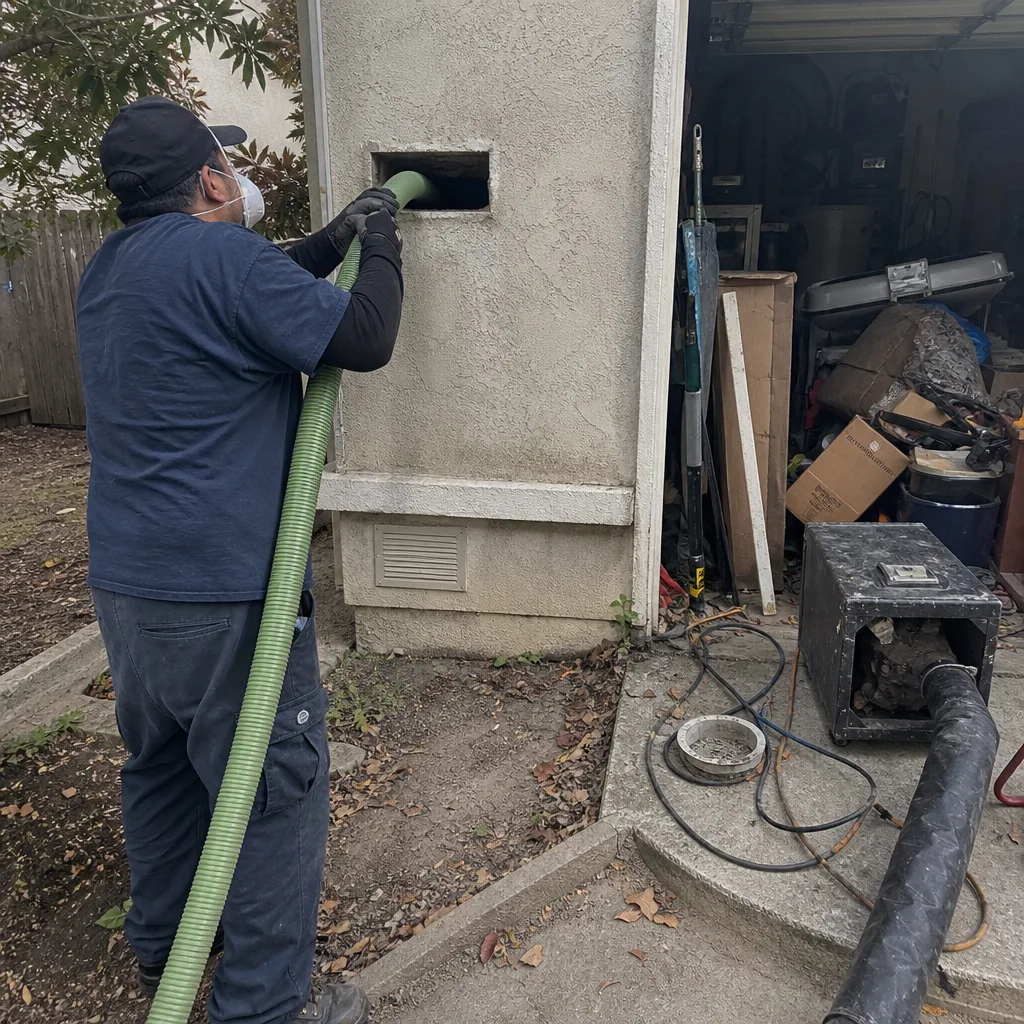
When we perform post-smoke duct cleaning, the process differs from a standard service. We run Rotobrush rotary-brush equipment through every supply and return duct to mechanically dislodge smoke particulate that has bonded to duct walls. In parallel, a Nikro negative-air system pulls the dislodged material out of the duct before it can re-enter living spaces. For homes with heavy smoke infiltration, we deploy Abatement Technologies containment barriers around supply registers to keep particulate from migrating during the cleaning process. There is a meaningful difference between this approach and what a low-bid company with a shop vac setup can accomplish. After a smoke event, that difference is visible in the before-and-after photos.
Documentation Steps for Insurance Claims After Smoke Infiltration
Smoke damage from a wildfire is typically covered under homeowners insurance as part of the broader fire event, but claims require documentation that most homeowners don’t think to collect. Here’s what we tell Oak Park homeowners who call us after a fire:
- Photograph the filters before discarding them. A smoke-loaded filter is physical evidence of what passed through your system. Take photos with a date stamp. The filter itself can be kept in a sealed plastic bag if you expect a dispute.
- Document the inspection findings. Note the date, what you observed (gray film, odor, soot on blower), and where. Simple written notes taken contemporaneously carry weight in a claim process.
- Get a professional inspection if you suspect contamination. If the post-smoke inspection reveals anything beyond light dust, a professional assessment with written findings is strong documentation for an insurance claim. Most insurers will accept a professional inspection report for duct cleaning coverage after a documented fire event.
- Save receipts for any emergency materials. Replacement high-MERV filters, portable air purifiers, even the plastic sheeting used to tape over vents during the event can be part of a claim. Create a dedicated folder.
- Photograph the exterior of the home during the smoke event if possible. The same particulate that’s in your ducts is on your roof, windows, and siding. Exterior photos establish the severity of the event relative to your property.
- Request a written quote for any needed duct service. An itemized quote from a professional company becomes the basis for the insurance reimbursement. File the claim before scheduling the service whenever possible to avoid disputes over pre-authorization.
Insurance companies are not inherently adversarial, but they are process-driven. The homeowner who documents everything has a materially easier path to coverage than the one who calls two months later with a memory and a smell complaint.
Oak Park’s Specific Risk Profile: Why This Isn’t Theoretical Here
Oak Park sits directly in the wildland-urban interface zone of the Santa Monica Mountains. The Woolsey Fire of 2018 burned nearly 97,000 acres and the smoke plume affected air quality across the entire Conejo Valley and Ventura County for over a week. Homes in Oak Park were under smoke advisory for days, not hours. That event was not an outlier. The fire history of this specific geographic corridor, bounded by open space on three sides, produces repeat exposure.
Homes in Oak Park neighborhoods like Morrison Ranch, Regency Hills, and the older sections near Kanan Road share common characteristics that matter for duct contamination. Many were built in the 1980s and 1990s, meaning original ductwork that has seen decades of use. Attic-mounted air handlers are the standard configuration, and attic spaces in this area reach 130 degrees in summer, which accelerates the degradation of duct seals and insulation. Leaky return ducts, as discussed above, are common. A house in this area built 30 years ago almost certainly has some degree of return-side leakage.
This matters for emergency preparedness because the question “is my system pulling contaminated air from outside?” has a different answer for a 1988 Oak Park home with original flex duct than for a new construction house with taped and sealed rigid ducts. Knowing your home’s age and duct condition is part of your emergency protocol.
We’ve worked on enough Oak Park systems to see the pattern clearly: homes with original ductwork that ran their systems through Woolsey are still dealing with the residue, and the homes that did nothing continue to smell faint smoke every time the AC kicks on in summer. The fix is the same every time: proper Air Duct Cleaning in Oak Park with professional-grade equipment, and in cases with damaged or collapsed sections, Air Duct Repair in Oak Park to restore proper airflow before cleaning.
Common Mistakes to Avoid
- Running a low-MERV filter through a smoke event. This is the single most common error, and it converts a manageable situation into contamination that requires professional cleaning. A $10 fiberglass filter cannot stop wildfire smoke. It’s not a quality debate; it’s a material property.
- Turning the system back on immediately after the advisory lifts. The smoke clears outside long before your ducts are clear. Restarting a system that has drawn smoke particulate simply redistributes what settled inside during the event.
- Assuming “the smoke didn’t get inside” because the house felt closed up. Attic ventilation, building envelope leaks, and HVAC air intakes mean smoke penetrates even a closed house. The question is never whether smoke entered; it’s how much and where it settled.
- Relying on an old filter because it “looks fine.” Filters load with sub-micron particulate long before visible discoloration appears. If you ran the system during a smoke event, the filter is done. Replace it.
- Believing a $99 duct cleaning special will resolve post-smoke contamination. Smoke particulate is fine and adhesive. A company running a makeshift vacuum through your registers will not dislodge it. The Rotobrush and Nikro systems we run are designed specifically for this mechanical agitation and containment, and that’s the difference between the appearance of cleaning and actual particulate removal.
- Filing an insurance claim months after the event without documentation. Claims filed promptly with photos, receipts, and professional assessments are processed as part of the fire event. Claims filed months later, with no documentation, are treated as routine maintenance requests.
- Forgetting the dryer vent. Smoke particulate settles everywhere, and the dryer vent is a direct connection from your laundry room to the outside. After a significant smoke event, this is a safety issue. We recommend Dryer Vent Cleaning in Oak Park as a standard post-fire action.
When to Call a Professional
A professional duct inspection and cleaning is warranted when the post-smoke inspection reveals gray or brown film in ducts, persistent smoke odor from registers, a visibly coated blower, or when the home has original 20-plus-year-old ductwork that ran through a significant fire event. If you’re unsure what you’re looking at during a self-inspection, that uncertainty itself is reason enough to call. Duct Cleaning Oak Park offers free estimates in Oak Park – call (844) 620-0479. We’ll assess the system honestly and tell you if cleaning is needed or if you’re overreacting. Both answers happen regularly, and we’d rather you know for certain than guess.
Frequently Asked Questions
You’ll know wildfire smoke entered your ductwork if you see fine gray or brown film on the inside of supply registers, notice smoke odor from vents days after the outdoor air cleared, or find soot deposits on the blower housing or filter frame during inspection.
A MERV 13 filter is the minimum effective rating for wildfire smoke particulate in Oak Park homes, capturing the PM2.5 particles that make up most smoke. If your system can accommodate it, a MERV 16 or activated carbon filter adds VOC and odor removal.
Run your HVAC during a smoke advisory only if you have a confirmed MERV 13 or higher filter installed and the system draws no outdoor air. Otherwise, shut it down entirely rather than loading your ductwork with particulate that will need professional removal later.
Oak Park homeowners should schedule duct cleaning every 3 to 5 years under normal conditions, but sooner after any significant wildfire smoke event that ran the system with standard filtration. Homes with allergy sufferers or pets near open space may need cleaning more frequently.
Homeowners insurance commonly covers duct cleaning after a documented wildfire smoke event when the homeowner can provide photographic evidence, a professional inspection report, and itemized quotes. File the claim before scheduling service whenever possible to avoid pre-authorization issues.
Professional duct cleaning uses motorized rotary-brush systems like Rotobrush and negative-air systems like Nikro to mechanically dislodge bonded particulate and remove it under vacuum containment. Cheap specials typically push a vacuum hose through registers, which cannot dislodge smoke residue from duct walls.
The Bottom Line
Oak Park’s position in the wildland-urban interface makes wildfire smoke exposure a recurring reality, not a remote possibility. The difference between a home that recovers cleanly and one that smells like old smoke every time the AC runs comes down to filter ratings, knowing when to run or shut down the system, and conducting a real inspection before restarting after an event. A MERV 13 filter and a sealed return duct are the minimum starting points. Professional cleaning with proper equipment handles what filters and prevention cannot. To schedule a free estimate for duct cleaning or dryer vent service in Oak Park, call (844) 620-0479.
Written by the team at Duct Cleaning Oak Park, serving Oak Park since 2017.
See the difference
 Before
 After
 Before
 After
 Before
 After